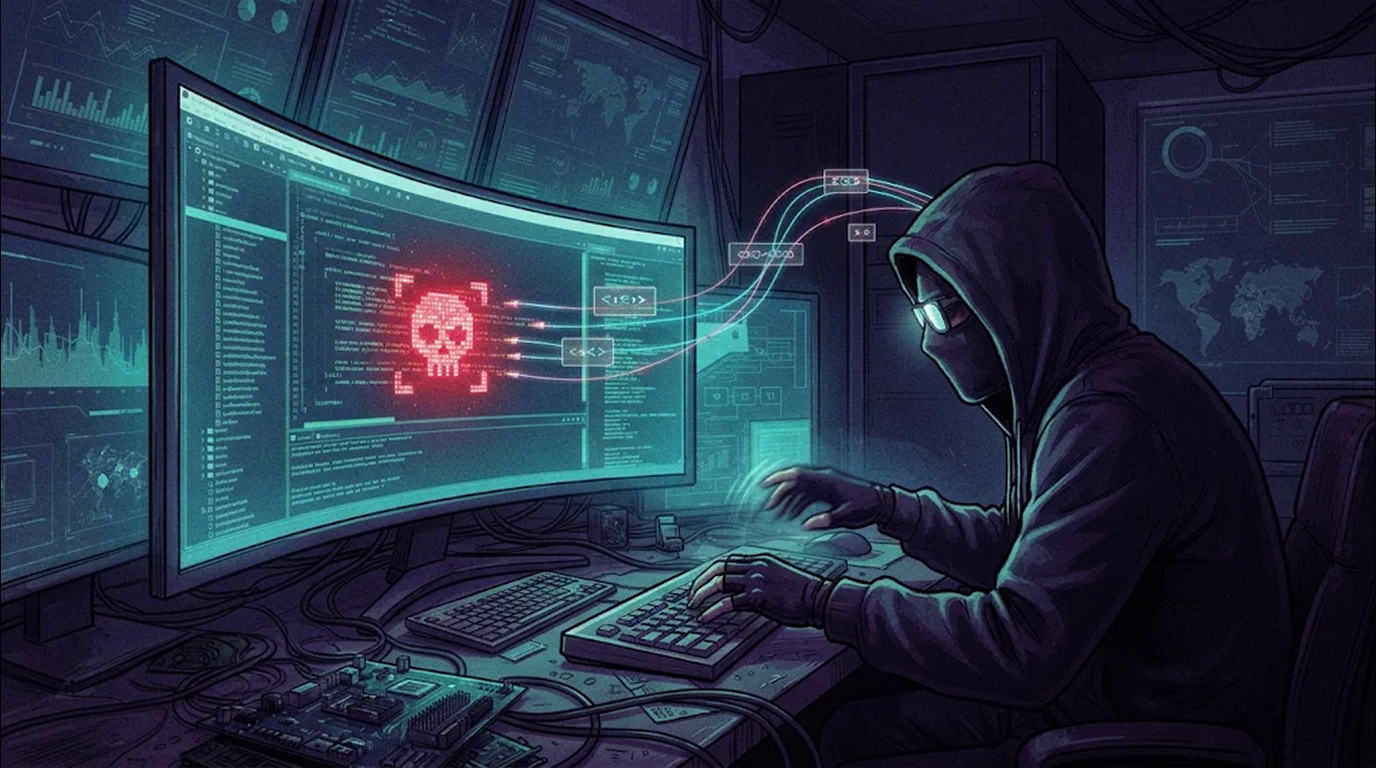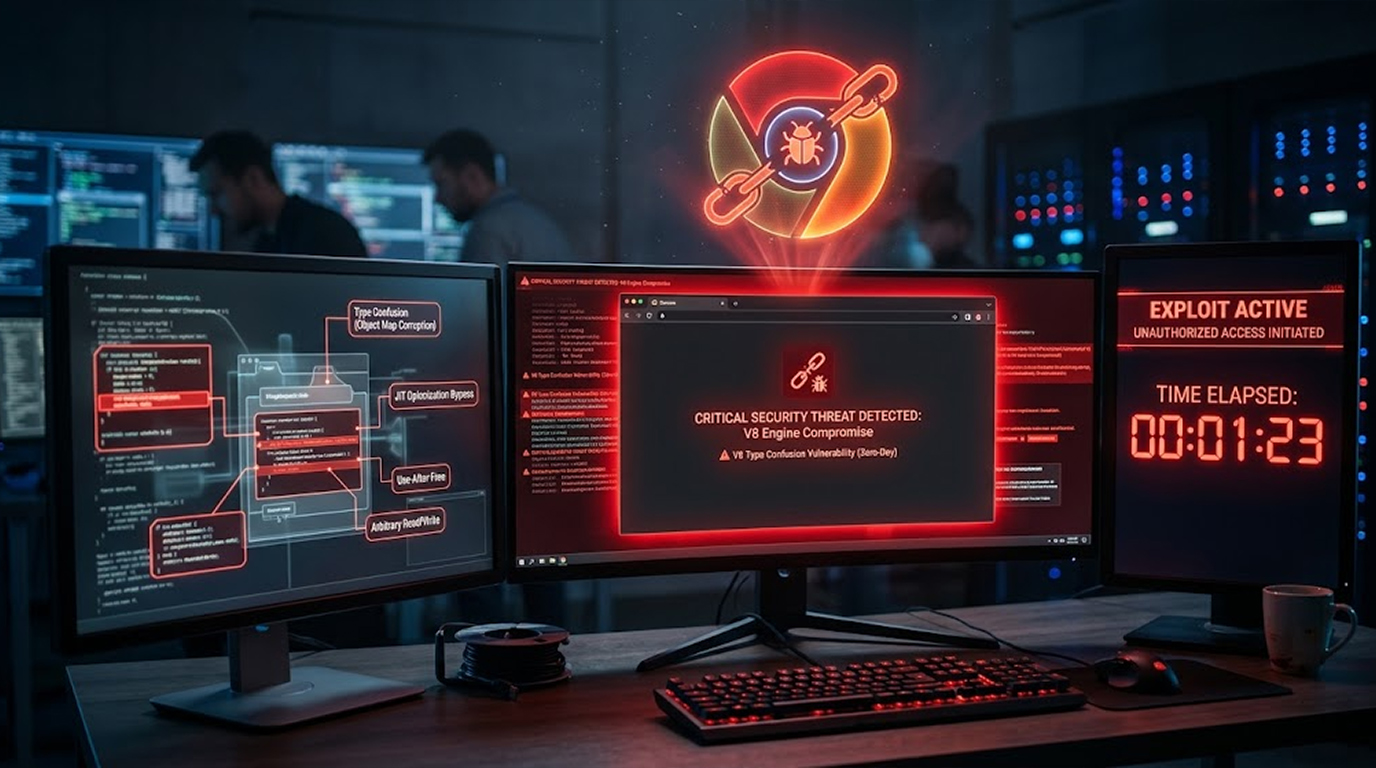
The FBI has established that threat actors tied to North Korea stole more than $400 million worth of cryptocurrency over the last 18 months through a social engineering scheme codenamed FaceStealer.
As part of a coordinated set of government actions, the cloud infrastructure behind the campaign has been seized. The FBI described the operation as "hard-to-detect."
Separately, the Department of Justice announced the court-authorized seizure and restraint of more than $1.2 billion in cryptocurrency recently stolen by TraderTraitor actors following the Binance hack. The DOJ said those assets fund Pyongyang's illicit weapons program.
The Numbers From the FBI
FBI Cyber Branch Operations Director Brett Leatherman stated the position directly. The North Korean regime relies on large-scale cryptocurrency theft to fund its illicit weapons program, stealing billions in recent years. North Korean actors have used FaceStealer to aggressively target individuals in crypto and Web3, resulting in more than $400 million stolen in 18 months.
The operation also yielded a significant intelligence seizure. More than 900 victim webcam video recordings used by the actors to impersonate victims in follow-on attacks have been taken by the FBI.
That number is the part worth sitting with. Nine hundred people were recorded, and each recording became the bait for the next set of victims.
Who Is Behind It
The activity is linked to BlueNoroff, a prolific North Korea-linked financially motivated cluster. It carries a long list of tracking names across the industry: APT38, CageyChameleon, CryptoCore, DangerousPassword, Nickel Gladstone, Sapphire Sleet, Stardust Chollima, and UNC1069.
BlueNoroff specifically targets people working in cryptocurrency and Web3, along with individuals involved in developing and maintaining open-source software.
That second target set is the one that worries supply chain defenders. Access to a developer's device and the repository accounts they control is access to software that thousands of organizations install without review.
How FaceStealer Actually Works
The scheme is a chain, and each stage feeds the next. It is self-propagating by design.
|
Stage |
What Happens |
|
1. Compromise |
Harvest wallets, seed phrases, and access; hijack Telegram; record the victim on video |
|
2. Impersonate |
Use the victim's Telegram to message their contacts with an investment opportunity |
|
3. Schedule |
Send a Calendly invite, then a typosquatted Zoom or Teams link |
|
4. Fake meeting |
Play the recorded webcam video of the trusted contact, plus deepfakes of other "participants" |
|
5. Infect |
Claim an audio or technical error, then send a ClickFix-style link or script |
|
6. Repeat |
New victim's device and accounts become the next launchpad |
The Meeting Itself
Targets are lured with invitations to video meetings, delivered from stolen accounts belonging to prior victims. That is why the invite looks real. It comes from someone the target knows.
When the target joins, their own video stream is recorded. At the same time, the attackers play an authentic, prerecorded webcam video of a previous victim, or of someone the target knows, to build trust.
The DOJ also noted the use of AI to generate deepfake videos of well-known and influential figures in crypto and Web3, which makes the scheme more effective in meetings with targets.
A few seconds into the call, a mock technical error appears. The victim is told they cannot be heard, and given a link to fix the non-existent problem.
That link is the payload. It is a ClickFix-style lure designed to install malware, steal cryptocurrency, and abuse the target's privileges to reach other infrastructure.
The Phishing Kit Behind It
JUMPSEC published an extensive report on the operation in July 2026, describing a phishing kit built to impersonate videoconferencing platforms including Zoom and Microsoft Teams.
The firm characterized FaceStealer as a victim acquisition platform, one that uses compromised trusted contacts as a pathway to fuel a self-propagating chain via Telegram.
Account hijacking extends well beyond Telegram. The attackers take over LinkedIn, Slack, and Discord for extended periods, then mine the victim's contact list to target both personal and professional circles.
The typosquatted meeting links are worth noting as a specific indicator. JUMPSEC documented uu01webzoom[.]us for Zoom and teams.livemeet[.]us for Teams.
The AI Component
The campaign incorporates generative AI from several sources, including ChatGPT, Google's tools, Grok, and Wondershare AI Content Generator.
Arctic Wolf described what those tools produce: artwork, avatars, and convincing synthetic participant videos. Headshot images generated with ChatGPT are used as static avatar placeholders on fake calls.
The reconnaissance has also matured. Arctic Wolf noted that lure material is scraped not just from profile photos and prior victims' webcam streams, but from YouTube interviews and conference talks, which the actor screen-records.
That is the escalation worth naming. An attacker no longer needs to compromise a founder or CEO to impersonate them on video. A recorded conference talk is enough.
The Target Profile
Arctic Wolf's April 2026 report counted more than 400 victims across 20-plus countries, concentrated in the U.S., Singapore, the U.K., Hong Kong, South Korea, and the U.A.E.
The composition of that target set is striking.
|
Category |
Share of Targets |
|
Cryptocurrency/blockchain finance |
54% |
|
Adjacent finance and investment |
26% |
|
CEOs and founders |
45% |
By the time Arctic Wolf published an update, the campaign had expanded to 677 targets across 58 countries, with more than 80% founders and C-suite executives.
The Axios Incident
The FaceStealer scheme was used earlier this year against the maintainer of the popular Axios npm package, in an attempt to push a trojanized version that delivered a cross-platform remote access trojan.
That is the supply chain risk in concrete form. A social engineering campaign aimed at a package maintainer is not an attack on one person. It is an attack on everyone who runs npm install.
The FBI said it is aware of several other attempts by North Korean hackers to target software developers, maintainers, and software libraries with significant download volume.
FaceStealer Is Not Contagious Interview
These get conflated, and the distinction matters for defenders because the delivery mechanisms differ.
FaceStealer is a video-meeting impersonation scheme that ends in a ClickFix-style lure.
Contagious Interview, and its iteration ClickFake Interview, is recruitment-themed. Attackers pose as recruiters on LinkedIn and share a "technical assessment" designed to execute malware.
The scale of Contagious Interview is significant. A joint advisory from Japan, the U.S., Australia, and Germany in late September 2026 estimated the campaign had compromised at least 30,000 devices across 100 countries.
The Delivery Methods
- Malware embedded in coding tests, repositories, or packages victims are asked to run
- VS Code tasks.json files that auto-execute when a project opens
- .githooks/pre-commit and post-checkout scripts that fire on first commit or branch change
- Trojanized macOS utility installers delivering OtterCookie via a shell script downloader
The Sophos Incident
Sophos disclosed that an employee's corporate macOS device was compromised in mid-September 2026 after they cloned a public repository presented as a job interview coding assignment and opened it in VS Code.
The repository contained a weaponized workspace settings file that replaced the editor's integrated terminal profile. When a terminal opened, the modified profile silently downloaded and ran a multi-stage payload.
The payload was BeaverTail, a JavaScript loader used to deliver a Python backdoor called InvisibleFerret. Sophos said the malware ran in memory for roughly 26 hours, from execution on September 14 until a reboot the next day. It did not affect Sophos products, services, or customer data.
The AccuraSoftHire Decoy
JFrog found that the actors behind Contagious Interview built a decoy company called AccuraSoftHire, complete with a careers site, client testimonials, a LinkedIn page, job ads on mainstream boards, and verified recruiters.
Guy Korolevski of JFrog Security Research put the problem plainly. These lures are built to pass the checks people rely on. A professional website, a LinkedIn page, job ads on mainstream boards, and recruiters with LinkedIn's verified badge.
His guidance for employers is the practical takeaway. Developers cannot be expected to catch that on their own, so employers need to set the rules. Interview assignments with downloads should only run in a disposable VM, never on a work laptop.
What Defenders Should Do
- Assume a video call can be faked. Verify meeting invitations through a second channel. If a contact sends a Zoom link over Telegram, call them on a number you already had.
- Watch for the audio-error pretext. A sudden claim that you cannot be heard, followed by a link to fix it, is the signature. Close the meeting and verify separately.
- Block the typosquat domains. uu01webzoom[.]us and teams.livemeet[.]us are documented infrastructure.
- Treat coding assessments as hostile until proven otherwise. Run them in a disposable VM. Never on a machine with credentials, wallets, or repository access.
- Inspect VS Code workspace settings. .vscode/tasks.json and terminal profile overrides are the documented execution path.
- Review git hooks before running anything. .githooks/pre-commit and post-checkout scripts execute on normal operations.
- Restrict Telegram, Slack, and Discord on managed endpoints where policy allows. These are the account takeover targets and the delivery channels.
- Protect package maintainers specifically. If anyone on your team maintains a widely used library, they need targeted briefing and separate credentials for maintainer work.
- Rotate anything reachable from a compromised machine. Wallet keys and seed phrases first, then repository tokens and session credentials.
- Educate on the target profile. Founders, C-suite, and crypto-adjacent finance staff are the highest-value targets. Brief them differently than general staff.
FAQ
What is FaceStealer?
A North Korea-linked social engineering scheme that uses recorded video and deepfakes to impersonate trusted contacts during fake video meetings, then delivers malware through a fake technical fix. The FBI says it has stolen more than $400 million over 18 months.
How does the fake meeting work?
The attacker hijacks a victim's Telegram account and messages their contacts. If the contact agrees to a meeting, they receive a typosquatted Zoom or Teams link. On the call, a pre-recorded video of the trusted contact plays, along with deepfakes of other participants. A few seconds in, the target is told there is an audio problem and given a malicious link.
Who is BlueNoroff?
A North Korea-linked financially motivated threat cluster. It is tracked under many names, including APT38, CryptoCore, Sapphire Sleet, Stardust Chollima, and UNC1069.
What did the FBI seize?
The cloud infrastructure behind the campaign, and more than 900 victim webcam recordings used to impersonate people in follow-on attacks.
What is the $1.2 billion figure?
That is a separate DOJ action. It announced the seizure and restraint of more than $1.2 billion in cryptocurrency stolen by TraderTraitor actors after the Binance hack. It is not the FaceStealer total.
Is FaceStealer the same as Contagious Interview?
No. FaceStealer is video-meeting impersonation. Contagious Interview is recruitment-themed, using fake job offers and coding assessments. Both are North Korea-linked and both use ClickFix-style tactics, but the delivery paths differ.
How large is Contagious Interview?
A joint advisory from Japan, the U.S., Australia, and Germany in September 2026 estimated at least 30,000 compromised devices across 100 countries.
What happened with the Axios npm package?
FaceStealer was used against the maintainer of the Axios npm package in an attempt to push a trojanized version delivering a cross-platform remote access trojan.
What is the Sophos incident?
An employee's macOS device was compromised after they opened a job-interview repository in VS Code. A weaponized workspace settings file replaced the terminal profile and ran BeaverTail, which delivered the InvisibleFerret backdoor. It ran in memory for about 26 hours.
What should I do if I receive a suspicious meeting invite?
Verify through a second channel you already trust. Do not use the contact details in the message. If the call reports an audio issue and asks you to run a fix, close it.
How do I protect developers from fake interviews?
Run interview assignments in a disposable VM. Check .vscode/tasks.json, git hooks, and terminal profile settings before executing anything. Warn staff that a verified LinkedIn recruiter and a professional website prove nothing.