In 2026 the phrase “deepfake diplomat” is no longer a thought experiment or conference panel topic. It has appeared in real diplomatic cables, and emergency hotline calls, so far this year. The technology has crossed the line from “possible” to “happening,” and the same voice-cloning tools that ignite crises are now sometimes used within hours to help extinguish them.
Here’s how the most dangerous plays are unfolding right now, based on what has actually been documented in open-source intelligence and declassified summaries.
The Classic “Angry Ally” Call
This is the most repeated pattern so far in 2026:
1. A mid-level foreign ministry official or ambassador receives a short, furious phone call late at night (2–4 a.m. local time, when the recipient is drowsy and less likely to verify).
2. The voice on the line is a near-perfect clone of a senior politician (foreign minister, head of defense, president).
3. The script is short, culturally tuned, and escalatory: accusations of a recent border incident, demands to stop provocative actions, and a veiled military threat (“we will have no choice but to respond”).
4. Caller ID is spoofed to look legitimate.
5. Goal: provoke an immediate over-reaction (public statement, troop alert, cancelled talks) that creates a new crisis window.
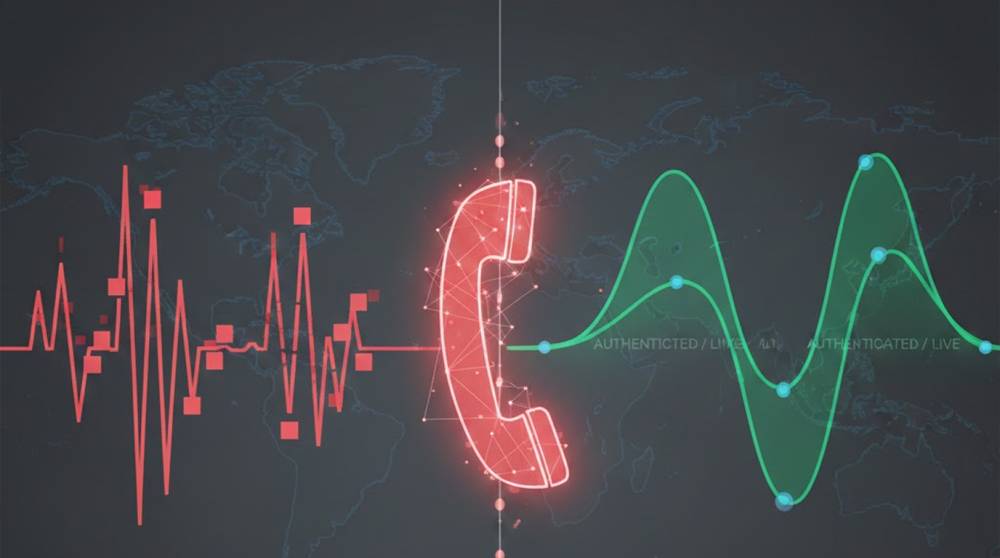
In one documented case this year, the call triggered a strong public response from the receiving side, which was then used to justify military posturing. The other side denied the call ever happened, and voice-forensic analysis later showed clear synthetic markers (spectral anomalies, unnatural intonation shifts).
The “False Order” Play
Higher risk, lower frequency so far:
1. The cloned voice belongs to a military commander or head of state.
2. The message is a direct order to a field unit or missile brigade (“immediate stand-down” or, conversely, “prepare for launch”).
3. Often paired with forged text messages or emails from the same cloned voice source for reinforcement.
In a border-zone incident earlier this year, a forward artillery unit received a brief voice call matching their brigade commander’s voiceprint ordering a 5 km withdrawal. The unit began complying, creating a temporary vulnerability that was almost exploited. Post-incident forensics confirmed the call originated from a residential VoIP provider in a third country; the voice model had been trained on roughly 40 minutes of public speeches.
The “De-escalation Deepfake” Counter-Play (Still Rare but Growing)
Sometimes the same technology is used to defuse the crisis it helped create:
1. After an inflammatory deepfake call causes panic, the real official appears in a live broadcast with visible liveness markers (watermarking, eye-blink analysis, timestamp verification) to deny the call and calm the situation.
2. The attacker may then counter with their own deepfake “clarification” video of the same official “walking back” the statement.
3. The victim side quickly releases forensic proof → the second deepfake is debunked within minutes by open-source tools and public fact-checkers → crisis contained.
What Has Changed in 2026
1. Advances in voice technology have made it possible to create accurate simulated voices by just taking a few minutes of recording.
2. The time it takes to change someone's voice to simulation mode so that it sounds like them in the original recording is less than three hundred milliseconds.
3. There are many multimodal impersonators available now (both in terms of audio/video).
4. Most publicly available detection software still significantly underperforms due to the fact that the majority of publicly available open source fake/real fake detectors do not detect real fake voices accurately at this time (> 60-80% accurate).
Practical Steps Being Taken Right Now
1. Mandatory voice watermarking in official recordings (invisible audio markers similar to image SynthID).
2. Real-time challenge-response on high-risk calls (“repeat this random phrase right now”).
3. Dedicated encrypted video hotlines with cryptographic signatures for top officials.
4. Public release of official voice samples + spectral signatures so fakes can be disproved quickly.
5. Training programs for officials: “If you receive an urgent call from leadership asking for codes, actions, or changes , hang up and call back on a known number.”
The era of “he said / she said” diplomacy is ending. In 2026 the first question after any inflammatory statement is no longer “Did they really say that?” it’s “Is that voice real?” And the answer is now often determined in under five minutes.