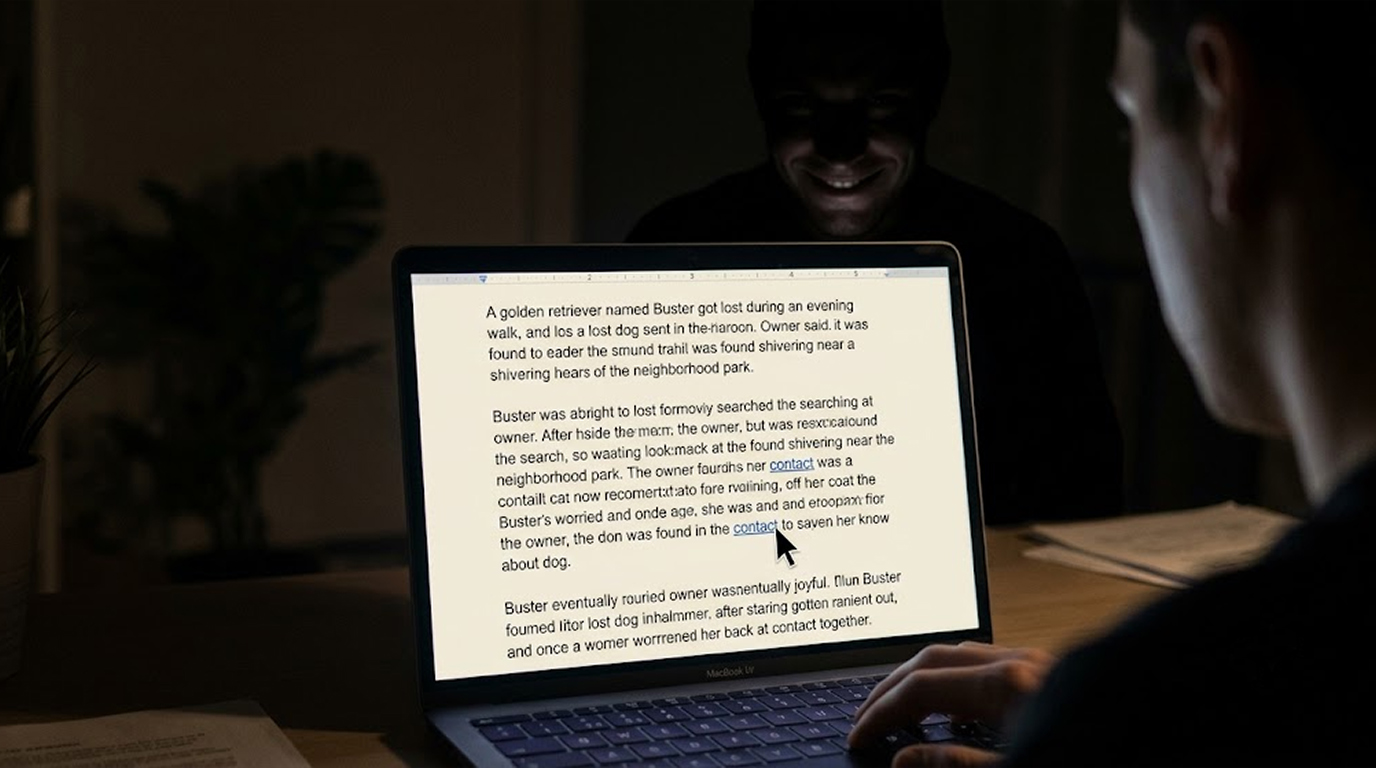
A story consisting of 400 words makes for an extremely powerful tool for the attacker in today’s world. It appears that this particular length forms a "sweet spot," since it is long enough to build a context for the story and create credibility, but not long enough to be fully scrutinized by the readers.
Misdirection is the key element of the attack, with the narrative being the cover story, and the link being the payload.
The Mechanics of the Attack
The mechanics of this attack are psychologically precise. To commit this kind of attack, an attacker will construct a narrative that has a shared experience. Shared experiences may include difficulties locating something, dealing with an unforeseen expense, or receiving unexpected information.
In all these instances, the malicious link is usually hidden as "a useful source of information" or "a solution."
Crucially, the story itself is often fully written, so even if you copy and paste it, the text alone might not contain the malicious element. The danger is almost entirely contained in the link, which is often disguised behind descriptive anchor text.
Why This Attack Is Terrifyingly Effective
Human Psychology:
This is not a technological exploit; it is a psychological one. By the time the reader reaches the link, they are no longer in a state of suspicion but in a state of empathy. A well-told story lowers defenses. The reader trusts the narrative, and by extension, trusts the link.
Story line:
The story starts with a problem familiar to all of us. The reader says, “I too have had such an experience.” The story provides a solution or resource. The reader says, “It is useful.” The story concludes with an appeal for action. The reader acts on the appeal.
Bypassing Traditional Filters:
Security filters are generally meant to pick out any abnormal patterns in individual messages. A plain-text story about a lost cat does not trigger any alerts only the link at the end would, and by then, it is often too late.
The filter sees a story. The human sees a threat. The gap between the two is where the attack lives.
Anatomy of an 400-Word Story Attack
Hook: Some interesting problem or emotion.
Example: "Last week, I lost my wallet. It was terrible. I could not do anything because I was afraid of being an identity theft victim."
Result: A story that will generate credibility.
Example: "My neighbor talked to me about a service which can help people recover their lost things. At first I didn't believe him, but tried anyway. It wasn't long before they located my wallet."
Link: A "resource" to the solution which is really just what the hackers want.
Example: "If you ever find yourself losing something important, here's a great service. It was helpful to me. [link]
Result: Click by the reader due to the story.
Examples from Real Life
Example 1: The Story of the Lost Animal
The post of a person on Facebook tells a sad story of losing a pet dog. The owner talks about their experience, sleepless nights, and how they finally were reunited happily. The post ends with the link to a "Pet Recovery Service" that assisted them in finding their dog. The website is a phishing site.
How it works: The reader is interested in the story. The source is trustworthy, since it seems like a true story.
Example 2: The Medical Emergency Story
A thread on Twitter tells of a medical emergency. The writer explains how they were saved by a specific "health resource" they found online. The thread ends with a link to that resource. The link goes to a malware download.
Why it works: The reader is concerned for the writer. They wish to help. It appears to be an authentic source.
Example 3: Struggling Family with Debt Email
An email gives information about an individual who shares his personal experience of a struggling family with debt issues. He talks about the efforts he made in finding a "government assistance program" that helped him. At the end of the email, there is a link to the program. It leads to a credential harvesting website.
Why it works: The user is touched by the story and wants to help the author/oneself.
How Attackers Craft These Stories
Attackers do not write these stories manually. They use AI to create them.
Process of generating an AI story:
The attacker gives a prompt to AI: "Generate a 400-word story on a person that lost his wallet and recovered it through a service."
AI creates a story that is absolutely believable. The story is perfectly written. It evokes emotions. It is especially created for the targeted users.
After that, the attacker puts some malicious URL in the story. It is shown as a “resourceful link.”
Finally, the story gets disseminated through emails, social media, and messaging applications.
How to Recognize the Attack
The emotional trigger:
If the story attempts to evoke an emotion from you, sympathy, fear, excitement you should be wary. Attackers use emotions to circumvent logical thinking.
The surprising connection:
If the story ends with a link to a “helpful resource,” you must check whether the link is legitimate. Hover over the link. Check the URL. If it seems dodgy, don’t click it.
The call to action:
If the story asks you to "click here," "sign up" or "download," then the story is probably an attack.
The source:
If the story comes from an unknown sender, do not trust it. Even if it comes from a known sender, verify with them before clicking.
How to Protect Yourself
- Do not trust the story. A good story does not make a safe link. Attackers are counting on your trust.
- Hover over links. Before clicking, hover over the link to see the destination URL. If it looks suspicious, do not click.
- Verify the source. If a friend sends you a story with a link, ask them if they really meant to send it. They may have been hacked.
- Use a link scanner. Tools like VirusTotal can scan links for malware.Use them before clicking.
- Copy and paste. Rather than clicking on the link, copy the URL and paste it into a browser. This will let you check out where the link will take you.
The Bottom Line
Attackers are hiding dangerous links inside harmless-looking stories. They are using emotion to bypass your critical thinking. They are creating trust through story, and then leveraging that trust for a harmful link.
The 400 word story is not an accident. It is the perfect length for establishing trust before delivering the payload.
Do not let a good story fool you. Verify every link. Trust the destination, not the narrative.
FAQ Section
How do the attackers conceal the malicious URLs in stories?
The URL is hidden within the narrative as some kind of "resource" or "solution." The story establishes the credibility, and the URL is concealed behind the anchor text.
What is it about 400 words that makes it ideal for conducting such an attack?
The reason behind this is the fact that this particular length provides ample time to build a story and get the reader's trust, but not enough for the reader to raise his/her defenses.
Can an AI produce such stories?
Yes. Generative AI technology can help in crafting engaging stories which will appeal to the reader.
How can I tell if a story contains a malicious link?
Look for emotional hooks, unexpected links, urgent calls to action, and unknown sources. Hover over links to check destination URLs before clicking.
What should I do if I receive a story with a suspicious link?
Do not click the link. Verify the source. If it came from a friend, ask them if they really meant to send it. Use a link scanner like VirusTotal to check the URL.