There is a version of credential hunting that most teams still picture in their heads, it involves a person, a lot of manual searching, some guesswork, and a slow accumulation of findings over weeks.
That version is out of date.
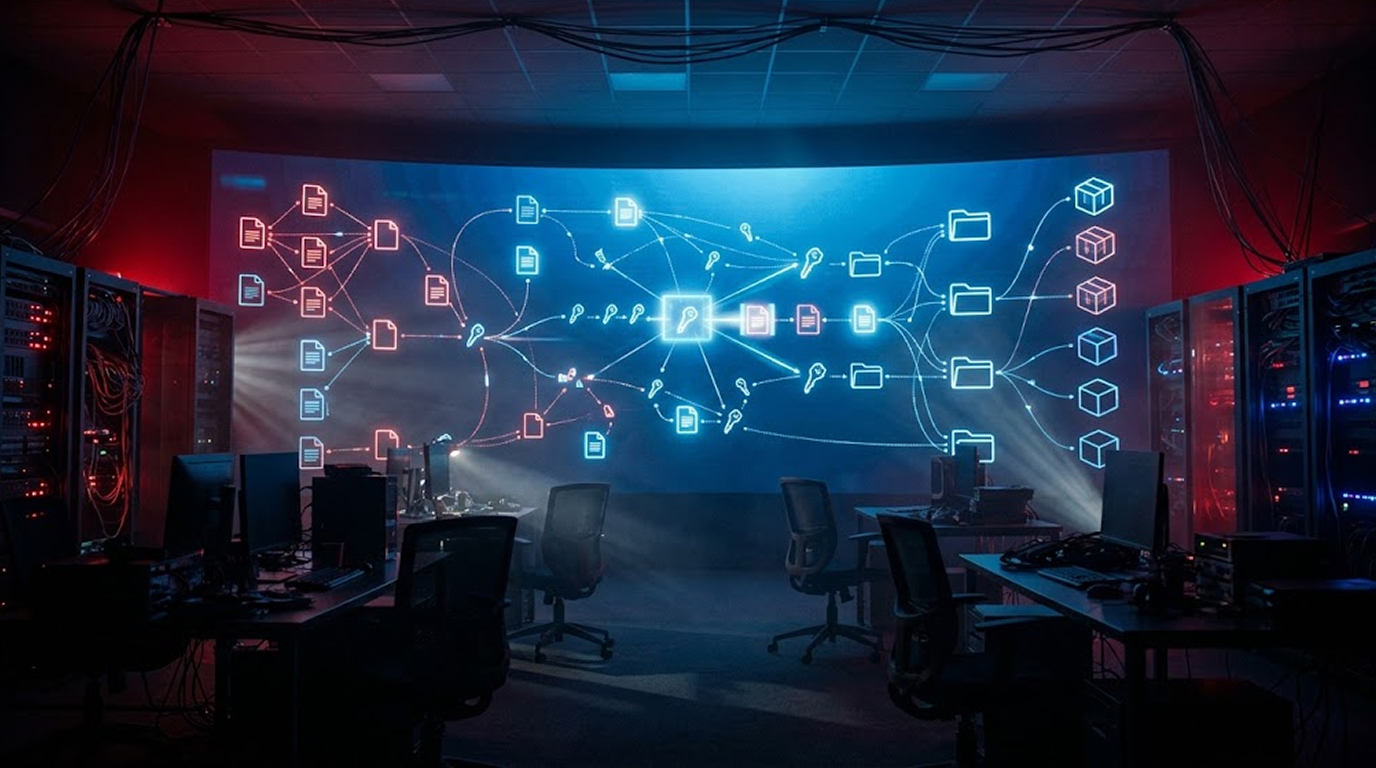
What actually happens now looks much more like a search engine, an AI system is pointed at a target, it reasons about where secrets are likely to live, it prioritizes the most promising paths, and it surfaces candidate tokens in minutes, not weeks.
This is AI-powered credential discovery, and it changes the economics of finding secrets.
Important Disclaimer
This article is intended for educational and defensive purposes only, the techniques described here are shared to help security professionals understand emerging threats so they can better protect their systems.
Do not use these techniques against systems you do not own or do not have explicit written permission to test, unauthorized testing is illegal in most jurisdictions.
The author assumes no liability for any damages, legal consequences, or other outcomes resulting from the use or misuse of this information, always obtain proper authorization before conducting any security testing, and stay legal, stay ethical, stay responsible.
Why Tokens Are the Prize
Passwords get most of the attention, tokens get most of the value.
A password usually needs a second factor, a device, and a login flow. A token needs none of that, it is a bearer credential, whoever holds it is treated as the legitimate user until it expires or gets revoked.
That makes token discovery a much better use of an attacker's time, and it is the reason AI-powered reconnaissance focuses on tokens rather than passwords.
The most valuable targets are predictable:
- Personal access tokens for source control platforms
- Cloud provider access keys and session tokens
- OAuth client secrets and refresh tokens
- CI/CD pipeline credentials
- API keys for SaaS integrations
- Service account tokens with broad scopes
Each one is a key, and each one is somewhere in your environment, often in places nobody is watching.
What AI Brings to Credential Discovery
Manual credential hunting has three limits, it is slow, it is shallow, and it does not scale.
AI removes all three.
Reasoning About Where to Look
A human hunter learns a few patterns and applies them repeatedly. An AI system builds a model of the target, it reasons about what kind of organization this is, what tools they likely use, what their deployment patterns probably look like, and it generates hypotheses about where credentials are most likely to be exposed.
That reasoning is what turns a random search into a prioritized campaign, instead of scanning everything equally, the AI ranks targets by likelihood of a quick win.
Pattern Recognition Beyond Regex
Classic secret scanning relies on regular expressions, a known prefix, a known format, a known length. That works until someone changes the format or uses a service the scanner does not know about.
AI systems recognize secrets by context and by behavior, not just by pattern, a string that looks like an API key in a config file, next to a service name, in a repository that talks to that service, is a candidate even if it does not match any known pattern.
That reduces false negatives dramatically and lets the AI find secrets in environments nobody has written rules for yet.
Scale Across Sources
A human can review a handful of repositories, a handful of public buckets, a handful of paste sites. An AI system can process thousands of sources in parallel and correlate across all of them.
The scope of the search is what makes the difference, secrets that leak in one place often appear in another, and correlation is where AI shines.
Prioritization and Validation
Finding a candidate string is not the same as finding a working credential. AI systems can rank candidates by likelihood of being live, they can check whether a token is still valid, and they can avoid wasting effort on dead ends.
For defenders, this means the gap between exposure and exploitation is shrinking.
Where AI Looks First
The AI does not guess randomly, it works through a fairly consistent priority list, and understanding that list tells you where to focus your defenses.
Public Code Repositories
Source code is the richest source of leaked tokens, developers commit secrets by accident, they hardcode keys into test scripts, they leave tokens in configuration files that get pushed to public repos, and they forget to rotate them.
AI systems scan commit history, not just current state, a secret that was removed in a later commit is still exposed if the commit is public.
Container Images and Build Artifacts
Docker images and build artifacts frequently contain environment variables, config files, and cached credentials, layers are preserved, and anything baked into an image stays there.
AI systems can unpack images and analyze layers at scale, which is why image registries are a common early stop in a credential hunt.
CI/CD Configurations and Logs
Pipelines need credentials to deploy, and pipelines are often sloppy about handling them, tokens end up in build logs, in environment files, in variable definitions that are less protected than production secrets.
Cloud Storage and Misconfigured Buckets
Open buckets are still common, and AI systems are good at finding them, they look for naming patterns, they test for public access, and they enumerate contents quickly.
Documentation, Wikis, and Tickets
Internal documentation is a goldmine, onboarding guides, runbooks, and tickets often contain example tokens, real tokens, or references to where tokens live.
Paste Sites and Leak Forums
Data from previous breaches circulates for years, AI systems ingest these sources and correlate them against the target, a token leaked three years ago might still be valid.
Browser Storage and Endpoints
On the endpoint side, AI-powered tooling can parse browser storage, application caches, and local config files, this is the intersection of reconnaissance and malware, and it is where the line between scanning and compromise blurs.
Real Scenarios
Scenario 1: The Repository Sweep
The Setup
A startup has a public GitHub organization with thirty repositories, most are open source, a few contain internal tooling that was accidentally made public.
The Attack
An AI-powered reconnaissance tool is pointed at the organization, it clones the repos, it analyzes commit history, it correlates strings against known token formats and service patterns, and it flags candidates.
The Result
A live personal access token from an old developer who left the company eighteen months ago is found in a deleted branch, the token still has read access to private repositories, the attacker uses it to clone internal code.
The Lesson
Deleted commits are not deleted, and tokens outlive the people who created them.
Scenario 2: The Ticket Trail
The Setup
An engineering team uses a ticketing system for all internal work, tickets are accessible to all employees, and nobody thinks of them as sensitive.
The Attack
An AI system ingests the ticket corpus, it looks for token-shaped strings and for context that suggests credentials, it finds a support ticket where an engineer pasted a full API key while debugging an integration.
The Result
The attacker uses the API key to access a third party service, the service has weak logging, and the abuse goes unnoticed for weeks.
The Lesson
Internal systems are not automatically safe, and the assumption that "it is only internal" is exactly what makes them attractive.
Scenario 3: The Endpoint Harvest
The Setup
An attacker gains a foothold on a developer laptop through a malicious dependency.
The Attack
An AI-powered tool runs locally, it reasons about where credentials are likely to be stored on this type of machine, it parses browser storage, it inspects application configs, it looks at environment variables, and it extracts tokens.
The Result
The attacker now holds live tokens for source control, cloud, and SaaS applications, all of which were authenticated on that machine, none of which required a password to steal.
The Lesson
The endpoint is a credential store, and it is the most direct path to live tokens.
Why This Is Hard to Defend Against
The uncomfortable truth is that AI credential discovery exploits a structural weakness, secrets end up in more places than any team can track.
Repositories accumulate history, images accumulate layers, tickets accumulate examples, and each of those places is a potential leak.
The defense is not to be perfect, the defense is to reduce the number of places secrets can live, to shorten the window in which a leaked secret is useful, and to detect when a secret is used from a context it should not be.
Defensive Controls That Actually Help
1. Assume Something Is Already Leaked
Every organization of any size has at least one exposed secret somewhere, plan for that reality instead of assuming cleanliness.
2. Rotate Everything on a Schedule
Rotation limits the useful life of a leaked credential, if a token leaks and is rotated within days, the attacker's window is small.
3. Prefer Short-Lived Credentials
Workload identity, short-lived tokens, and just-in-time access reduce exposure dramatically, a credential that expires in minutes is much less valuable than one that lasts for months.
4. Scan Your Own Repositories Continuously
Use secret scanning that runs on every commit and over full history, the same tools attackers use are available to defenders, use them first.
5. Scan Images and Artifacts
Image scanning is required for the build pipeline, secrets cannot be included in layers, and registry permissions must be verified.
6. Secure Internal Infrastructure
Tickets, wiki, and other documents need to be treated as sensitive, and their permissions as well as their content need to be scanned for secrets.
7. Monitor for Anomalous Token Use
Correlate token usage by IP, geography, device, and user agent, a token used from an unexpected context is a signal, even if the token itself is valid.
8. Provide a Fast Revocation Path
Know how to revoke tokens per user, per service, and globally, and practice it, minutes matter when a credential is exposed.
9. Train Developers on Secret Hygiene
No hardcoded secrets, no tokens in tickets, no keys in images, use secret managers, use environment injection at runtime, and treat every commit as public.
10. Reduce the Blast Radius of Every Token
Scope tokens to the minimum required, avoid long-lived broad-scope tokens, and separate credentials by environment.
Quick Reference: AI Credential Discovery Defense Checklist
|
Control |
Why It Matters |
|
Assume leaked |
Removes false confidence |
|
Scheduled rotation |
Limits useful life of leaked secrets |
|
Short-lived credentials |
Reduces value of any single leak |
|
Repository scanning |
Catches exposure before attackers do |
|
Image scanning |
Prevents secrets in build artifacts |
|
Internal system controls |
Closes the "only internal" blind spot |
|
Token use monitoring |
Detects replay and misuse |
|
Fast revocation |
Ends exposure quickly |
|
Developer training |
Reduces accidental leaks |
|
Least privilege scoping |
Limits blast radius |
The Bottom Line
AI-powered credential discovery is not a future threat, it is the current state of reconnaissance, it reasons about where secrets are likely to live, it correlates across sources, and it prioritizes the fastest path to a working credential.
The defense is not to hide better, the defense is to reduce the number of places secrets can exist, shorten the time they are useful, and detect when they are used from somewhere they should not be.
Assume something is already exposed, rotate it, scope it, and watch how it is used.
The AI is already looking, make sure what it finds is not worth anything.
FAQ Section
What is AI-powered credential discovery?
It is the use of AI systems to find exposed tokens and secrets across repositories, images, logs, internal systems, and endpoints, with reasoning and prioritization rather than simple pattern matching.
Why do attackers target tokens instead of passwords?
Tokens are bearer credentials, they bypass MFA and login flows, and whoever holds a valid token is treated as the legitimate user.
In what locations are tokens usually leaked from?
Publicly available code repositories, container images, build logs, CI/CD configuration, cloud storage, internal documents, tickets and paste sites.
Are AI capable of identifying secrets which do not fit patterns?
Yes, AI systems utilize the context and behavior of secrets rather than regular expressions, therefore, lowering the number of false negatives.
How do I know if my organization has exposed tokens?
Run continuous secret scanning across repositories and history, scan container images, review internal systems, and monitor for anomalous token use.
What is the best possible method of defense?
A secret that expires in just a few minutes after being compromised is certainly much safer than one that remains valid for several months.