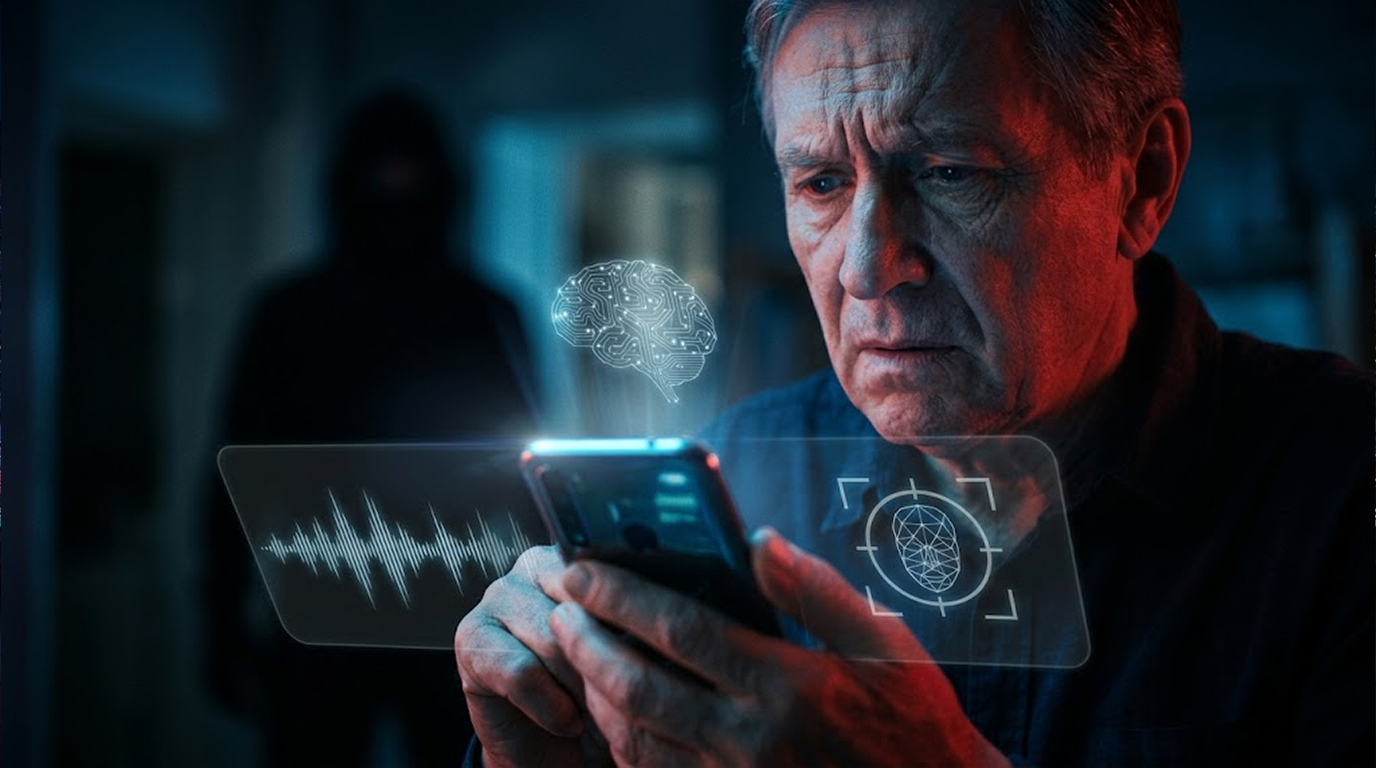
You receive a phone call. The voice on the other end sounds exactly like your grandson. He is scared. He says he is in trouble and needs money fast. You panic. You want to help.
But something is not right.
That voice is not your grandson. It was generated by AI. It was trained on a few seconds of audio scraped from social media. And you are the target of a new kind of attack designed specifically for older adults.
This is the reality of AI-powered elder fraud. And it is getting worse.
Important Disclaimer
This article is intended for educational and defensive purposes only. The techniques described here are shared to help security professionals and families understand emerging threats so they can better protect their loved ones.
Do not use these techniques against systems you do not own or do not have explicit written permission to test. Unauthorized testing is illegal in most jurisdictions.
The author assumes no liability for any damages, legal consequences, or other outcomes resulting from the use or misuse of this information. Always obtain proper authorization before conducting any security testing. Stay legal. Stay ethical. Stay responsible.
Why Older Adults Are Targeted
Older adults are not targeted because they are naive. They are targeted because they are vulnerable in specific ways that AI is perfectly suited to exploit.
They Have Money
Many older adults have accumulated significant savings over their lifetimes. They own homes. They have retirement accounts. They have pensions. They are attractive targets for financial fraud.
They Are Less Familiar With AI
Many older adults did not grow up with the internet. They are less familiar with how AI works. They may not know that voices can be cloned. They may not know that videos can be faked. They may not know that emails can be generated by machines.
This lack of familiarity makes them vulnerable to AI-powered deception.
They Are Often Isolated
Isolation is a major risk factor. Older adults who live alone may have fewer people to consult with. They may not have a family member nearby to ask, "Does this seem right?"
Attackers exploit this isolation. They build trust. They become the person the victim turns to.
They Trust Authority
Older adults are more likely to trust authority figures. They trust the government. They trust the police. They trust doctors.
AI can impersonate all of these. It can generate realistic emails from government agencies. It can clone the voice of a police officer. It can create fake medical alerts.
This trust is exploited.
How AI Identifies Older Adults
AI is not just a tool for executing attacks. It is a tool for finding targets.
Data Mining for Demographics
AI can analyze vast amounts of data to identify older adults. Public records. Social media profiles. Consumer databases. Marketing lists.
The AI looks for signals. Date of birth. Retirement status. Homeownership. Life events like the loss of a spouse.
These are signs of vulnerability.
Social Media Analysis
The AI collects information from social media about older adults. It looks at photos of grandchildren. Posts about retirement. Check-ins at senior centers. Mentions of health issues.
This information builds a profile. The attacker has knowledge about whom to attack and the way of attacking them.
Voice and Writing Analysis
AI can analyze voices and written samples for determining one's age. Older adults may have different speech patterns. They may use different vocabulary. They may write differently.
This analysis helps attackers craft messages that resonate.
Behavioral Profiling
AI monitors online behavior. What websites do older adults visit? What emails do they open? What links do they click?
This behavioral profile guides the attack. The attacker knows what kind of message will get a response.
How AI Exploits Older Adults
Once a target is identified, AI makes the attack more effective.
Voice Cloning
AI can clone a voice from just a few seconds of audio. This technology is readily available. It is easy to use.
Attackers clone the voice of a loved one. They call the victim. They pretend to be a grandchild in trouble. They ask for money.
The victim hears a familiar voice. They want to help. They act before they think.
This is called the "grandparent scam." AI makes it devastatingly effective.
Deepfake Videos
AI can create fake videos. It can make it appear that a trusted figure is saying something they never said.
Attackers create deepfakes of celebrities endorsing fake products. They create deepfakes of government officials making announcements. They create deepfakes of family members asking for help.
Older adults may not know that these videos are fake. They see a familiar face. They believe the message.
AI-Generated Phishing Emails
AI generates phishing emails that are grammatically correct, contextually relevant, and personalized. They do not have the spelling mistakes that used to give phishing away.
The AI can write an email that sounds exactly like it came from a bank. Or a doctor's office. Or a government agency.
Older adults may not recognize the signs of phishing. They may click the link. They may provide their information.
AI-Powered Chatbots
AI can power chatbots that engage older adults in conversation. The chatbot builds trust. It answers questions. It provides "support."
Then it strikes. It asks for personal information. It asks for money. It convinces the victim to install remote access software.
The victim thinks they are talking to a helpful representative. They are talking to a machine.
The Psychology of AI-Powered Elder Fraud
AI does not just make attacks more convincing. It makes them more psychologically devastating.
Exploiting Loneliness
Older adults who are lonely are vulnerable to anyone who shows them attention. AI can simulate companionship. It can send messages. It can respond to messages. It can make the victim feel seen.
This emotional connection is exploited. The attacker becomes a "friend." Then they ask for money.
Creating Urgency
AI-generated messages often create a sense of urgency. "Your account will be closed." "Your grandchild is in jail." "You will lose your benefits."
This urgency short-circuits critical thinking. The victim acts without pausing to verify.
Isolating the Victim
Attackers use AI to isolate their targets. They tell the victim not to tell anyone. They say it is embarrassing. They say it will cause problems.
This isolation makes the victim more dependent on the attacker. It makes them less likely to seek help.
Building Trust Over Time
Some AI-powered attacks are not immediate. They are long cons. The AI builds trust over weeks or months. It sends messages. It asks questions. It learns about the victim.
Then it strikes. By then, the victim trusts the AI completely.
Real-Life Scenarios
Scenario 1: The Grandparents’ Scam
The Setup
Margaret is an elderly woman living by herself. David is her grandson attending college. She hasn’t seen him for many months now. She misses him.
The Attack
An attacker scrapes David's social media. He finds videos of David speaking. He uses AI to clone David's voice.
The attacker calls Margaret. The voice sounds exactly like David. He says he is in jail. He needs bail money. He says, "Please, Grandma, don't tell Mom."
Margaret is panicked. She goes to the bank. She withdraws $10,000. She wires it to the account the "bail bondsman" provides.
The Aftermath
Margaret tells her daughter what happened. Her daughter calls David. David is fine. He was never in jail.
Margaret has lost $10,000. She feels foolish. She feels violated. She is embarrassed to tell anyone else.
The Lesson
Voice cloning makes the grandparent scam more dangerous than ever.
Scenario 2: The Tech Support Scam
The Setup
An older man named Robert gets a pop-up on his computer. It says his computer is infected. It provides a phone number to call.
The Attack
Robert calls the number. He reaches an AI-powered chatbot. The chatbot sounds professional. It asks for remote access to his computer.
Robert grants access. The "technician" (actually an AI) shows him fake error messages. It says his computer is badly infected. It will cost $500 to fix.
Robert pays.
The Aftermath
The attacker now has access to Robert's computer. They steal his passwords. They access his bank account. They steal his identity.
Robert thought he was getting help. He was being robbed.
The Lesson
AI-powered chatbots make tech support scams more convincing and more dangerous.
Scenario 3: The Romance Scam
The Setup
An older woman named Susan is widowed. She is lonely. She joins an online dating site.
The Attack
She matches with a man named "James." James is charming and attentive. He sends messages every day. He asks about her life. He shares details about his own.
Susan falls in love.
But James is not real. James is an AI-generated person. His messages are written by the AI. This is because of the data that she has shared on herself through social media profiles.
Months after gaining her trust, James requests money. He says he needs it for a business emergency. Susan sends it without hesitation.
The Aftermath
Susan sends thousands of dollars over several months. Then James disappears. His profile is deleted. The phone number is disconnected.
Susan realizes she was scammed. She is heartbroken. She is ashamed.
The Lesson
AI can simulate companionship. It makes the romances scams more successful and more devastating.
How to Protect Older Adults
Protecting older adults from AI-powered exploitation requires a combination of education, technology, and vigilance.
1. Talk About the Threat
- Have open conversations with older family members. Explain that voices can be cloned. Videos can be faked. Emails can be generated by machines.
- Do not assume they already know. Many do not.
2. Create a Verification Plan
- Establish a code word or a verification question that only family members know. If someone calls claiming to be a family member in trouble, they must provide the code word.
- Do not rely on voice alone. Voice can be cloned.
3. Slow Down the Urgency
- Teach older adults to pause. Urgency is a tactic. If someone says you must act now, that is a red flag.
- Encourage them to hang up. Call the person back on a known number. Verify the request with another family member.
4. Monitoring of Accounts
Put alert notifications in your bank accounts and credit card account. Be cautious regarding any strange transaction activity.
5. Limit Public Information
Help older adults review their social media privacy settings. Limit what strangers can see. Do not post about grandchildren by name. Do not post about travel plans.
6. Use Call Blocking
Set up call blocking on their phone. Block unknown numbers. Use spam filters.
7. Install Security Software
Install reputable security software on their devices. Keep it updated. Enable automatic updates.
8. Stay Involved
Loneliness is a risk factor. Stay connected. Call regularly. Visit when you can. The more connected they are, the less vulnerable they are.
Quick Reference: Protecting Older Adults
|
Defense |
Action |
|
Education |
Talk about AI threats and scams |
|
Verification Plan |
Create a family code word |
|
Urgency Training |
Teach them to pause and verify |
|
Account Monitoring |
Set up alerts on bank accounts |
|
Privacy Settings |
Limit public information |
|
Call Blocking |
Block unknown numbers |
|
Security Software |
Install and update |
|
Connection |
Stay involved and engaged |
The Bottom Line
AI is making elder fraud more dangerous. It can identify older adults. It can clone voices. It can create deepfakes. It can generate personalized phishing messages. It can simulate companionship.
Older adults are targeted because they have money, they are less familiar with AI, they are often isolated, and they trust authority.
But we can protect them. We can educate them. We can create verification plans. We can monitor their accounts. We can stay connected.
Do not wait until your loved one is a victim. Start the conversation today.
FAQ Section
Why are older people scammed using AI?
Older people are scammed due to the presence of savings among them, their lack of familiarity with AI, isolation from others, and respect towards authority.
What is meant by voice cloning?
Voice cloning is an AI technology used by scammers to generate a clone of somebody’s voice based on a small voice sample.
What is grandparent scam?
The grandparent scam is a trick where the scammer pretends to be somebody’s grandchild who got into some troubles and needs money. AI makes this scam more convincing through voice cloning.
How can I protect my parents from being scammed through AI?
Educate them on AI scams. Set up a a family code. Educate them on how to stop and check. Monitor their accounts. Stay in contact.
What is to be done if my parent becomes a victim of a scam?
Notify the bank immediately. Notify the police about the scam. Notify the FTC. Be supportive emotionally. Do not blame them.
Can AI-generated videos be detected?
Sometimes. But detection is getting harder as AI improves. The best defense is verification through a separate channel.