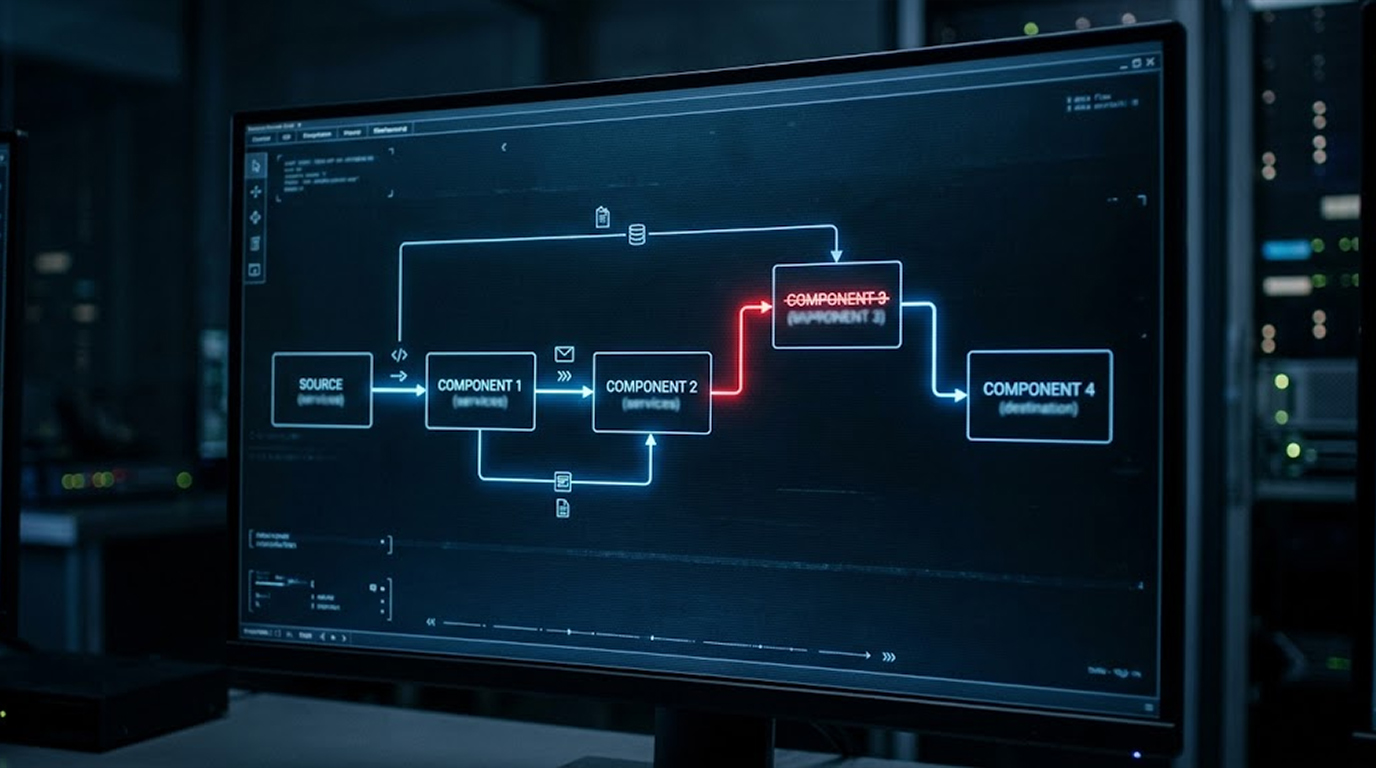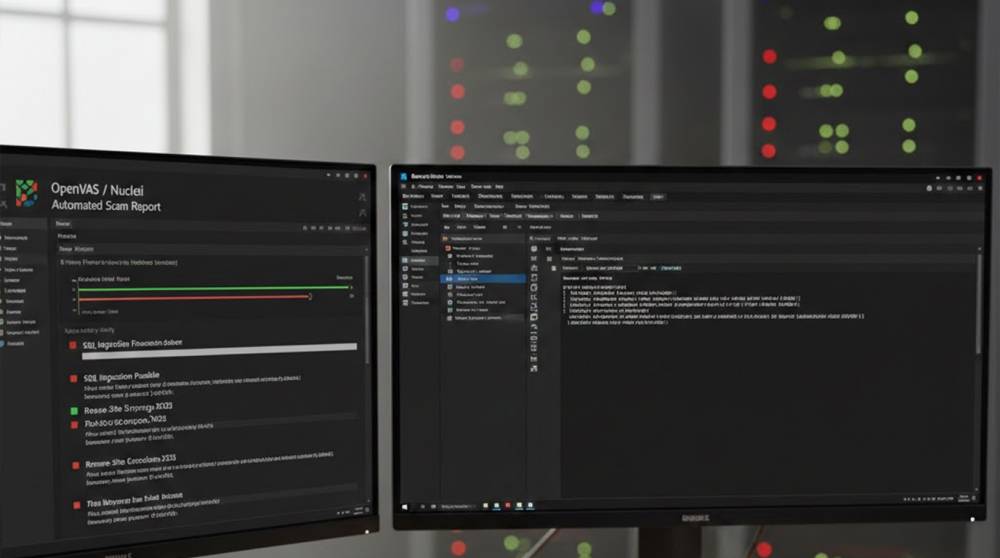
Automated vulnerability scanners (OpenVAS, Nessus, Qualys, Nuclei, Nikto, sqlmap, etc.) are incredibly powerful, they scan fast, find thousands of potential issues, and save huge amounts of time.
But in 2025–2026, the most skilled pentesters, red-teamers, and bug bounty hunters all agree on one thing:
Automation finds the doors. Manual testing walks through them.
Automated tools are excellent at detection, they tell you “something is probably wrong here.” Manual testing is required for validation, exploitation, and impact assessment, proving whether the finding is real, how bad it really is, and what an attacker could actually do.
A total reliance on automated testing creates the following problems:
1. An abundance of false positives waste your time.
2. You may have a CVSS of 9.8, but that doesn’t equal a significant business impact.
3. Underestimating linked vulnerabilities.
4. You won’t be able to illustrate actual risk to either your customers or to management.
Where and When Should You Be Performing Manual Testing Versus Automated Testing?
The following are some of the most commonly found scenarios in which professional testers will stop trusting the scanner and begin to perform manual tests.
1. SQL Injection (sqlmap or Nuclei shows possible vulnerability): The automation will state “Time-Based Blind SQLI found (Delay > 5 seconds)” in which case a manual test is needed as follows:
a. Validate the injection was successful, i.e. is there a false positive due to delay caused by WAF?
b. Dump the database actual data, (users table, credit cards, etc.).
c. Prove out what the risk will be, i.e. if it was to be able to get the admin credentials then could you take over the entire user's account.
To perform practical manual testing once you have already confirmed the databases exist you would perform the following command, Example Bash syntax would look like:
sqlmap -u "http://target.com/page?id=1" -D users_db -T users --dump --columns username,password
2. Admin panel/debug endpoint automation flags: "Connected to the administration panel (/admin.php), returning a 200 status code, and potentially having default credentials” Need to manually confirm:
a. Using an admin account to log in with the known usernames and passwords
b. To check if any directory listings exist, as well as any exposed backup files, or debugging data.
c. To see if we can access sensitive information, such as customer lists or API keys.
How to test:
a. Use the browser to access an administration page, example: http://target.com/admin to try to access the page using known usernames/passwords
b. If allowed in scope, use Burp Intruder to attempt a brute-force login of the administration page.
3. Weak TLS/SSL Configuration Automation says: (TLS 1.0/1.1 allowed, and the use of weak ciphers such as RC4 or 3DES). Need to manually confirm the following:
a. Confirm that a downgrade attack (e.g., POODLE, Sweet32) is possible.
b. Check the certificate to see if any intermediate certificates have been mis-issued (expired intermediates).
c. Confirm business risk (e.g., that a MITM attack is feasible when on public Wi-Fi).
Practical tool: Use sslscan or testssl.sh
testssl.sh --fast target.com:443
3. File upload Endpoint has Weaknesses and Automatically Identified Flagged is: "File Upload Endpoint Provides a Way to Upload .PHP Extension", requires manual testing should include:
a. Uploading a WebShell (PHP Reverse Shell)
b. Verifying that the WebShell can be executed Remotely (Remote Code Execution)
c. Elevating Impact by reading /etc/passwd, obtaining database credentials
Example of Practical WebShell Upload (only for authorized testing):
<?php system($_GET['cmd']); ?>
→ Upload as shell.jpg.php → access http://target.com/uploads/shell.jpg.php?cmd=whoami
4. Source Code Repositories Exist on Public Servers, Automatic Results of Testing Showed a Flagged Existence of: “/.git/HEAD” results in HTTP 200 response code, requires manual testing should include:
a. Allow for Download of Full Source Code (Git Clone http://target.com/.git)
b. Finding Hardcoded Credentials, API Keys, and Database Passwords
c. Demonstrate that Full Compromise is Achievable
Practical:
git clone http://target.com/.git exposed_source
cd exposed_source
grep -r -i "password\|key\|secret\|token" .
Practical Tools That Bridge Automation → Manual Testing
1. Burp Suite Community Edition (Free) - Allows interception of requests for manual testing, Intruder can be used for brute-forcing requests, and Repeater can be used to adjust injections from scanned requests.
2. Sqlmap (Free) - Once identified use --dump, and --os-shell to fully exploit vulnerabilities.
3. Metasploit (Free) - Convert vulnerability scanner results into exploitable vulnerabilities with a working shell.
4. Nuclei templates (Free) - Provide a fast proof of concept to verify vulnerability scanner results are still valid.
5. FFUF/Dirsearch - Manually brute-force directory after automated scans.
Key Takeaways
1. Automation is the starting line, it finds possibilities.
2. Manual testing is the finish line, it proves real risk and impact.
3. Most valuable findings come from chaining: scanner → manual validation → exploitation → impact demonstration.
4. If you ever run a scan and see High/Critical results, don’t just accept the report. Test them manually (safely and legally) to understand what they really mean.
One manual test on a “maybe” finding can turn an “informational” alert into proof of a critical breach path.