You have worked for many years developing your personal brand on social media. However, now there is a network of fake accounts that are exploiting your image, brand name, and your good reputation to commit fraud on your customers. They damage your reputation every single day they are operating.
This is not an insignificant nuisance; it is a direct danger to your source of income and reputation.
These fake media accounts are taking over social media sites like Facebook, Instagram, and X (formerly known as Twitter). They are not just making one fake account; rather, they use artificial intelligence (AI) to make networks of bots that can mimic a brand’s identity, spread misinformation, and collect customer information.
They go after your clientele, hijack customer service conversations, and carry out scams under your brand name.
I will walk you through the process of how these networks work, identifying them, and removing them.
Understanding the Scale of the Problem
The problem of botnets does not consist only of a few fake accounts. Botnets are highly developed and coordinated systems, which attempt to simulate the behavior of actual humans.
The security specialists revealed that in some instances more than 80% of followers in the targeted group of people were actually inauthentic. Thousands of fake accounts from several countries can participate in one group simultaneously.
Law enforcement organizations managed to take down AI-powered bot farms, which produced fictitious social media profiles pretending to be actual citizens.
In recent years, bad bots have comprised a considerable number of all web traffic, mostly in social media platforms.
The problem will not disappear; on the contrary, it will continue to evolve.
Bot Network Detection Methods
Detection of a bot starts with identifying one. The detection of a bot network involves the identification of patterns.
Detecting Patterns in Name Creation
The easiest way to identify whether a bot is used on the network is the "user####" pattern. An account that contains the string "user" followed by digits in its name is often created automatically as part of bot activities on the network.
Metadata in Profiles
Missing avatar pictures, incomplete biographies, or lack of posts are signs of bot use. A Facebook group for a small community suddenly gaining thousands of followers in a single month is a clear sign of a bot network. Look for disproportionate growth in a short time.
Observe Behavioral Patterns
Bots generate likes in tightly clustered bursts, often down to the millisecond. This is because there are several instances of bots running scripts that make it easy for them to get detected. The bots can lend a voice to other causes in order to increase support for them. This is known as Astroturfing or the process of faking a grassroots campaign. The bots like content which then boosts their algorithms, thus encouraging real people to join the bandwagon.
Track and Map the Network
Manual tracking is too slow. Attackers operate at machine speed. You need tools that can analyze behavior at scale and detect coordinated inauthentic behavior.
Detection through AI
Modern systems of detection examine temporal causality between accounts to detect any coordination activity. These systems have high accuracy in detecting coordinated activities, but require less effort since they do not require manual annotation.
Graph-Based Analysis
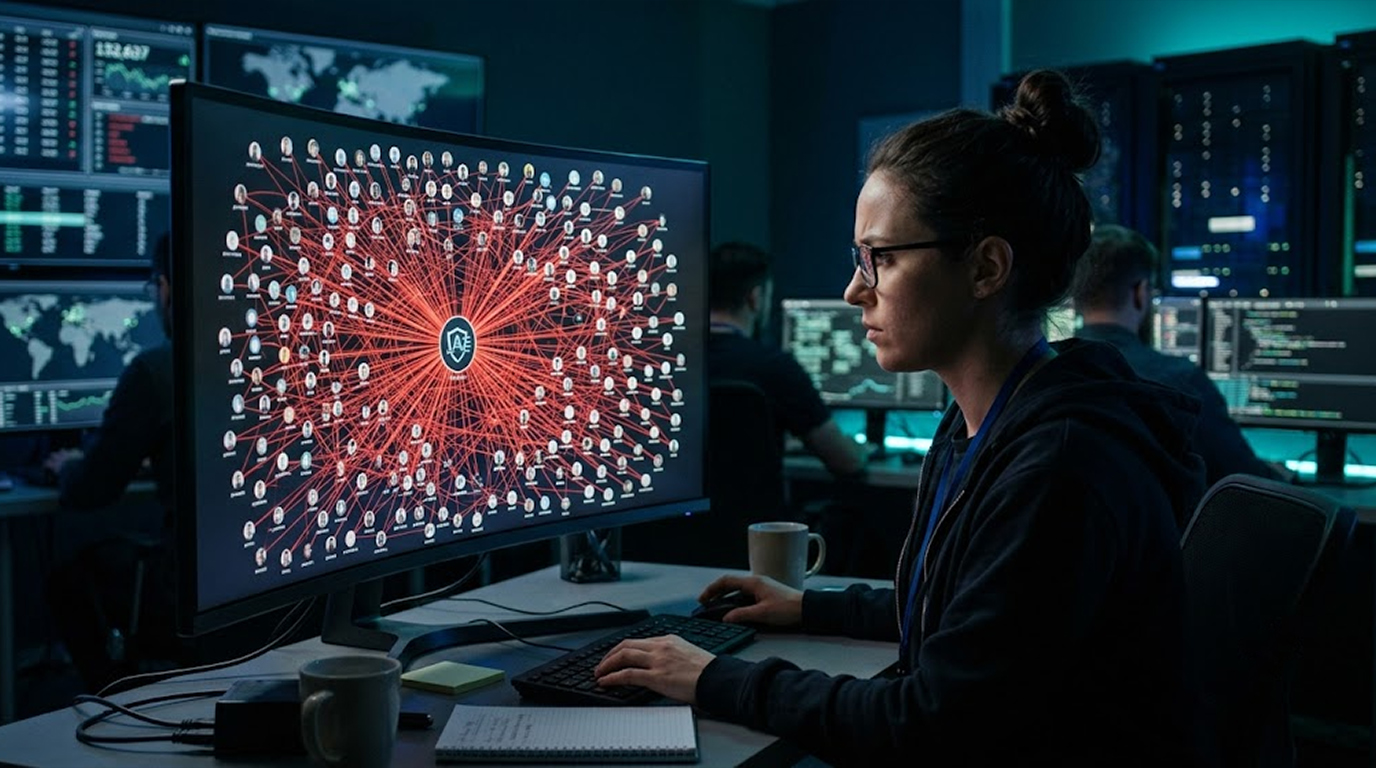
These systems detect connections between accounts to detect a network in which one user controls many accounts. These systems will find a cluster of related accounts having the same infrastructure, including IP addresses, domains, and phone numbers.
Specialized platform tools
There are some platforms that have special tools to detect impersonation. The tools perform analysis of usernames similarity, bio similarity, avatar analysis, profile cloning detection and engagement anomaly detection for bots detection.
Real-World Scenario: The Coffee Chain Attack
Here is an example scenario for you.
The Victim:
A medium-sized coffee chain having 200 stores. They are very active in social media and have 500,000 followers on Instagram and 300,000 followers on Facebook. Contests and giveaways are commonplace for them.
The Attack:
Unexpectedly, on one particular day, the social media manager realizes that their recent post has gained more comments than usual. All these accounts that posted the comments were just recently created with usernames such as “user3847291” and “user4829203.” These comments are generic too – for instance: “Great post!” and “Love this brand!”
Within 24 hours, the coffee chain's official Instagram account is tagged in dozens of posts from fake accounts. The posts show screenshots of a "winning" message from a fake contest, asking users to click a link to claim their prize. The link goes to a phishing site that steals credit card information.
The calls start coming in to the call center of the coffee company with the customers complaining about the prize-winning process. Complaints are received from the customers regarding charges on their credit cards for items they have not purchased.
The investigation:
Social media manager conducts an analysis through use of bot detection tools.The analysis shows there are 3,000 accounts created within the past 72 hours. They all have the "user####" name format. They all have the same profile photo – a standard coffee cup logo.
They all behave in the exact same way: they “like” the posts made by the coffee shop, leave generic comments and then make fake contest entries on Facebook.
From the graph analysis, one can see that all 3,000 accounts are connected to the same IP addresses, same domain name and same phone numbers for SMS authentication.
The Response:
The social media manager reports all 3,000 accounts using the takedown platform to Instagram simultaneously. This platform automates the process and then contacts the trust and safety team at Instagram.
Within 24 hours, all 3,000 accounts are taked down. The phishing domain is reported to the registrar, and the domain is shut down. The coffee chain notifies its customers about the scam.
The Result:
The image of the coffee chain has been preserved. Trust of the customers has been recovered. There is nothing left for the attackers anymore but to start from scratch.
Eliminate All of the Network
Account removals are a never-ending battle; you need to automate the process.
Professional Takedown Software for Enterprises
Professional takedown software utilizes AI technology to scan social networks, websites, mobile applications, and digital ads. Such software proactively recognizes and tracks attacker tactics, visualizes attack structures, and conducts full end-to-end threat containment.
They have systems that constantly keep tabs on the social media networks and use AI programs for logo recognition, natural language processing, and coordinated network identification to automate their reporting process to the platform trust and safety teams.
Free Browser Extensions for X
There are free browser extensions available to delete bot followers for individual users. They employ rules that may be adjusted by the user to identify bots based on parameters such as number of followers being few, number of follows being high, no posts, username formats, profile picture being default, and inactivity period.
Reporting to Platform Safety Teams
The social media platforms have deleted the fake accounts after receiving complaints from the government officials and security analysts. While reporting, you need to provide credible evidence about the organized inauthenticity, which should include screen shots and accounts list with behavior patterns.
Monitor Shared Infrastructures
Botnets usually make use of shared infrastructures. Monitoring these infrastructures will help you to detect and get rid of the whole botnet.
Monitor Shared Domains
Many botnets use common domains in order to register emails and shorten links. These can be monitored and reported to the registrar services.
Search for Shared IPs
Botnets may make use of shared IP addresses or IP ranges. They can be found via threat intelligence feeds.
Search for Shared Phone Numbers
The majority of botnets make use of the same phone numbers for verification. They can be traced and removed from the network.
Future Brand Protection
After eliminating the bot network currently threatening your brand, you should protect your brand from future threats.
Impersonation Detection
Monitor the social media platforms for any signs of impersonation using monitoring platforms that identify logo misusage, similar names, and brand mentions.
Handle Protection
Protect your brand handles on all the major social media platforms. This includes variations of your brand name.
Monitor for Domain Typosquatting
Monitor for domain typosquatting. Attackers will create domains which are very similar to your own brand domain where they will host their malicious activities.
Educate Your Customers
Educate your customer regarding impersonation. Tell them how they can recognize your official accounts.
The Bottom Line
Impersonation Bots on Social Media Are Becoming a Threat for Business. They harm your brand's reputation, take away your clients, and destroy the reputation of your brand.
Monitor such networks through the use of artificial intelligence tools and graph analytics. Get rid of these threats through automatic removal, reporting to the platform, and cooperation with law enforcement agencies. Ensure that your brand is not vulnerable to any future attacks.
The attackers are not going to stop. Neither should you.
FAQ Section
Explain what is social media impersonation bot?
A social media impersonation bot refers to an automatic imitation of brands, individuals, and institutions through artificial intelligence that is undertaken in collaboration to fool consumers, spread misinformation, and defame reputation.
What signs will I observe if it is a bot network?
There is specific naming scheme for bot networks which include names like "user####". There will be no avatar pictures, incomplete profile descriptions, zero post activities, and rapid growth.
How should I do to reduce the botnet?
Utilize the automated takedown services for the removal of fake accounts from different platforms. Submit your report to the trust and safety team of the platform. Work with the law enforcement agency as well if necessary.
Is there any free software available to remove bots?
Yes. You may use some free browser extensions to detect and remove bot followers for your profile in Twitter.
What steps can I take to ensure my brand does not get attacked in the future?
Monitor for impersonations, brand security of handles, typosquatting domains, and customer education about impersonations.