You are scrolling through your feed, and you see a video of a missile strike. It looks dramatic, urgent, and real. You share it, because people need to know what is happening.
The video is from a video game. You just became part of a disinformation campaign.
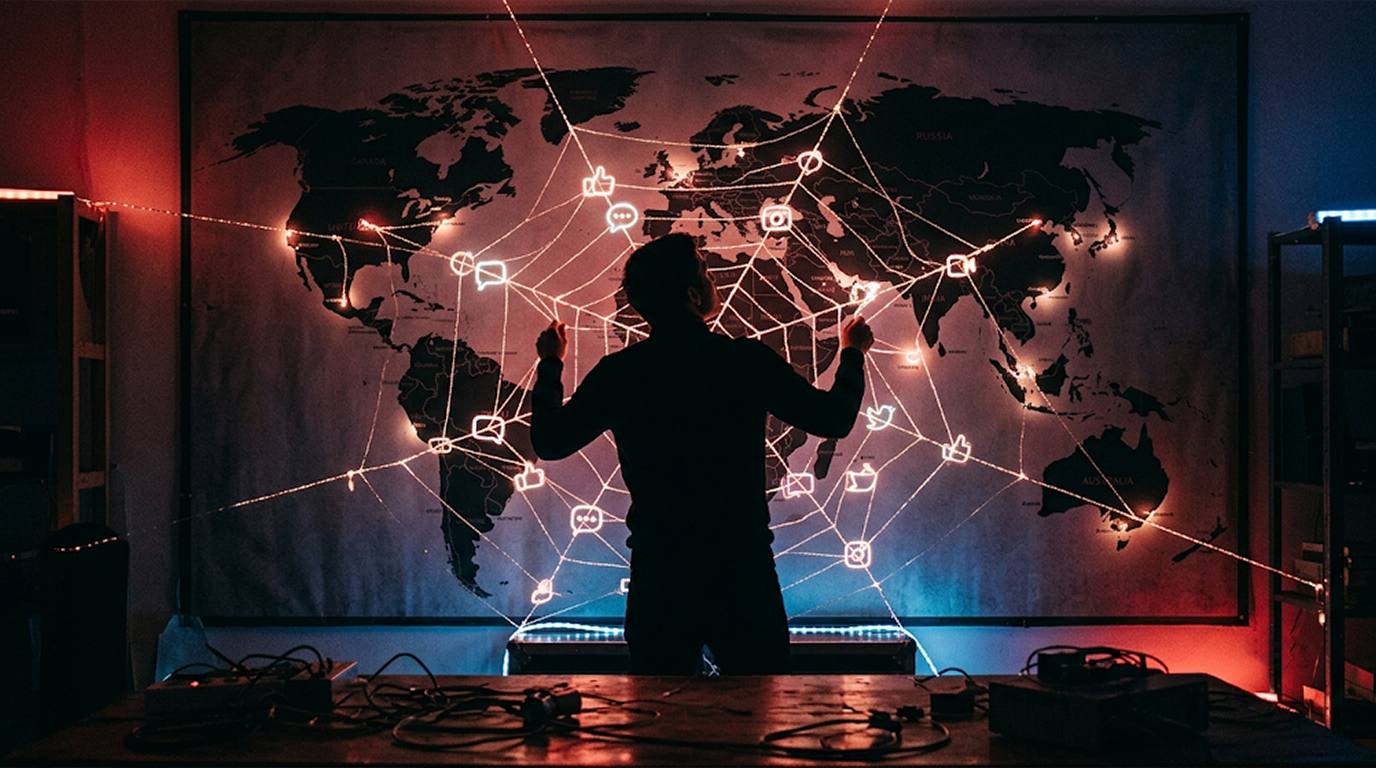
This is how social media has transformed warfare. The battlefield is no longer just physical territory. It is also your timeline, your feed, and your group chats.
The Battlefield is Digitalized
In today’s world, wars are waged through digital media platforms such as X (formerly known as Twitter), Facebook, Telegram, TikTok, and YouTube by states and military forces, as well as by non-state actors.
While traditional warfare employs bullets and bombs, cyber warfare via social media involves the use of information.
Information warfare is cheaper and easier to cover up than physical warfare, and it can affect millions of people in a split second.
The objective is not the destruction of physical infrastructure. The objective is the manipulation of the narrative, public opinion, and causing confusion.
Using Social Media in Cyber Warfare
Tactic 1: Disinformation Campaigns and Fake News
Disinformation refers to fabricated information whose purpose is to mislead. This is the most frequently used weapon in cyber warfare through social media.
In cases of war and conflict, the sponsored state entity comes up with fake news articles, fabricated images and videos which are distributed through fake accounts and bot networks as well as through compromised real accounts.
This content aims at evoking strong emotions in people such as fear, anger or outrage. Sharing this content leads to rapid spreading than the rate at which the fact checkers catch up.
How it works:
An attacker crafts a fake news story about an army defeat. He or she posts the story on an apparently credible website. They then distribute links of this story using many fake social media accounts.
Tactic 2: Psychological Operations (PSYOPS)
PSYOPS are operations that are aimed at influencing the emotions, motivations, and actions of the audience being targeted.
In social media, PSYOPS include messaging, propaganda, and fear campaigns. The attackers employ social media data to know what will scare, anger, or motivate their target group of people.
They then craft messages designed to exploit those emotions. A population that is afraid will support military action. A population that is angry will demand retaliation. A population that is confused will believe anything.
How it works:
The attacker analyzes conversations on social media and detects a source of tension. The attacker inflames this tension through postings of polarizing content. The attacker uses fake accounts that debate against one another to make this division believable. The community polarizes and the conflict ensues.
Tactic 3: Amplification through Bot Network
Bot account is an automated social media account that makes large-scale postings. It is used to amplify messages, make them look convincing and overwhelm opposition.
During the course of a conflict, bot network may be used to make an untrue narrative look like majority opinion. If there are millions of people posting the same content, the assumption that this is the truth comes naturally.
How it works:
The attacker makes thousands of bot accounts. These accounts are programmed to post and share certain content. The bots like, retweet and comment to make this content look popular. The actual users see the trend and jump in.
Tactic 4: Influence Operations Against Decision Makers
The attackers do not only target the masses but also the leaders, the policy makers, and the military commanders.
This is done by setting up fictitious social media accounts. The attackers make friends with the decision-makers over several months. They gain the trust of the decision-makers and start feeding them with fake information that can sway their decision-making process.
How it works:
The attacker sets up a fictitious social media account claiming to be a defense analyst. For months on end, the attacker posts credible material that attracts followers. One day a genuine policymaker starts following him. The attacker feeds him with a piece of fake intelligence that can sway his decision.
Tactic 5: Creating Division and Polarization
Another effective tactic is the creation of division among people. In this case, the attacker recognizes any existing fault lines in the form of race, religion, politics and makes it worse.
attacker creates false accounts which express extreme opinions from both sides. It appears as if the division is more serious than it actually is. The population becomes divided and it becomes impossible for them to have a collective response to the conflict.
How it works:
In this case, an attacker creates two different sets of false accounts. While one set expresses extreme opinions of the left side of the spectrum, the other expresses the extreme opinions of the right side of the spectrum and attacks the moderate position.
Tactic 6: Leveraging Proxies
Attackers leverage social media platforms to recruit and organize proxies. This is an entity, whether a group or an individual, which executes the attacks on behalf of the attackers.
The proxies may be hacktivist groups, criminals, or sympathetic civilians. These proxies are organized through social media platforms that offer money, revenge, or ideologically-driven motivation.
How it works:
The attacker creates a Telegram channel about the particular cause. The attacker invites followers who have an interest in that particular cause. The attacker gives direction and helps to carry out the attack.
Real-World Scenarios
Scenario 1: The False Flag Operation
A state-sponsored organization wishes to launch a military operation against its rival. It fabricates footage of its rival carrying out attacks on civilian targets. It disseminates the footage through bot networks and fake news websites. The footage goes viral, resulting in negative sentiment against its rival. A military operation takes place with public approval.
Scenario 2: The Election Meddling
A state-sponsored organization wishes to bring down its rival by affecting its electoral process. It creates polarizing content about the rival party, including its counterpart. It uses personalization to target the swing voters. It hacks into the campaign websites of rivals and leaks confidential information.
Scenario 3: The Military Misinformation
The military force intends to mislead the enemy regarding the movements of its force. It makes social media accounts that look like soldiers belonging to another battalion. This force posts movements that never happened. The enemy sends its forces on the basis of the misleading information, and the military force attacks the enemy from the unexpected angle.
The Role of the Platforms
Social media platforms find themselves stuck in the middle, neither perpetrators nor victims, but whose technological infrastructure is being exploited as a weapon.
There are two issues that the platforms face:
First, information can travel much faster through the network of social media than any efforts at fact-checking could contain.
Second, the algorithms employed by the platforms for engagement purposes favor emotional and polarizing messages, which is precisely what the attackers seek to spread.
What the platforms are doing:
Deleting bots and fake profiles. Marking and tagging disinformation. Lowering the visibility of propaganda. Working with fact-checkers.
What the platforms are not doing:
Stopping all disinformation. Keeping viral lies from spreading. Stopping coordinated inauthentic activity.
The platforms are playing whack-a-mole. They solve one issue, and attackers find another loophole.
How to Protect Yourself
You do have some power. You have the ability to protect yourself against being a victim of social media warfare.
Verify your sources.
Before posting that video, image, or story, ask yourself where it is from. Was it posted by a verified source? Did other credible news sources report on the same incident? If you can’t verify it, don’t post it.
Watch your emotions.
Disinformation is designed to make you feel something. If you feel angry, scared, or outraged, pause. Ask yourself if the content is designed to provoke that reaction.
Spot those signs of fake accounts.
Those accounts having no followers, no profile picture, and posting only recently are usually bots. Those accounts that publish controversial content from both ends of the controversy are probably used to promote polarization.
Fact-check before sharing.
Use fact-checking websites and reverse image search before sharing anything that seems suspicious. Do not be part of the problem.
Diversify your information sources.
Do not get your news from a single platform or a single feed. Read coverage from multiple sources, including those you disagree with.
The Bottom Line
Social media has become a weapon of warfare. It is used in the spread of misinformation, opinion manipulation, and sowing division. It is cheaper than a tank and far more effective than pamphlets.
This is not a conspiracy theory. It is a documented fact of modern warfare. State actors, militaries, and non-state groups are actively using social media as a weapon.
You are not just a user of these platforms. You are a target. Your attention is the battlefield.
Be aware. Be skeptical. Do not become part of the attack.
FAQ Section
How is social media used to conduct cyber war?
The use of social media offers an inexpensive, speedy, and worldwide way of spreading disinformation and creating dissension. Hackers can target millions of individuals without the assistance of the mass media or armed forces.
In what way does disinformation differ from misinformation?
Misinformation is intentionally false information. Misinformation is unintentionally false information. Disinformation is a weapon. Misinformation is a by-product.
Can social media impact the result of a conflict?
Yes. Public opinions play role in how much support the political decision-making will give to use military force. Military deception will affect the enemy’s troops. Disinformation may affect decision making of the leadership. Social media has become an integral part of modern warfare.
Do social media platforms do enough to prevent disinformation?
The platforms do more than they did, but it’s not enough. Disinformation is still spreading faster than fact-checking. Algorithms of the platforms promote emotionally loaded content which is the aim of attackers.
How do I know if I’m subjected to a disinformation attack?
You’re subjected to the attack no matter what. You just need to know about it. Be skeptical of any content that causes emotional responses. Check sources before forwarding content. Diversify information channels. Don’t assume things to be true because everyone says so.