You see a QR code on a parking meter, on a restaurant table, on a poster at a bus stop, and you pull out your phone to scan it, because that is what QR codes are for, and you do not think twice about it.
Then a question crosses your mind, and it is a question a lot of people ask, can this little square actually hack my phone?
The short answer is no, and the long answer is more interesting, because the code itself is harmless and the danger lives somewhere else entirely, and understanding where it lives is what actually keeps you safe.
Important Disclaimer
This article is intended for educational and defensive purposes only, and the information shared here is meant to help everyday users understand how QR code attacks work so they can protect themselves.
Do not use these techniques against systems you do not own or do not have explicit written permission to test, because unauthorized testing is illegal in most jurisdictions.
The author assumes no liability for any damages, legal consequences, or other outcomes resulting from the use or misuse of this information, so always think before you scan, and stay legal, stay ethical, stay responsible.
What a QR Code Actually Is
A QR code is a picture of text.
That is the whole thing, and once you internalize that, most of the mystery disappears. A QR code encodes a string of characters, a URL, a phone number, a WiFi password, a piece of plain text, and when your camera reads it, your phone simply decodes the string and acts on it.
There is no executable code inside the square, there is no program hiding in the pattern, and there is no way for the image itself to reach into your operating system and do something, because the image is just a picture of some text.
So a QR code cannot hack your phone in the way a malicious app or a browser exploit can, and anyone who tells you otherwise is either confused or selling something.
Where the Danger Actually Lives
The code is harmless, and the destination is not, and every QR attack works by sending you somewhere you should not go or triggering an action you did not intend.
That distinction matters because it changes the defense, and the defense is not about avoiding QR codes, it is about knowing what to check after you scan one.
Four categories cover almost everything that happens in the wild.
Destination 1: A Phishing Site
This is the most common attack, and it is called quishing, which is just phishing delivered through a QR code instead of an email link.
The code takes you to a page that looks like a login screen, and the page is designed to look like a bank, a government service, a delivery company, or a payment platform, and it asks you to enter your credentials.
Since you scanned a code in the physical world, the page feels more trustworthy than a link in an email, and that false sense of trust is exactly what the attacker is buying.
Once you enter your username and password, the credentials are captured, and the attacker logs in from somewhere else.
Destination 2: A Malicious App Download
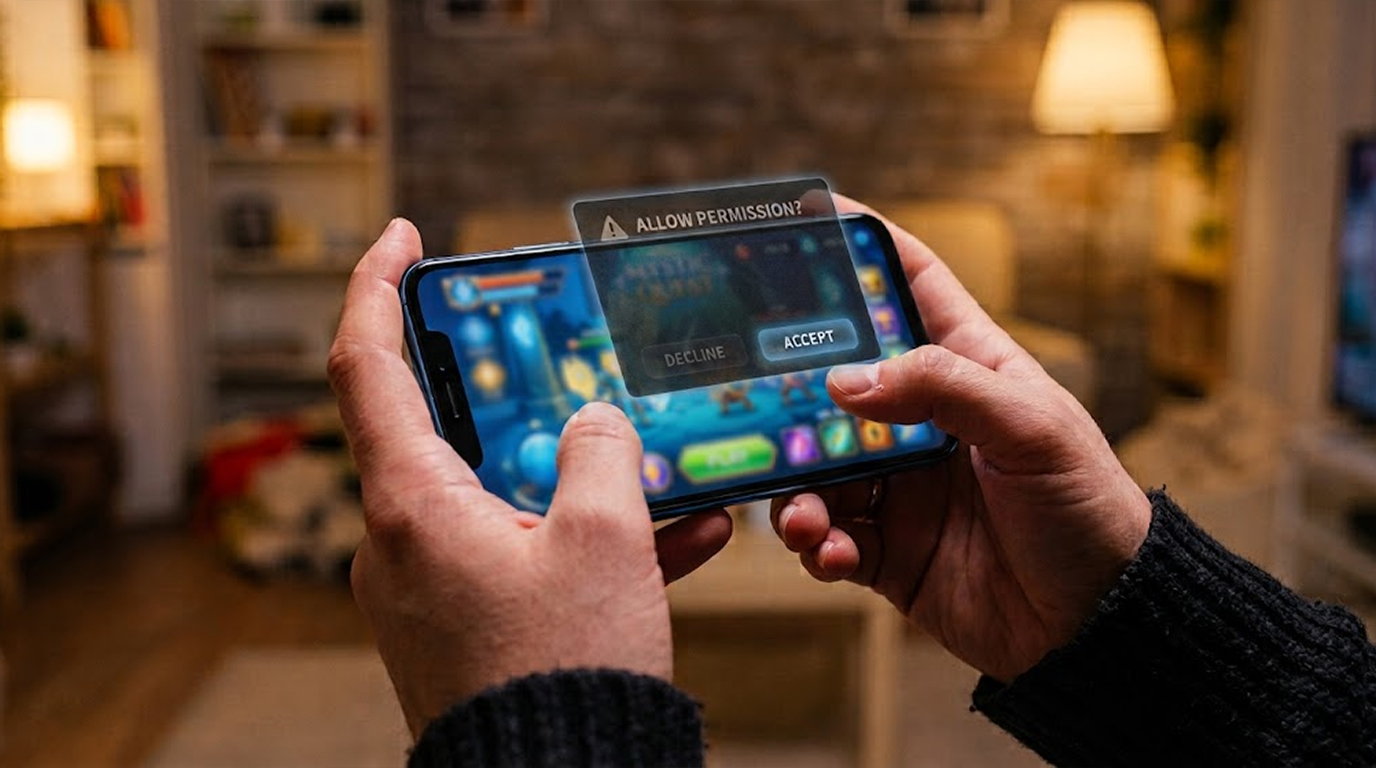
Some codes lead to a page that offers an app, and the app is not from an official store, so it installs something that you would never have approved if you had read the permissions.
On Android, this usually means a direct APK download from a third party site, and on iOS it usually means a configuration profile or a sideloaded app, and both of them can do real damage once installed.
The QR code did not hack your phone, and you installed something that did.
Destination 3: A Payment Redirect
Payment QR codes are genuinely useful, and they are also easy to replace.
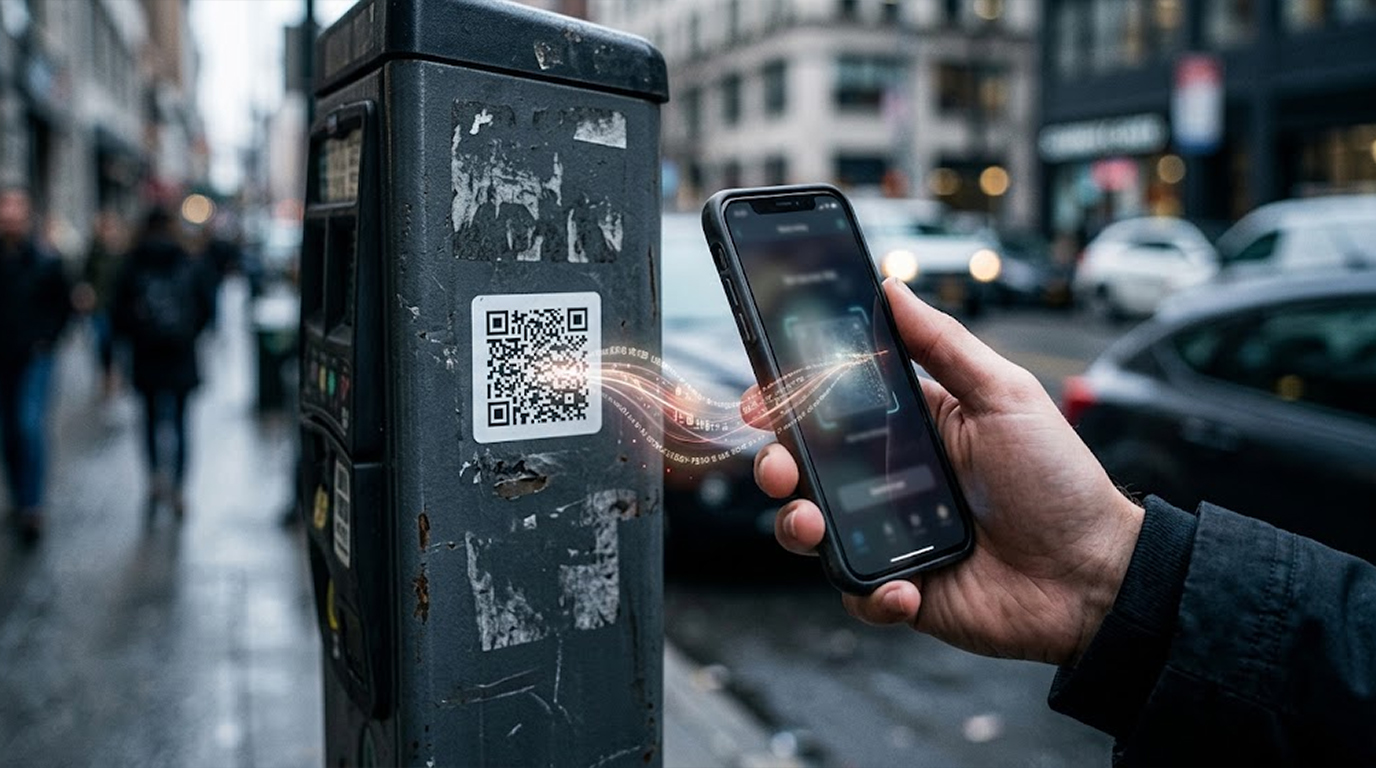
An attacker prints a sticker with their own payment code and sticks it over the real one on a parking meter, a donation box, or a table tent, and the victim pays the attacker while believing they paid the merchant.
This is one of the simplest attacks in existence, and it works because nobody checks whether the code is the one that was originally printed.
Destination 4: A WiFi Join or a Profile Install
Some QR codes are designed to join a network or install a configuration profile, and a malicious one can connect your phone to a network that the attacker controls.
Once you are on their network, they can observe your traffic, serve you phishing pages that look local, and in some cases push a configuration profile that changes your device settings.
This is less common than phishing, but it is more dangerous when it succeeds, because the compromise is at the network level rather than the account level.
Why QR Attacks Work So Well
Three factors make this channel unusually effective.
- The code hides the destination. With a normal link, you can see the domain before you click it, and with a QR code, you cannot see anything until after you have already scanned it, and by then the browser is loading.
- The physical world feels safe. A code on a poster, a menu, or a meter feels like it belongs there, and we do not apply the same suspicion to physical objects that we apply to emails.
- The phone makes verification hard. On a phone, the address bar is small, sometimes hidden, and easy to ignore, so even a careful user may not notice that the domain is wrong until after the page has loaded.
Real Scenarios
Scenario 1: The Parking Meter
The Setup
You park, you see a QR code on the meter, and you scan it because paying by app is faster than finding coins.
The Attack
The code leads to a payment page that looks exactly like the official one, and it asks for your card details, and you enter them because the page looks right.
The Result
Your card details are captured, and the attacker uses them for fraudulent purchases before you notice the charge.
The Lesson
The code on the meter may not be the code the city installed, and a sticker takes seconds to apply.
Scenario 2: The Restaurant Menu
The Setup
You sit down, and instead of a paper menu, there is a QR code on the table, so you scan it to see the food.
The Attack
The code takes you to a page that asks you to sign in with your email or social account to view the menu, and you do it because you are hungry and it seems reasonable.
The Result
The attacker now has an account, and if you reused that password anywhere else, they have more than one.
The Lesson
A menu does not need your credentials, and any page that asks for them is lying about what it is.
Scenario 3: The Delivery Notification
The Setup
A card arrives at your door with a QR code, and it claims a parcel is waiting and that you need to pay a small redelivery fee.
The Attack
The code leads to a page that collects your card details and your address, and it looks like a legitimate courier site.
The Result
You pay a small fee, and your card is now in the attacker's hands, and they use it for much larger charges.
The Lesson
Unexpected fees are a classic hook, and physical cards left at doors are easy to print and distribute.
Scenario 4: The Public Charging Station
The Setup
You are at an airport, your battery is low, and there is a charging kiosk with a QR code that promises faster charging if you scan.
The Attack
The code installs a configuration profile or connects you to a malicious network, and once connected, your traffic can be monitored or redirected.
The Result
Sensitive data is captured over the following days, and you have no idea anything happened.
The Lesson
Convenience is the most reliable hook in social engineering, and public infrastructure is a favourite target.
How to Stay Safe
The good news is that the defense is simple, and it is mostly about habits rather than tools.
1. Preview the Link Before You Open It
Most modern phone cameras show the decoded URL before you tap it, and that preview is the single most valuable piece of information available, so look at it, and if the domain is not what you expect, do not proceed.
2. Check the Domain Carefully
A domain is the part right before the first single slash, and everything before it is just a label, so read from right to left, and treat lookalike spellings, extra hyphens, and unusual endings as warning signs.
3. Never Enter Credentials From a QR Link
If a page asks you to log in after scanning a code, close it, and navigate to the service yourself through the official app or a bookmark instead.
4. Never Install an App From a QR Code
Go to the official app store, search for the app, and install it from there, because the store review process is not perfect but it is far better than a random download page.
5. Check Payment Codes Against the Printed Original
If a payment code is on a sticker, look underneath, and if the sticker is uneven, misaligned, or on top of another code, assume it is a replacement.
6. Decline Profile Installs
Your phone should not install a configuration profile from a web page, and if a page asks you to, close it immediately.
7. Use Your Phone's Built-In Protections
Keep the operating system updated, keep the browser updated, and enable any built-in safe browsing features, because they block a meaningful number of known malicious destinations.
8. Be Suspicious of Urgency
Fees, deadlines, and expiring deliveries are pressure tactics, and pressure is the enemy of clear thinking, so slow down, especially when a code is asking you to act immediately.
9. Report Suspicious Codes
If you find a code that looks tampered with, report it to the business or the venue, because you are probably not the only person who will scan it.
10. Trust the Preview More Than the Setting
A code in a nice restaurant is not automatically safe, and a code in a rough neighbourhood is not automatically dangerous, because the setting tells you nothing about the destination.
Quick Reference: QR Code Safety Checklist
|
Habit |
Why It Helps |
|
Preview the URL |
You see where you are going before you go |
|
Read the domain right to left |
The real domain is the one before the first slash |
|
Never enter credentials |
A QR code never leads to a legitimate login prompt |
|
Never install apps from QR |
Use the official store instead |
|
Check payment stickers |
Overlays are easy to apply and easy to spot |
|
Decline profile installs |
Configuration profiles are a serious risk |
|
Keep the OS and browser patched |
Closes known browser and system flaws |
|
Slow down on urgency |
Pressure is the attacker's main tool |
|
Report tampered codes |
Protects the next person |
|
Ignore the setting |
Appearance says nothing about safety |
The Bottom Line
A QR code cannot hack your phone, because a QR code is just a picture of some text, and the danger was never in the square, it was always in the destination and in what you choose to do when you arrive.
The attacks that use QR codes are phishing, fake downloads, payment redirection, and profile installation, and every one of them depends on you taking an action after the scan, which means every one of them can be defeated by a few seconds of checking.
Preview the link, read the domain, never enter credentials, never install an app, and check the sticker before you pay.
Treat the code as a doorway rather than a threat, and look at what is on the other side before you walk through.
FAQ Section
Is a QR code able to hack into my phone?
It can’t because it’s only encoded text, so it doesn’t contain any executable code itself.
What does quishing mean?
Quishing refers to an attempt to use phishing by means of a QR code that leads to either a fake login page or a malicious download instead of a legitimate destination.
What should I do if I already entered my password on a QR-linked page?
Change that password immediately from a different device, enable multi-factor authentication, and check the account for any activity you do not recognize.
Can a QR code install malware without me doing anything?
No, because the scan only decodes text, and installation requires you to approve a download, a profile, or a permission prompt.
How can I tell if a payment QR code has been tampered with?
Look for a sticker over the original code, check for misalignment or uneven edges, and compare against any code printed directly on the surface.