Understanding False Positives and False Negatives in Cybersecurity
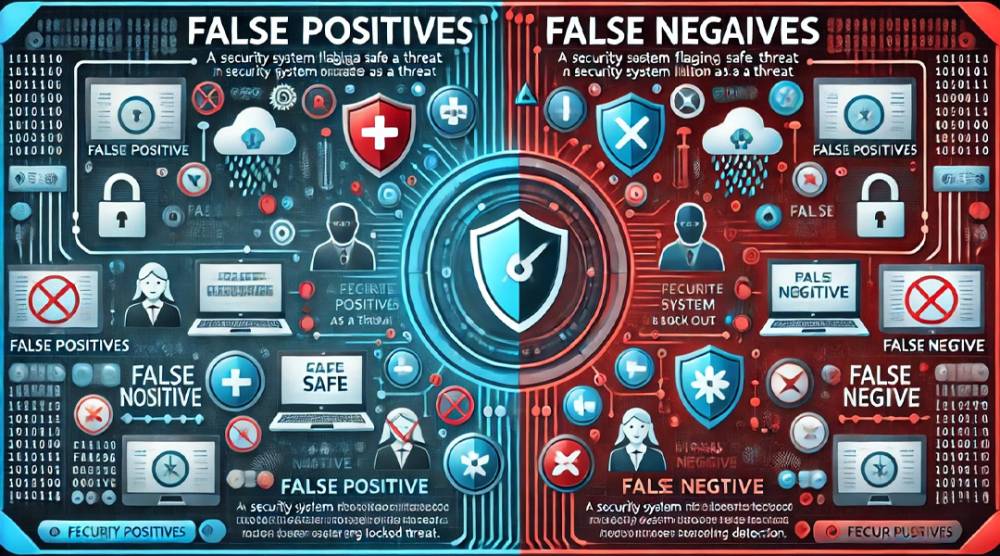
In the realm of cybersecurity, accuracy is crucial for identifying and mitigating potential threats. However, no system is perfect, and errors such as false positives and false negatives are inevitable. These terms describe situations where a system either misclassifies a safe event as a threat or fails to recognize an actual threat. Let’s dive deeper into their definitions, implications, and examples to understand their impact on cybersecurity.
What Is a False Positive?
A false positive occurs when a system incorrectly flags legitimate activity as malicious. While these detections may not pose a real security risk, they can still have significant consequences, such as wasted time and resources.
Example of a False Positive in Cybersecurity
Consider a firewall that blocks a legitimate email containing an attachment because it mistakenly identifies it as a phishing attempt. This might disrupt business operations, delay communication, and reduce trust in the system.
What Is a False Negative?
In contrast, a false negative happens when a system fails to detect a real threat. This error can be far more dangerous, as it leaves organizations vulnerable to undetected attacks.
Example of a False Negative in Cybersecurity
Imagine an intrusion detection system (IDS) that overlooks a malware attack embedded in a seemingly harmless file. This oversight could lead to data breaches, system compromises, or ransomware infections.
Why Do These Errors Occur?
- Complexity of Cyber Threats: Cyberattacks evolve constantly, making it challenging for systems to distinguish between legitimate and malicious activities accurately.
- Sensitivity of Detection Systems: Highly sensitive systems may generate more false positives, while less sensitive ones might miss threats, resulting in false negatives.
- Insufficient Data: Machine learning-based security tools rely on training data. Incomplete or biased data sets can lead to errors.
Implications of False Positives and False Negatives
- Operational Impact of False Positives:
- Increased workload for IT teams managing false alerts.
- Potential loss of productivity due to blocked access to safe resources.
- Security Risks of False Negatives:
- Greater exposure to undetected threats.
- Increased likelihood of successful breaches, data theft, or downtime.
How to Mitigate These Errors
- Fine-Tune Detection Systems: Adjust the sensitivity of systems to strike a balance between false positives and false negatives.
- Implement Layered Security: Combine multiple tools, such as firewalls, IDS, and endpoint detection, to reduce reliance on a single system.
- Continuous Monitoring and Updating: Regularly update threat detection models to reflect new attack vectors and patterns.
- Leverage Threat Intelligence: Incorporate external intelligence feeds to enhance the accuracy of detection mechanisms.
Both false positives and false negatives present unique challenges in cybersecurity. Striking a balance between these errors is critical for maintaining a secure and efficient digital environment. By understanding their implications and adopting proactive strategies, organizations can minimize risks and enhance their defense against cyber threats.
Effective cybersecurity is not about eliminating errors entirely but about managing them wisely to ensure the safety and functionality of systems.