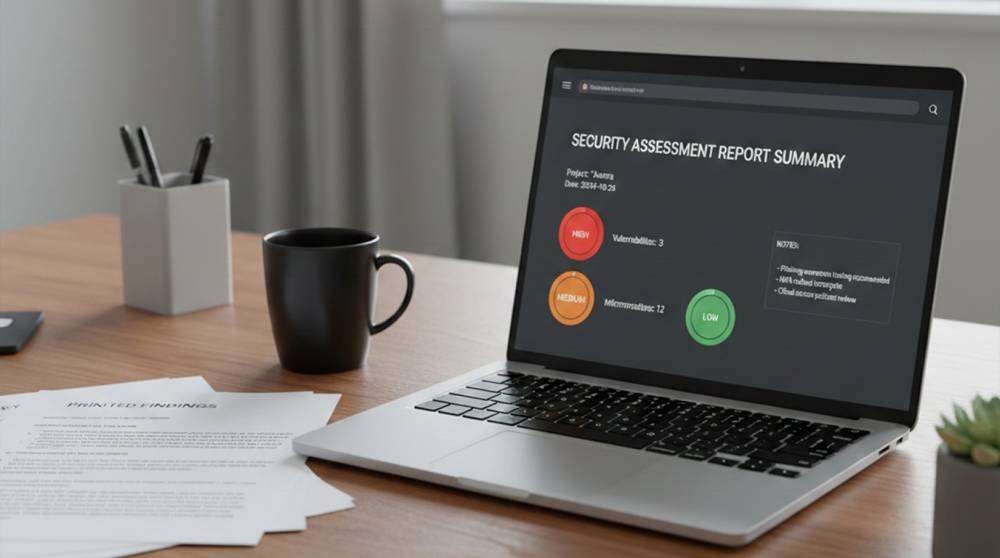
Most security assessments produce long lists of findings.
Misconfigurations, missing patches, weak access controls.
The work is usually solid.
The impact is often limited.
What gets lost is not the detail. It is the meaning.
Leaders are left with pages of issues but no clear sense of risk.
The gap between findings and decisions
Technical findings describe what is wrong with systems.
Risk describes what could realistically go wrong with the business.
When those two are not connected, several things happen:
1. Issues are fixed based on severity labels, not impact
2. High-risk problems compete with low-value improvements
3. Leadership approvals slow down or stall
4. Security teams feel ignored
This gap shows up in almost every organization at some point.
Why severity scores are not enough
Severity ratings are useful. They are not decision tools.
A “critical” issue on a non-essential system may matter less than a “medium” issue on a revenue platform. Context changes everything.
Real incidents have been traced back to:
1. Low-severity issues chained together
2. Known findings postponed because they felt minor
3. Risks outside formal vulnerability scans
Severity explains technical danger.
Risk explains business exposure.
What leaders actually need to know
Executives are not asking for exploit details.
They want clarity.
Effective communication answers four basic questions:
1. What could realistically happen?
2. How would we notice it?
3. What would the impact look like?
4. What changes if we do nothing?
When those questions are answered, decisions become easier.
Reframing findings in practical terms
The most useful reports translate technical detail into everyday outcomes.
For example:
1. “Unrestricted admin access” becomes “Any compromised admin account can change payroll or customer data.”
2. “Outdated software” becomes “A known issue could interrupt service during peak business hours.”
3. “Exposed storage” becomes “Sensitive files could be accessed without leaving clear logs.”
This is not simplification. It is interpretation.
Real-world examples
Example 1: Ignored misconfiguration
A cloud misconfiguration was flagged repeatedly as low priority.
Months later, it enabled unauthorized data access.
What changed after the incident:
1. Findings were tied to specific data types
2. Ownership of risk was assigned outside IT
Example 2: Overloaded risk register
An organization tracked hundreds of technical risks.
None were clearly prioritized.
What worked:
1. Grouping findings by business process
2. Focusing on scenarios, not individual issues
Example 3: Budget approvals stuck
Security funding requests stalled due to unclear justification.
What helped:
1. Linking fixes to outage and regulatory exposure
2. Showing cost of delay, not just cost of action
How organizations do this better
Teams that succeed tend to follow a few consistent practices.
They usually:
1. Map findings to business services and data
2. Use scenarios rather than vulnerability counts
3. Assign clear risk owners
4. Review unresolved issues regularly
5. Accept some risk explicitly instead of ignoring it
These steps turn reports into tools.
What leaders should take away
Technical findings are raw material.
Risk is the finished product.
When security issues are framed in business terms, leadership can engage, prioritize, and decide.
The goal is not perfect security.
It is informed trade-offs and fewer surprises.