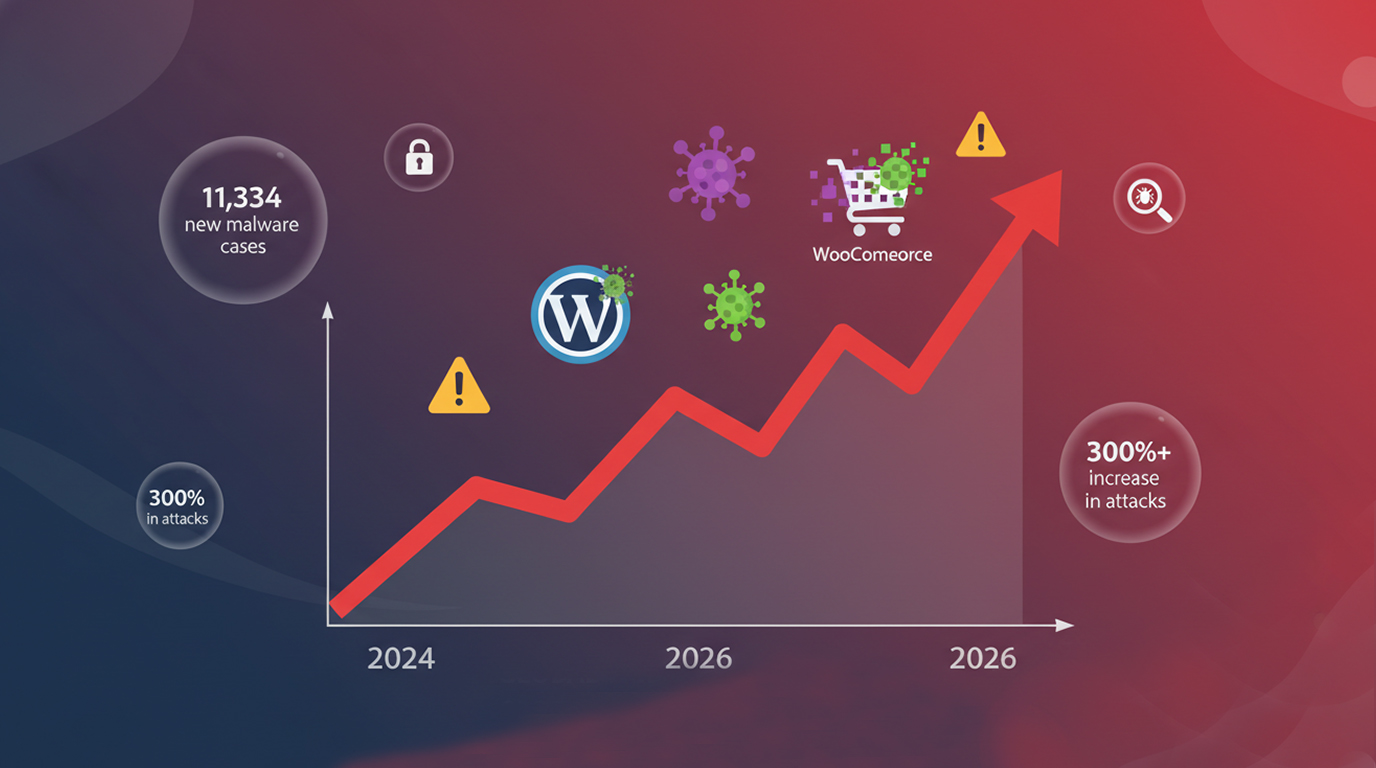
The number of malware infections on websites is not only increasing but also exploding exponentially. During 2025, the WordPress platform had 11,334 brand new vulnerabilities discovered, an increase of 42% from 2024. Most of these vulnerabilities (approximately 92% - 96%) are arising from plugins and themes making them the primary point of entry for malicious attackers.
According to security reports from Patchstack, Monarx, Wordfence, and others; concerns are mounting that in 2026 there will continue to be an increase in the sophistication of malware attacks, an increase in the speed of the exploitation of these types of attacks, and an increase in the stealth techniques utilized by attackers that will survive tier-1 cleanup processes. E-commerce sites operating on WooCommerce are particularly susceptible as they are being targeted by attackers for credit card skimming and ransomware placed on payment pages.
As the owner of a WordPress or WooCommerce online store, it is important for you to understand this increase in malware infections so that you can take the necessary precautions to protect your business, your customers, and your revenue.
Why Are Website Malware Infections Increasing So Rapidly?
There are multiple reasons why the risk of being hacked is increasing rapidly from 2025 to 2026. These include:
1. An Unprecedented Increase In Vulnerabilities - More than 11,000 new vulnerabilities were reported in a single year, including hundreds of serious vulnerabilities that were not patched for weeks or months after they were reported.
2. Plugin Dominance - Approximately 96% of the new vulnerabilities discovered are caused by plugins, of which there are millions of installations that use thousands of different plugins.
3. Artificial Intelligence Attacks - Hacking is no longer limited to humans, as artificial intelligence has permitted hackers to automate processes such as scanning for vulnerabilities, generating malware, and running massive campaigns on the internet.
4. Stealthier Malware - Many of the newer types of infections use code injection methods to automatically run through normal execution paths and hide in memory so they are undetectable until they do damage. In mid-2025, there was an almost 100% increase in the number of time malware was uploaded to servers through upload scripts, and during the peak of shopping season (Q4) there were three times as many as usual.
5. Seasonal and Holiday Hacking Cyber Tactics - Cyber criminals tend to increase attacks on vulnerable websites during the time when there are maximum volumes of people using online commerce.
6. Supply Chain Compromise & Outdated Software - Many of the ways to compromise large volumes of websites are by using backwards-compatible plugins, using nulled themes, and using shared or insufficiently secured hosting environments. A single compromised plugin could potentially expose tens of thousands of websites.
Real-world data backs this up: Wordfence blocked 1.6 million attacks in just 48 hours in late 2025, while Monarx analysed nearly 9 trillion file signals and remediated over 2 billion infections in 2025.
The Impact on WordPress and WooCommerce Stores
For WordPress and WooCommerce stores, malware is the leading cause of infection with over 72% of infected sites affected. Some typical effects of this infection are as follows:
1. SEO Poisoning via Hidden Pharma/Casino Spam & Redirects
2. Stealing credit card information with skimming devices.
3. Continually accessing accounts through back door methods.
4. Ransomware that will encrypt your data and require payment to unlock it.
5. Google stating 'this website is being deceptive' and blacklisting the website.
6. Loss of sales along with bad reputation and the possibility of legal action (especially if no online sales).
Once an infection of malware occurs on your computer, you may find that you have lost thousands in sales if the information of your clients was compromised, and your company will also experience a loss of productivity due to being down for several days after the infection occurs.
Why DIY Cleanup Often Fails in 2026
Basic scanners miss memory-resident or file-injected malware that automatically re-infects the site after restoration. Many store owners end up in a frustrating cycle of repeated infections.
Professional forensic analysis is increasingly necessary to find every trace and prevent reinfection.
Already Infected? Act Fast
If your site shows signs of malware (slow loading, strange redirects, Google warnings, traffic drops), don’t delay. The longer malware stays, the greater the damage.
Red Secure Tech specializes in fast, confidential website malware removal and hacked website recovery for WordPress and WooCommerce stores. Our team will get rid of every last trace of your hacked website (including any secret variant of the virus) and help your business with Google Reviews and blacklisting removal by hardening your site to protect against future attacks, typically in less than 72 hours.
We securely communicate with each of our clients via digital encryption so they can concentrate on their business rather than worrying about their site until we restore their site's safety and performance!
→ Get Your Website Cleaned Now!
Final Thoughts
The rise in online malware in 2026 is caused by a perfect storm of increasing vulnerabilities and smarter, more technical attackers.
The most vulnerable spots for small-to-medium size businesses are their websites and e-commerce sites that do not have enough security measures in place to prevent viruses from attacking them.
By consistently managing your systems’ updates, utilizing various layers of protection, and knowing how to ask for outside help when necessary, you can improve your chances for avoiding malware infections, and recover quickly if your site does become infected.
If you notice any indications of a malware infection on your site; please reach out so we can help prevent the loss of your rankings and revenue, as well as your business’s reputation.