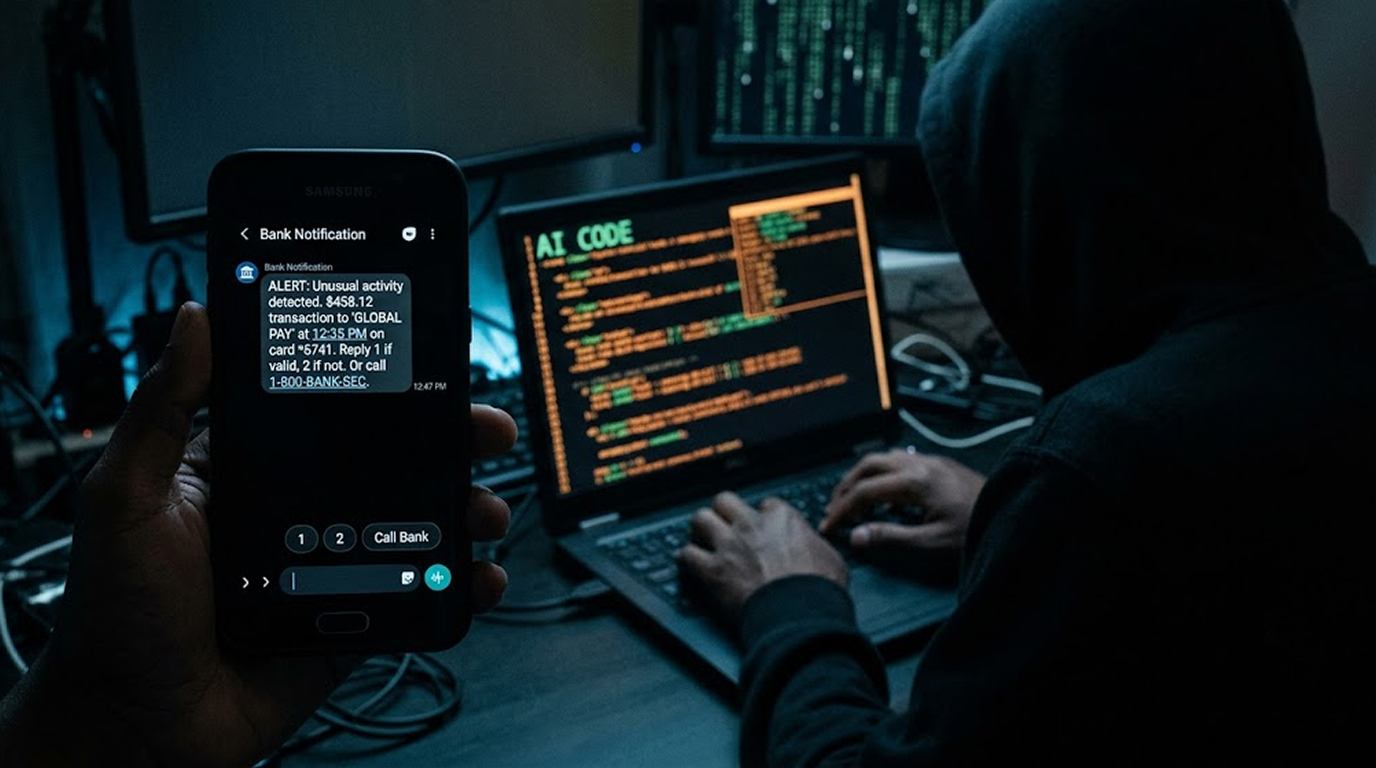
You get a text message. It looks like it is from your bank. The message says there is a problem with your account. It asks you to click a link to verify your identity. You click it.
You just gave a scammer access to your money.
This is happening more than ever before. And it is happening because criminals have discovered something powerful: AI.
The Numbers Are Staggering
Between July and December 2025, Visa detected nearly $1 billion in scam-related activity. This makes scams the single largest category of consumer payment fraud. It is not a small problem. It is the problem.
These attacks do not occur in the expected way. There is no cracking or password theft involved here. Instead, the criminals are using artificial intelligence to make the victims give up their money voluntarily.
The AI Advantage
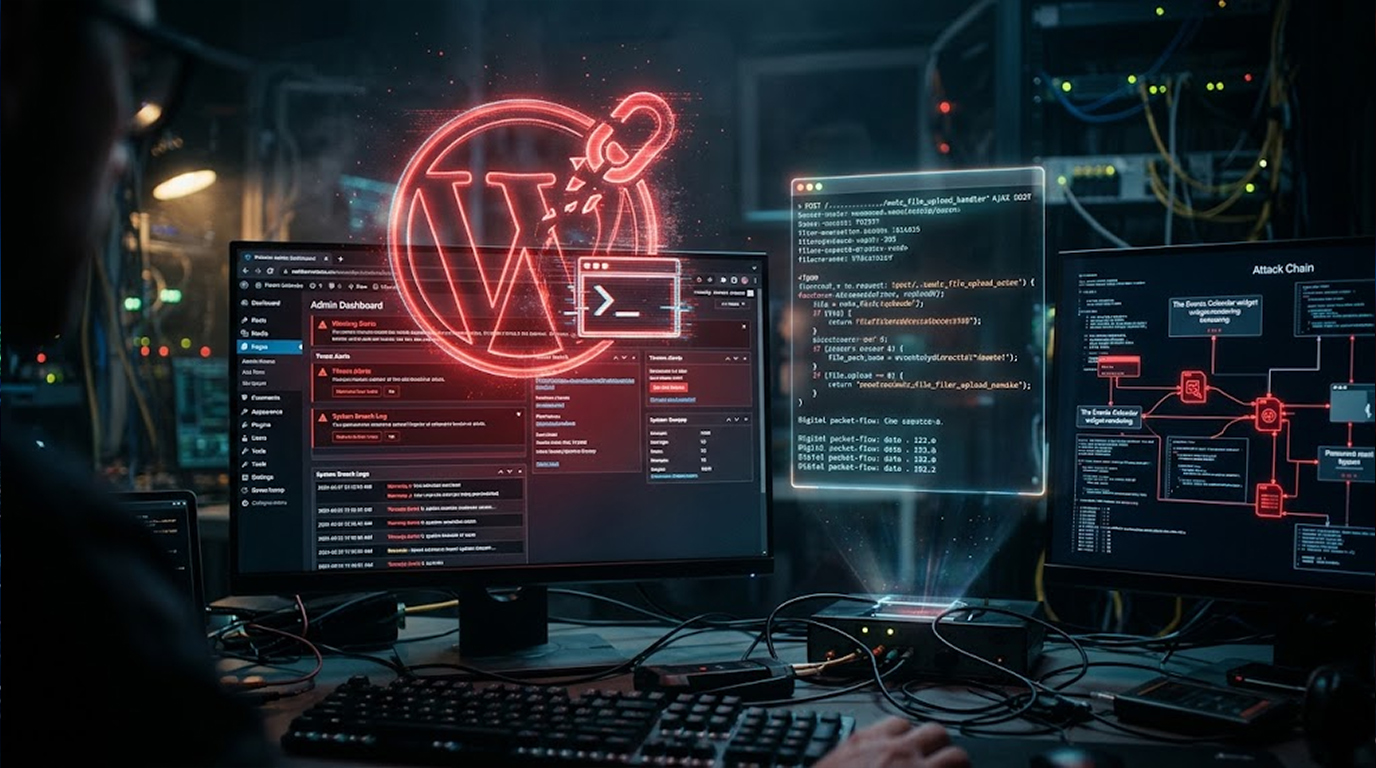
Here is the thing about AI: it makes scams easier and more convincing. Criminals are using AI to write phishing messages that sound exactly like real communications from legitimate banks. They use AI to clone voices, impersonate trusted individuals, and create fake websites that are nearly impossible to tell apart from the real thing.
One Visa executive put it bluntly: "What once required deep technical skill can now be executed with a prompt." In other words, AI has lowered the barrier to entry for fraud. Anyone can do it now.
How the Scams Work
Step 1: The Hook
You receive a message that appears to come from your bank. It could be an e-mail or even a telephone call. In that e-mail or telephone call, there would be a warning about some kind of suspicious activity on your bank account or a fraud.
Step 2: The Fake Website
You click the link. The website looks exactly like your bank's official site.It includes all the right logos, all the right color schemes, and even the right format. Nothing out of the ordinary grabs your attention.
Step 3: The Request
Then the fake website will ask you to verify yourself by giving your username, password, and even your two-factor authentication security code.
Step 4: The Theft
At this point, the scammer has already got hold of all your information and proceeds to access your genuine bank account to withdraw your money without your knowledge.
Real-Life Examples
Example 1: The Fake Visa Warning
Sarah gets a warning through her cell phone from Visa. It says: "Visa Alert: There has been detected some suspicious behavior regarding your Visa card ending with 4321. Please verify your identity."
Sarah logs onto the website using the link provided. It is legit. She enters her card details and the one-time pin sent to her phone number. Here, the fraudster gets all necessary information.
Example 2: AI Voice Clone
James is called by his bank. His caller ID displays the correct phone number for the bank. The voice that is on the line asks him to identify himself by giving out his account number and the last four digits of his Social Security Number. The voice sounds professional and convincing.
The thing James doesn’t know is that it’s AI generated voice. What the scammer did was use voice cloning tool to clone the voice of the bank representative. James gives all the information and the scammer has access to his account.
Example 3: The CEO Impersonation
Maria is an executive assistant. She receives an email from her CEO. From the email: “I am currently in a meeting and will not be able to communicate. It is necessary that you transfer $50,000 to this bank account for an urgent transaction. Please keep this between us only.”
The e-mail appears to be legitimate since its language is consistent with that of the CEO. Maria agrees to the transaction. The money will end up with the scammers who use AI to replicate the writing style of the CEO.
Why Traditional Defenses Are Failing
Payment security has actually gotten better. Token-based fraud was down 9.6% in 2025. Network-level security works.
However, the criminal mind works differently. Rather than hacking into these measures, they are targeting the weak point in the chain – the people. They are using AI-powered social engineering to trick victims into authorizing payments themselves. No system is hacked. No firewall is compromised. The victim does the work for them.
The result:
AI is making phishing messages indistinguishable from legitimate communications. Deepfake video can now fool 60% of people. Voice cloning is so convincing that victims cannot tell the difference.
How to Spot an AI-Generated Phishing Attempt
- Check the sender's address. The display name can be faked. Look at the actual email address or phone number.
- Look for urgency. Scammers create urgency to push you into making mistakes. Take a breath. Think it through.
- Verify through a trusted channel. If you receive a message from your bank, do not use the contact information in the message. Go directly to the bank's official website or call the number on the back of your card.
- Beware of odd requests. When a person asks you to give out personal information or any money or verification, think twice. A legitimate company would never ask for such things through unsolicited communications.
How to Protect Yourself
- Pause and verify. If you receive an unexpected message asking for personal information or payment, stop. Do not click the link. Do not call the number provided. Contact the company on their website.
- Be skeptical of urgency. Scammers create urgency to push you into making mistakes. Take a breath. Think it through.
- Use phishing-resistant MFA. The act of using multi-factor authentication through the use of authenticator apps and physical tokens is much safer than using SMS codes.
- Remember that you should always check your accounts on a regular basis. You should also check your bank statement and even your credit card statement for any signs of suspicious activity.
- Talk to your family. Older adults are often targeted by these scams. Share this information with them.
What to Do If You Fall for It
- Contact your bank immediately. Call the number on the back of your card. Report the fraud and request a new card.
- Passwords should be changed. The passwords used in online banking accounts and other accounts which have used the same password should be changed.
- Monitor accounts. You need to monitor for any suspicious transactions made in your accounts.
- Notify the authorities. Inform the FTC and local authorities about the case.
The Bottom Line
AI has revolutionized phishing scams. The criminals are using it to increase their reach, develop content and deceive people like never before. The technical defenses that once protected consumers are no longer enough. The threat has moved from the network to the person.
The next time you receive a message from your bank, pause. Look closely. Verify through a trusted channel. Do not let AI fool you.
FAQ Section
What ways do scammers utilize AI for committing fraud?
AI is used by scammers to produce credible phishing emails, voice cloning, and deepfakes. These technologies are employed by scammers to impersonate people and organizations with which victims have prior relations.
Which type of scam utilizes AI technology the most?
The most popular scams involve phishing technology. Using AI technology, hackers are able to create very convincing communications on a massive scale, such that it becomes very difficult for the recipient to discern whether an email is real or fake.
How would I recognize a phishing attempt by AI?
It would be in the form of a message that instills a sense of urgency or demands personal details or payment. Even when it appears legitimate, one should authenticate it from a trusted source before reacting to it.
AI Can Clone My Voice When Making A Phone Call?
Yes. Scammers can easily record your voice during the phone conversation and use artificial intelligence to clone it. This cloning technology can further be used to authorize payments or impersonate you.
What am I supposed to do if I get a suspicious email from my bank?
I am not supposed to follow the link or dial the number given in that message. Rather, I should reach my bank through the number at the back of my card or via their website.