You are the CISO of a major utility company. It is 2 AM. Your phone rings. The operator on the other end tells you that the power grid is offline. Three cities are in darkness. Your SCADA systems are showing anomalies. You cannot log into your backup systems.
This is not a drill. But it should have been.
Simulating cyber war scenarios is how organizations prepare for the worst. It is how they train their teams to respond to attacks that have not happened yet. It is how they find the gaps in their defenses before a real adversary does.
Let me show you how to design, run, and learn from cyber war simulations.
What Is a Cyber War Simulation
A cyber war simulation is a structured exercise that replicates a large-scale cyber attack against an organization or a nation. It is not a technical test. It is a human test.
The goal is not to see if your firewalls can block an attack. The goal is to see if your people, processes, and communication channels can handle a crisis.
What it is not:
1. A penetration test (technical).
2. A vulnerability scan (technical).
3. A red team exercise (technical).
What it is:
1. A crisis management exercise.
2. A decision-making exercise.
3. A communication exercise.
4. A coordination exercise.
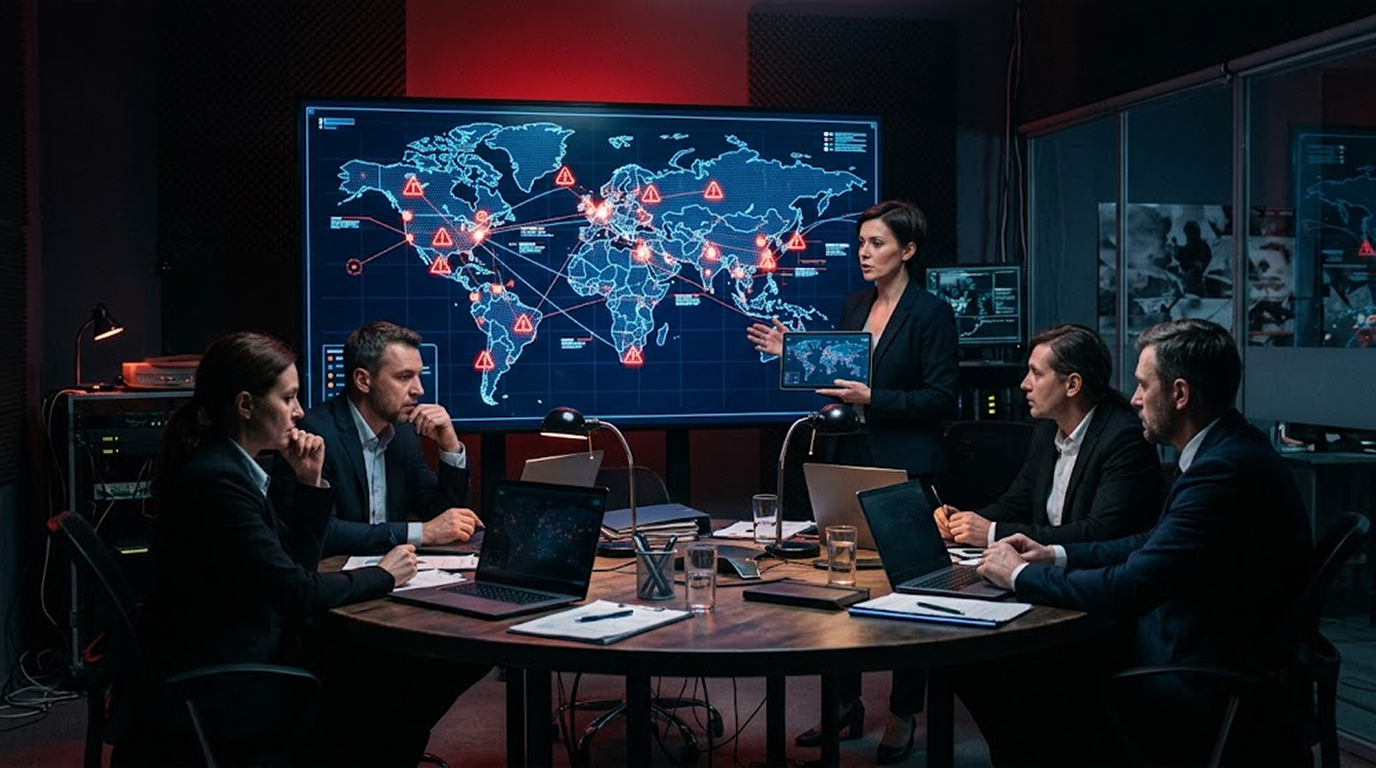
In a cyber war simulation, participants play roles. The CISO, the CEO, the head of communications, the legal team, the IT team, the incident response team. They are presented with a scenario and must make decisions in real time.
The typical scenario will usually involve nation-states, critical infrastructure, and large-scale impacts. The scenario will not include ransomware attacks on a single server. It is not that sort of scenario, it involves large-scale coordinated attacks with geopolitical ramifications.
Scenario examples in cyber warfare:
1. A foreign adversary disables the electricity grid during a heat wave.
2. An enemy group sabotages the water purification processes.
3. The coordinated attack on multiple hospitals during a pandemic.
4. The cyber-attack against the financial network leading to bank runs.
5. The disinformation operation to destabilize the national elections.
These are scenarios meant to be realistic and challenging for the participants. These kinds of exercises highlight deficiencies in an organization’s capacity to manage crises.
Why Simulate Cyber War Scenarios
There are several reasons to run these exercises:
Reason 1: You Cannot Prepare for What You Have Not Practiced
You have an incident response plan. You have a crisis communications plan. You have a business continuity plan. But plans are only as good as the people who execute them.
You cannot read a plan and know how to execute it under pressure. You cannot anticipate every decision you will have to make. You cannot predict how you will react to a crisis.
The only way to know is to practice.
Reason 2: People Make Mistakes in Crisis
In a crisis, people do not rise to the level of their expectations. They fall to the level of their training.
Without training, people freeze. They make bad decisions. They communicate poorly. They blame each other. They ignore the problem. They make things worse.
Training helps people build muscle memory. It helps them understand their roles. It helps them communicate effectively. It helps them make decisions under pressure.
Reason 3: Your Plans Have Gaps
Every incident response plan has gaps. The gaps are not obvious when you are reading the document. They become obvious when you are executing the plan.
Simulations reveal gaps in communication, escalation, decision-making, and coordination. They reveal gaps in your technical capabilities. They reveal gaps in your relationships with external partners.
Reason 4: Your Team Needs to Build Trust
In a crisis, trust is everything. You need to trust that your team members will do their jobs. You need to trust that your leadership will make good decisions. You need to trust that your external partners will support you.
Trust is built through shared experience. Simulations provide that experience.
Reason 5: Stakeholders Expect It
Regulators, customers, and partners expect organizations to be prepared for cyber attacks. They expect you to test your plans regularly. A simulation is a tangible demonstration of preparedness.
Cyber War Simulation Creation Process
The creation of a simulation involves extensive planning, designing of the scenarios, and an effective facilitator.
Step 1: Setting Up the Objectives
What would you like to achieve?
Examples of some objectives can be:
1. Testing the incident management plan.
2. Testing the crisis communication plan.
3. Testing the decision-making process.
4. Testing the escalation process.
5. Testing the coordination within the teams.
6. Testing the coordination with the outside parties.
7. Identify technical limits.
8. Building up team unity.
Be specific. Do not say "test our readiness." Say "test whether the incident response team can contain a compromise within four hours."
Step 2: Selecting the Scenario
The selected scenario needs to be realistic, relevant, and challenging.
Criteria to consider when designing a scenario:
1. What is the most important asset of your organization?
2. What is the biggest threat to your organization?
3. What is the weakest system within your organization?
4. What is the geopolitical setting?
Sample scenarios:
1. State-backed actors launch an attack on your organization’s critical infrastructure.
2. Ransomware actors backed by the state launch an attack on your organization’s IT network.
3. Your organization faces a disinformation campaign.
4. Your organization falls victim to a supply chain attack.
The scenario should be credible but unpredictable. It should challenge participants to think creatively and make difficult decisions.
Step 3: Creation of Scenarios Injects
The injects are the activities which make the simulation progress.
Inject examples are:
1. Someone at work identifies a suspicious email.
2. System warns about the possible intrusion.
3. The news reveals an attack by the hackers on another firm.
4. The regulator inquires about the situation.
5. The client is seeking information about the security breach of his data.
6. The attacker demands the ransom.
7. The attacker makes the data public.
The injects should be designed in such a way that they put pressure on the participants. They should test the participants’ capacity for quick decision-making and adaptation.
Step 4: Assign Roles
The participants must have certain roles assigned to them.
Common Roles:
1. Incident Commander (response coordination).
2. CISO (technical role).
3. CEO (strategic role).
4. Public Relations Head (external communications).
5. Attorney (legal counsel).
6. IT Staff (technical response).
7. Third party stakeholders (regulator, law enforcement, suppliers, etc.).
The participants must be given roles that differ from what they do in their regular life. The CISO must not be CISO and the CEO must not be CEO. It will compel them to think differently and prevent them from doing what comes naturally to them.
Step 5: Select a Format
There are various formats available in cyber war simulations.
Tabletop Exercise:
The participants gather around the table and deliberate about their actions. This is the most popular format. It is affordable and scalable. No technical systems are required for this format.
Live Exercise:
The participants carry out their actions in a live environment. This format is more realistic but is costly and risky as well. Technical systems are needed for this format.
Hybrid Exercise:
The participants do both tabletop deliberations and live technical actions.
Most organizations begin with tabletop exercises and then move on to live exercises with experience.
Step 6: Facilitate the Exercise
The facilitator is the most important person in the simulation. They control the injects. They manage the pace. They keep participants focused. They ensure the objectives are met.
The facilitator should be neutral. They should not be a participant. They should not have a stake in the outcome. They should be experienced in crisis management and simulation facilitation.
The facilitator should also be prepared to adapt. If the participants go in a direction you did not anticipate, you need to adjust the injects accordingly. The simulation should be flexible, not rigid.
Step 7: Conduct the After-Action Review
The after-action review (AAR) is where the learning happens.
Structure of an AAR:
1. What happened? (reconstruct the events).
2. What went well? (identify successes).
3. What went wrong? (list the failures)
4. How can we perform better? (list the lessons to learn)
5. What will we do? (list of actions)
The AAR must be constructive, not punitive in nature. It aims at learning and not blaming. It must create an environment where participants feel comfortable making mistakes.
The action plan should have specific owners and deadlines. Lessons learned are not valuable if they are not implemented.
Common Challenges in Cyber War Simulations
Simulations are not easy to run. Here are common challenges and how to overcome them:
Challenge 1: The Participants Aren't Taking It Seriously
It is as though this were a game for them. They are not totally committed. They do not take real decisions.
Solution: Emphasize the importance of the exercise. Make the situations more realistic. Increase pressure by conducting timed injects.
Challenge 2: The Scenario Is Too Complex
There are some scenarios which are very complicated for the participants to understand and involve in.
Solution: Begin with the easy ones. Consider one scenario at a time. Build up the complexity slowly.
Challenge 3: The Scenario is Too Simple
Some scenarios may be so simplistic that the participants will learn nothing from it.
Solution: Challenge your participants. Surprise them. Force them to adapt. Make difficult choices.
Challenge 4: Facilitator Runs the Show
Some facilitators say too much. They guide participants to the "correct" solution.
Solution: The facilitator must remain impartial. They must not offer any solutions. They must merely give the injects and maintain the clock. Allow participants to come to their own conclusions.
Challenge 5: After-Action Review Not Effective Enough
Some after-action reviews have been rushed, superficial, or punitive.
Solution: Take the time needed for the AAR. Learn from mistakes made rather than punish. Create an action plan. Execute the action plan.
Advanced Simulation Techniques
For organizations that want to go beyond basic tabletop exercises, there are advanced techniques.
Inject-Based Simulations
Inject-based simulations are a structured approach to tabletop exercises. The facilitator has a list of pre-written injects. They release the injects at specific times. Participants must respond to each inject.
This approach is realistic and dynamic. It forces participants to think on their feet. It also allows the facilitator to test specific areas of the response.
Hot Washes
A hot wash is a quick debrief immediately after the simulation. It captures immediate reactions and observations. It is held while the experience is still fresh.
The hot wash is followed by a more detailed after-action review later.
Multi-Day Exercises
Some cyber war simulations last multiple days. This allows for more complex scenarios. It also allows participants to experience the full lifecycle of a crisis from initial detection to recovery.
Multi-day exercises are resource-intensive but highly realistic.
Red Team vs Blue Team Integration
Some simulations integrate red and blue teams. The red team conducts the attack. The blue team defends. The simulation tests both offensive and defensive capabilities.
This is the most realistic approach but also the most complex.
Who Should Participate in Cyber War Simulations
Cyber war simulations are not just for the security team. They need to be a full organizational effort.
The individuals who need to be involved include:
1. CISO and the security department.
2. CEO and the executives.
3. The head of communication and the PR department.
4. Legal department.
5. IT department.
6. Operations department.
7. Human resource department.
8. Finance department.
The crisis response is not just about technology. It is about communication, legal, HR, finance, and operations. All of these functions need to be tested.
External partners should also be included. Law enforcement, regulators, vendors, and other stakeholders may need to be involved in a real crisis. Simulating their involvement helps build relationships and align expectations.
Providers of Cyber War Simulations
There are some organizations that provide cyber war simulation facilities.
Commercial providers include:
1. Cyber security consulting firms.
2. Crisis management consulting firms.
3. Firms providing simulation and training facilities.
Government providers include:
1. National Cyber Security Centres.
2. Cyber Security and Infrastructure Security Agency.
3. NATO Cooperative Cyber Defence Centre of Excellence.
In-house teams:
1. Large companies may develop their simulation programs.
2. It helps to customize the simulations.
The factors to consider when selecting a provider include credibility, experience, and references. It is important that the provider understands your industry.
The Bottom Line
Exercising cyber war scenarios is a necessary preparation for the worst-case scenario. This is where you will test your people, process, and communications. Your deficiencies in incident response, crisis management, and business continuity will be revealed.
A simulation is not a one-time event. It should be a regular part of your security program. The threat landscape is constantly changing. Your capabilities need to evolve with it.
Start with a tabletop exercise. Keep it simple. Focus on learning. Iterate and improve.
The next crisis is coming. The only question is whether you will be ready.
FAQ Section
What does a cyber war simulation consist of?
Cyber war simulation is a training activity aimed at modeling a massive cyber-attack against either a company or a nation. It evaluates the skills of the personnel involved in dealing with the emergency along with the procedures of communication and not only the security mechanisms.
How often should cyber war simulation take place?
The frequency of such simulations should not be lower than one time per year. Companies that are considered risky organizations should conduct them on a regular basis (once in three months).
Who would need to be involved in the cyber war simulation exercise?
The involved people could include the CISO, CEO, Head of Communications, legal department, IT department, Operations department, HR department, and the Finance department. There could also be involvement from external partners such as law enforcement and regulations.
Difference between Tabletop Exercise and Live Exercise?
The table-top exercise is a form of discussion-based simulation whereas the live exercise is the execution of actions in real-life. The Tabletop Exercise is preferred since it is affordable and less risky.
What is an after-action review?
An after-action review is a formal review process conducted at the end of the simulation exercise. This process analyzes things that went well, things that did not go well, and areas of improvement. The end result is an action plan.