What “Malware Free” Actually Means
Not all compromises involve payloads, binaries, or dropped files.
Some of the most persistent incidents never deploy malware at all.
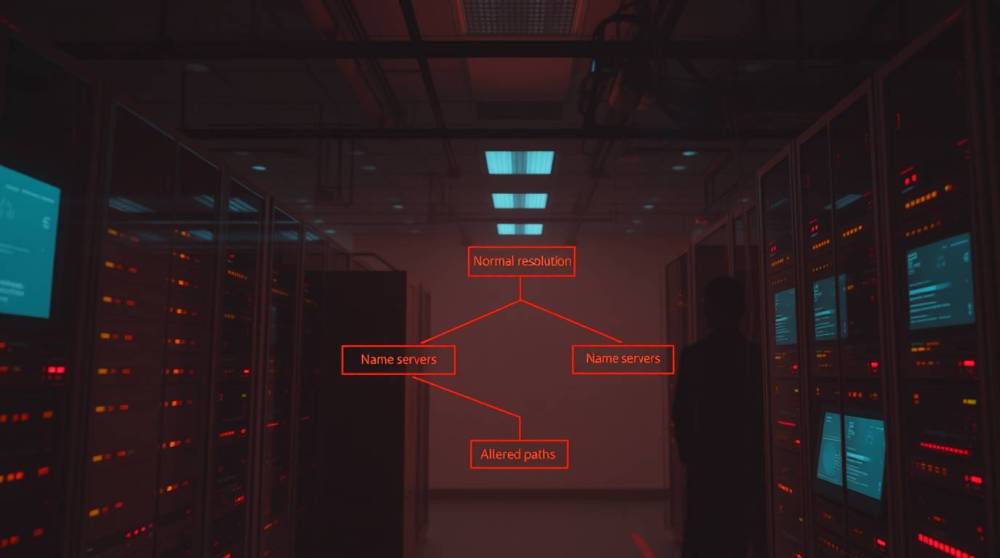
DNS hijacking often succeeds by changing where systems look, not what they run.
The result is quiet redirection, credential theft, or traffic inspection, without alerts tied to malware execution.
Why DNS Is a High Value Control Point
DNS sits early in every connection.
If it is manipulated, everything above it behaves normally.
Users log in as usual.
Applications connect successfully.
Certificates may still validate.
The attacker controls the destination, not the endpoint.
Technique 1: Domain Name Registrar Account Takeover
This is the most common form of DNS Hijack observed in reality.
The attack usually occurs due to:
1. Re-using a previous breach registrar login details (user name & password).
2. Phishing of finance or IT employees.
3. Weak Multi-Factor Authentication (MFA) implementation at the registrar level.
After gaining access to the targeted account, the attacker will modify the following:
1. Name Server records.
2. Login & mail portal A Records.
3. Mail exchange (MX) records to intercept e-mail communications.
Malware is not used, so the new records will propagate globally.
The real-life attack pattern typically follows the following sequence of events:
1. Web traffic being rerouted for several hours.
2. Harvesting credentials via a clone site.
3. Quietly restoring DNS records to minimize the chances of detection.
Most organizations will not realize they have been compromised until they receive a report of fraudulent activity.
Detection example:
1.Execute the following command:
dig example.com NS +short.
2.Then compare that output with the name servers that were previously stored offline.
3.Any unexpected changes should not be assumed to be maintenance.
Technique 2: Compromised DNS Management Interfaces
DNS services are usually managed using web-based interfaces or via APIs.
Attackers are typically targeting:
1. Cloud-based DNS consoles.
2. On-premise hosted DNS Admin Panels.
3. Forgotten users who have Administrative roles.
Commonly observed weaknesses within these areas include:
1. DNS Admins are not required to use Multi-Factor Authentication (MFA).
2. Many teams use the same credentials for access.
3. There are no IP restrictions when using DNS API tokens.
Practical examples of auditing:
Use the following command:
grep -R "dns" ~/.bash_history.
This will provide you a listing of any DNS updates that were made via Scheduled Automation.
You will want to evaluate whether the credentials used to login to DNS are still required.
Technique 3: DNS Manipulation via the Path (No Malicious Software Required)
DNS traffic is not sufficiently secured in several scenarios today where this type of traffic remains unencrypted. An attacker with network access can easily:
1. Generate fake DNS responses using different DNS servers
2. Divert the IP Address of specific site domains
3. Target legacy systems and printers that have had network access
Typical attacks include:
1. VPN Concentrators
2. Update Servers Within the Organization
3. Legacy Windows Hosts
How to Identify Possible DNS Response Spoofing
tcpdump -i eth0 port 53 -nn
Look for the following:
1. Receiving responses from IP addresses you never expected
2. Receiving TTL values different than what you normally see
3. Receiving responses that are faster than the level of performance you have come to expect from your upstream DNS servers; The speed is usually an indicator
Technique 4: DNS Search Engine Manipulation via Router and Firewall
This attack is regularly noticed by employees at the branch level.
Attackers typically gain access to one of the following:
1. SOHO routers
2. Edge Firewalls
3. VPN Gateway
Attackers will modify the DNS settings once and leave; therefore, every device behind the gateway uses the modified resolver.
Real Case Study of This Issue:
1. Remote offices were affected only;
2. Redirects seen sporadically;
3. Central IT sees no endpoint virus.
An example of how to verify:
cat /etc/resolv.conf
If an external resolver was found, that is an indicator of a possible attack, especially in managed work environments.
Technique 5: Domain Shadowing Without Content Hosting
Sometimes attackers don’t host fake content at all.
They create subdomains pointing to attacker infrastructure and use them for:
1. Phishing
2. C2 traffic
3. OAuth abuse
The parent domain remains untouched.
Example
1. login.example.com untouched
2. auth-login.example.com silently added
3. Used in emails and redirects
Detection Script Example
dig example.com ANY +short
Then compare against a known inventory of approved subdomains.
Anything new should be questioned.
Tools Commonly Used in DNS Hijacking Operations
Attackers rely on simple, reliable tooling:
1. dig and nslookup
2. curl for validation
3. Cloud provider APIs
4. Browser based registrar panels
5. Custom Python scripts for automation
Defenders often miss attacks because the tools look legitimate.
Why Traditional Security Tools Miss This
DNS hijacking does not trigger:
1. Antivirus alerts
2. EDR detections
3. File integrity monitoring
Logs exist, but in different places:
1. Registrar audit logs
2. DNS provider change history
3. Network traffic captures
Few teams review them together.
The below list contains effective defense techniques: their focus is on control rather than just detecting noise created by attacks (the method used to monitor DNS activity).
The five listed techniques include:
1. Use Strong Multi-Factor Authentication (MFA) to Lock Regina Account
2. Use Restricted DNS Change Habits/Auditors
3. Monitor All DNS Configuration Updates, Not Just Uptime / Availability
4. Have Baseline Resolvers and Verify Against Them Across Multiple Networks
5. Log All Changes to DNS Configuration and Alert Administrators
DNS Should Be Managed as Part of Your Identity Processing Infrastructure.
Main Takeaways:
1. It is Possible to Conduct DNS Hijacking Without Installing Malware
2. The Most Effective Silent Attacks Target Trust, Not Systems
3. There Are Logs of Activity Related to DNS, But They Are Frequently Not Correlated
4. The Majority of Attacks Are Detected Very Early Through Simple Checks.
When normal traffic flows normally, but something doesn't seem right, it's likely due to a DNS issue.