
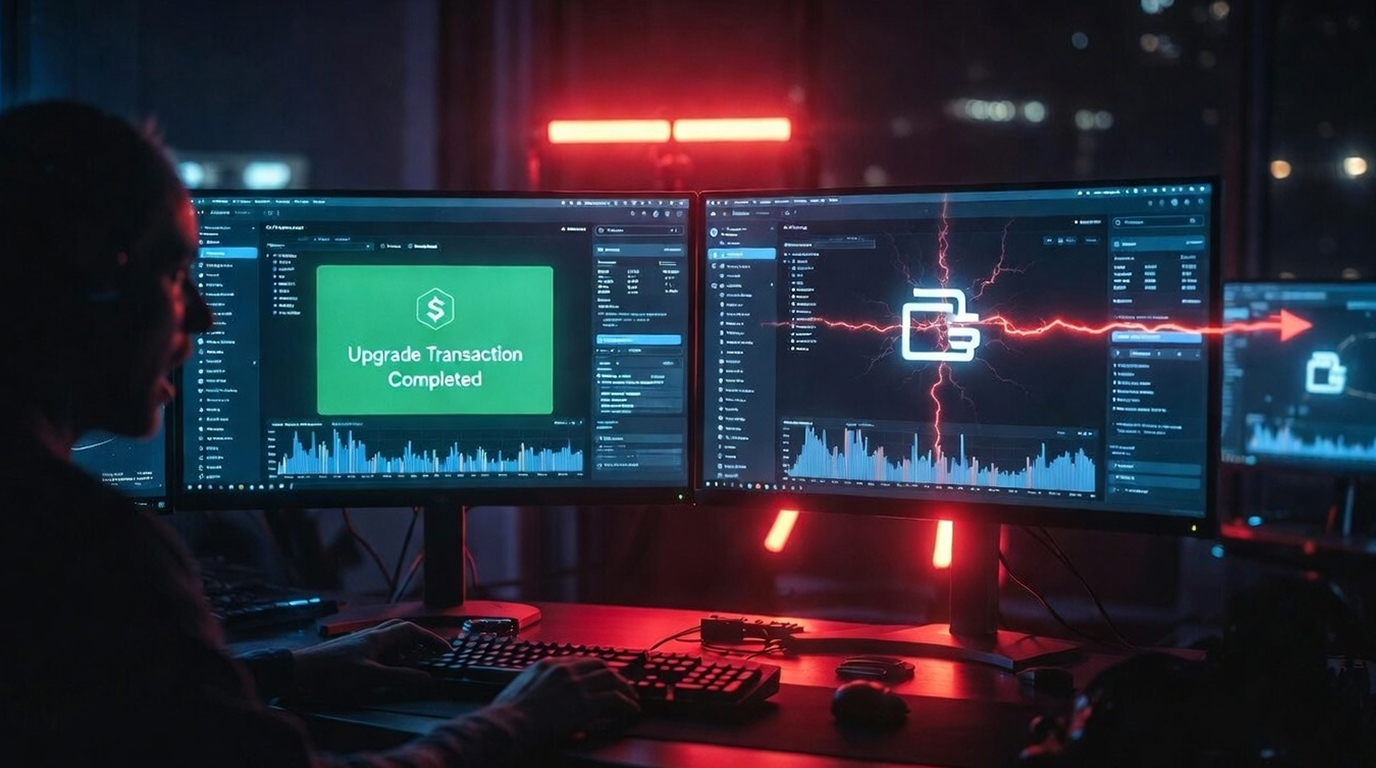
In 2025 and 2026 the most painful losses in DeFi aren’t always classic rug-pulls where the team drains the liquidity pool and disappears. A newer, nastier variant has become disturbingly common: malicious proxy/contract upgrades that turn the protocol itself into a denial-of-service (DoW) weapon against user wallets.
The attacker doesn’t even need to steal funds directly. They can simply make it impossible (or extremely expensive) for legitimate users to interact with their own assets, forcing panic sells, bridge exploits or bridge abandonment at a loss.
How the Attack Usually Plays Out
Most modern DeFi protocols use an upgradeable proxy pattern (usually OpenZeppelin UUPS or Transparent Proxy) so the team can push new logic while keeping the same contract address and storage.
A threat arises from the fact that several ongoing projects maintain the responsibility for coordinating upgrades through a multi-signature wallet, composed of trusted individuals who belong to the community.
Typical progression of malicious upgrades
1. An attacker either compromises or uses techniques to trick into giving access to one/multiple individuals who are authorized to sign the multi-signature (e.g., phishing, infostealing, social engineering, or insider compromise).
2. They propose and execute an upgrade to a new implementation contract they control.
3. The new implementation contains one or more of these “soft rug” mechanisms:
a) Gas griefing / infinite loops ; every transfer, approve, swap, or withdraw call enters a loop that consumes all available gas → transaction reverts with “out of gas”.
b) Reentrancy traps ; fake callbacks that re-enter the caller endlessly → DoS on the victim wallet.
c) Blacklist / freeze ; new storage variable that blocks transfers from specific addresses (including user wallets).
d) Fake “emergency pause” ; function that pauses everything but only the attacker can unpause.
e) An attacker has an enormous profit through 'Hidden Fee' or 'Hidden Tax' on every transaction originating from a transaction where the transaction has originated from a transaction where 99% of the transaction value is going to an address that the attacker controls.
4. Users attempt to make a withdrawal, swap, or transfer and encounter various errors, including 'Execution Reverted', 'Out of Gas', and 'Reverted with Panic Code'.
5. Panic sets in → users bridge out at a loss, sell at bottom, or get phished trying to “rescue” funds → attacker profits indirectly.
Real Patterns Seen in 2025–2026
1. “Emergency upgrade” rugs Attacker claims “critical bug found” → pushes upgrade that silently adds a 99% transfer fee → drains users who interact before noticing.
2. Repeatedly running gas fines; executes 'infinite loop' on balance or allowance = any dApp or wallet checking balance fails = Users can neither view nor move assets.
3. Admin takeover via proxy; hacked multisig signer = upgrading proxy w/ logic controlled by hacker = freezes able to withdraw for 24 - 48 hrs = price drops.
4. False pause / blacklisting; New upgrade creates msg.sender being black-listed = Any legitimate users are blocked from using / interacting.
Why This Hurts Wallets So Badly
1. Wallet UX breaks ; most wallets (MetaMask, Rabby, Phantom, Trust Wallet) assume contract calls succeed → when they revert endlessly users think the wallet is broken.
2. No obvious theft ; funds are still “there” on-chain → users keep trying → rack up gas fees → eventually give up or sell at loss.
3. Psychological damage, “my funds are stuck forever” panic is almost as bad as direct theft.
Practical Defenses (What Protocols & Users Can Do)
For protocols
1. Immutable contracts, if possible, avoid upgradeability completely (many new protocols are doing this).
2. Timed delay prior to upgrades using multiple signature agreements requires a 48 - 72 hours delay before an upgrade occurs so that community members have time to respond appropriately.
3. A governance token can be used to revoke someone's right to perform an upgrade, by voting to destroy or "burn" the upgrade rights.
4. An example of Transparent Proxy (which is more difficult for a potential scammer to manipulate compared to UUPS) are proxies from OpenZeppelin.
5. When creating a contract, make sure there is already a set method of stopping (or pausing) the contract without needing to upgrade it.
For users / wallet holders
1. Do not approve any upgradeable contract with an unlimited spending limit; approve only for exact dollar amounts or cancel after your transaction has been finalized.
2. Monitor contract upgrades through either Etherscan or Tenderly’s alert system; if a contract has been unexpectedly upgraded, stop engaging the contract until further evaluation has been performed on that contract’s new codebase.
3. Use wallets with simulation/pre-execution (Rabby, Frame, Fire), they show “this call will revert” or “infinite gas” before you sign.
4. When in doubt → bridge assets to a safe chain/wallet and wait 48–72 h.
Upgradeable contracts give teams flexibility, but they also give attackers a single point of failure. Every malicious upgrade that bricks user interactions is effectively a soft rug-pull.
If a project you use is upgradeable, check the upgrade governance right now. If it’s a 2-of-3 multisig with anonymous signers → treat it as high risk.


