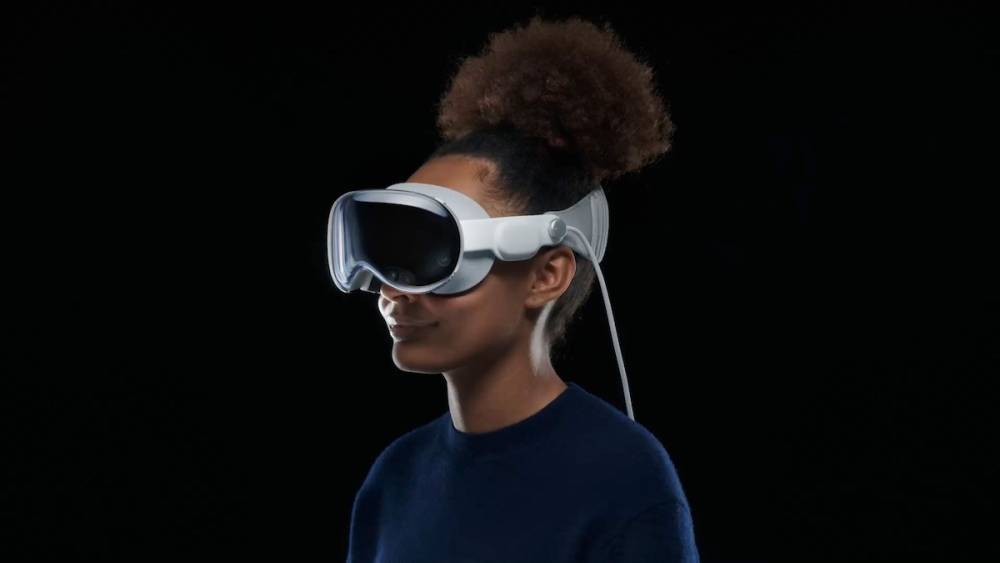
Details have emerged about a now-patched security flaw in Apple's Vision Pro mixed reality headset that could have allowed attackers to infer what users were typing on the device's virtual keyboard. The flaw, dubbed GAZEploit, has been assigned the identifier CVE-2024-40865.
The attack leverages a vulnerability in gaze-controlled text entry, a feature that lets users input data by focusing their eyes on a virtual keyboard. According to researchers from the University of Florida, the CertiK Skyfall Team, and Texas Tech University, GAZEploit exploits this vulnerability when users share a virtual avatar in mixed reality environments, such as during video calls or virtual meetings.
How GAZEploit Works:
GAZEploit takes advantage of the way gaze-controlled typing works. By analyzing the eye movements—or "gaze"—of a user's virtual avatar, an attacker could reconstruct the text that the user was typing. This is accomplished by using eye-related biometrics from the avatar image, such as eye aspect ratio (EAR) and eye gaze estimation.
A supervised learning model is trained on recordings of these metrics during typing sessions. It can distinguish between different activities, such as typing on the virtual keyboard versus watching movies or playing games. After that, the attacker can map the gaze estimation directions on the virtual keyboard to specific keys, allowing them to infer keystrokes and potentially extract sensitive information like passwords.
Exploit Potential:
The GAZEploit attack is particularly concerning because it can be carried out remotely. A malicious actor could capture video of a virtual avatar during video calls, online meetings, or live streaming platforms. By analyzing the captured video, they could infer the typed keys based on the user's eye movements, compromising their privacy and potentially leading to data breaches.
"By remotely capturing and analyzing the virtual avatar video, an attacker can reconstruct the typed keys," the researchers said. "Notably, the GAZEploit attack is the first known attack in this domain that exploits leaked gaze information to remotely perform keystroke inference."
Apple's Response:
The vulnerability was responsibly disclosed to Apple, and the company addressed it in visionOS 1.3, released on July 29, 2024. According to Apple’s security advisory, the flaw impacted a component called Presence, which facilitates the virtual avatar feature. The issue was resolved by suspending the Persona avatar while the virtual keyboard is in use, preventing attackers from gathering eye-related data during typing sessions.
Apple’s advisory clarified that "inputs to the virtual keyboard may be inferred from Persona" and confirmed that suspending the avatar during typing effectively mitigates the risk of GAZEploit attacks.
Implications for User Privacy:
The GAZEploit attack highlights the evolving risks associated with mixed reality technologies like Apple's Vision Pro, which rely heavily on eye-tracking for user interaction. While the issue has been patched, it underscores the need for continuous vigilance in securing advanced features like gaze-based input, as they become more prevalent in everyday devices.
The attack also raises questions about the future of biometric data privacy, especially as gaze tracking and other biometrics are integrated into virtual and augmented reality applications.