Not all forms of email fraud take the form of "you’ve won a prize!" messages as they did in the past. Email fraud today can be less obvious, more targeted, and much more integrated into users’ daily workflow than when it first started becoming prevalent. By 2026, however, the majority of email fraud is going to be based on exploiting Trust rather than on “blatant” errors.
More Precisely Targeting Users
While the majority of phishing will continue to exist in generic (but still targeted) forms, the vast majority of attacks that have a substantial impact on a company will be extremely tailored:
1. Impersonation of executives – Honestly imitating the executive’s style and phrasing
2. Vendor/Payment diversion – Creating invoices that look genuine and have been referenced
3. Internal manipulation of communications – Generating fraudulent requests that are presented within ongoing discussions
The success of these attacks can be attributed to the fact that most users expect to receive messages of this type on a daily basis.
Using Automation and Workflow Tools to Commit Fraud
The growing use of automation as an avenue to commit fraud is increasingly being used in businesses. Automation is being used to redirect emails automatically based on the company’s rules and also to set up policies to auto-forward emails without providing any additional review. Since in many cases companies are using these automated tools with tools and calendar applications, even the smallest misconfiguration related to automation will dramatically increase the potential impact of a fraudulent email.
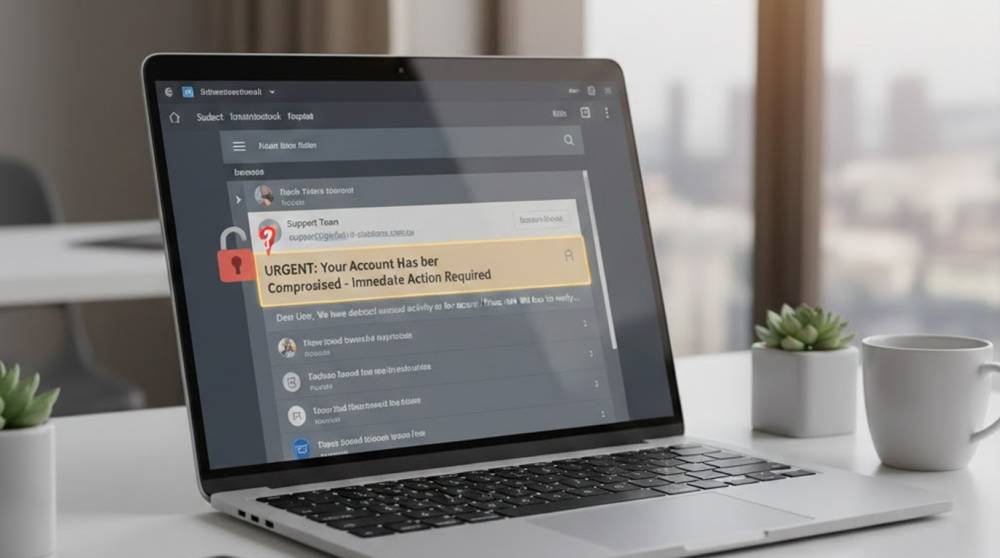
An email scam has the ability to persuade someone with a subtle way of communicating urgency and timeliness through messages such as, “For your immediate review, before the end of the day,” “This update is very important for compliance,” or “Immediate action is required for payment.” Unlike many of the more obvious scam messages (e.g., ‘You have won!’), these emails blend in to the user's normal behavior and use persuasion instead of fear.
Some trends in fraud techniques for 2026 are related to how fraudsters will take advantage of artificial intelligence, including:
1. Emails that look as if they came from familiar people.
2. Websites/Email addresses that look the same as existing websites/email addresses, but the URL may differ by one or two letters.
3. The ability to personalize messages based on responses to previous messages.
The ease at which these emails can be confused for legitimate will make it more difficult for casual inspection of emails to identify them as fake.
Real-world patterns seen repeatedly
Example 1: Changing an Invoice
1. Vendor emails were tampered with or faked
2. Payment details were changed slightly
3. Finance finalized payments before they were double-checked
Effect: Loss of money and poor relationship with vendors.

Example 2: Executive Impersonation - Company CEO Emailer
1. A company executive sent a company-wide email asking for confidential information
2. The email looked authentic and was signed by the company executive
3. The company employee who received the email acted on the email before notifying the supervisor
Result: An internal leak of highly sensitive information from the company's records.

Example 3: Automated "Auto-Forwarding" System Abuse
1. An automated "forwarding" system was used to forward sensitive documents from the company to individuals or groups outside the company
2. Criminals became aware of the automated forwarding system and took advantage of it, gaining access to sensitive information over a prolonged period
3. There were no warning signs that the forwarding system had been abused
Result: Continual exposure of sensitive information to criminals without any indication of what was happening.

Leaders need to take practical measures to protect their companies from email fraud:
1) Conduct regular audits on your auto-forwarding systems and set restrictions on auto-forwarding to maintain control.
2) Confirm and validate all requests related to financial payments and sensitive information.3) Report unusual emails without fear of overreacting.
4) Train staff to be suspicious of all urgent requests; i.e., not only obvious scams.
5) Create policies based on patterns, not individual instances. When leadership is involved in creating policy, it helps ensure that the company's actions and policies are aligned.
Final Thoughts:
Email fraud will continue to be an ongoing issue into 2026 as criminals become more sophisticated and context-driven to execute their schemes successfully. Email fraud will continue to be successful when processes presume trust and a level of normalcy.