Imagine waking up to find your email server locked. Your admin password does not work. Your users cannot send or receive messages.
You did not click a phishing link. You did not reuse a weak password. Your firewall was configured correctly.
But someone still took over your server. They did not need to know your password. They did not need to guess it. They simply asked the server to change it and the server obeyed.
This is CVE-2026-23760. And it is one of the most critical vulnerabilities disclosed in early 2026.
Let me explain how it works, why it is so dangerous, and what you need to do right now.
About the Vulnerability
CVE-2026-23760 is an authentication bypass vulnerability in SmarterMail, a popular business email and collaboration server used by thousands of organizations worldwide.
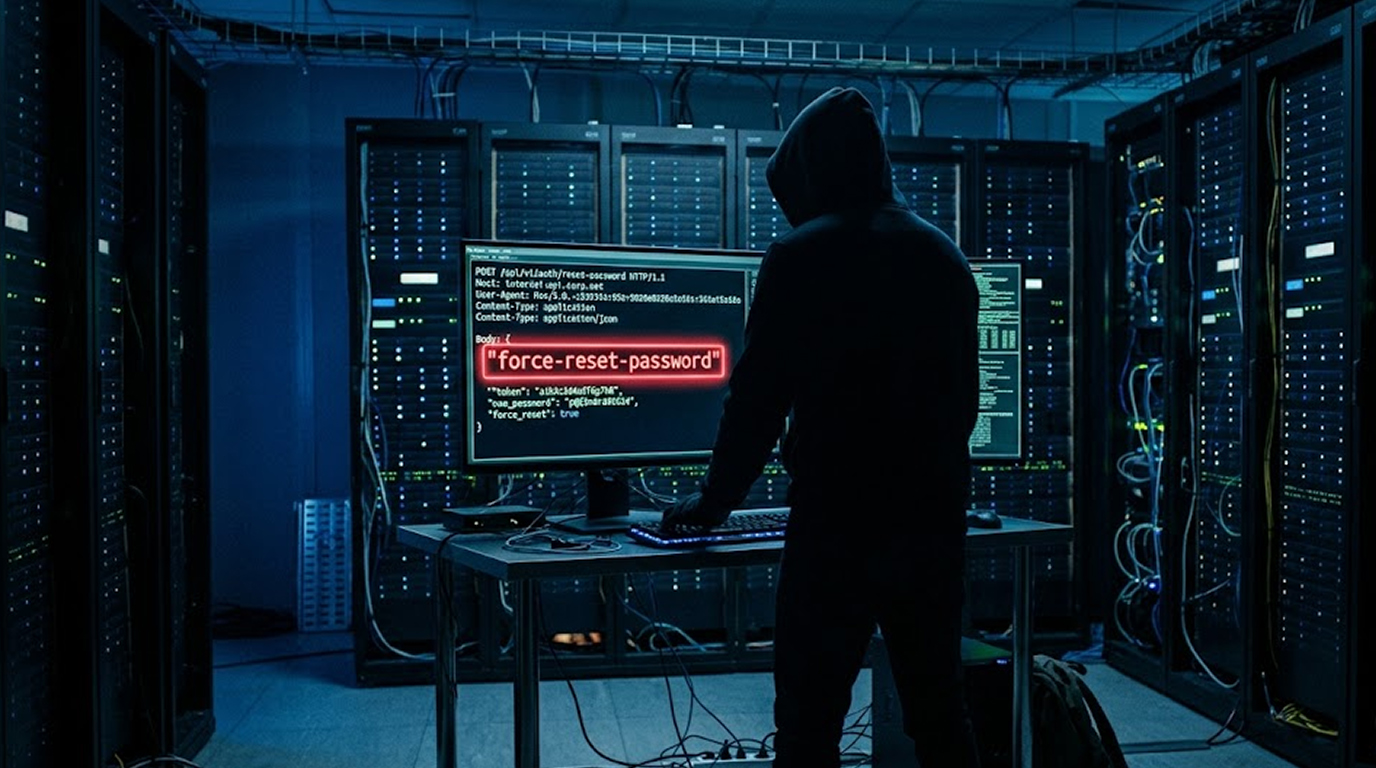
The vulnerability exists in the password reset API, specifically in an endpoint called force-reset-password. This endpoint was designed to allow administrators to reset passwords when users forget them.
But there was a fatal flaw.
The API endpoint accepted anonymous requests. It did not check whether the requester was logged in. It did not verify that the old password was correct. It did not require a reset token. Nothing.
An attacker simply needed to know the username of an administrator account. Then they could send one HTTP request to reset that administrator's password to anything they wanted.
No authentication. No user interaction. No warning.
CVSS Score: 9.3 (Critical)
The Attack: A Single HTTP Request
Let me show you exactly how simple this exploit is.
The attacker sends a POST request to the vulnerable SmarterMail server:
POST /api/v1/auth/force-reset-password HTTP/1.1
Host: target-smartermail-server:9998
Content-Type: application/json
{
"IsSysAdmin": "true",
"OldPassword": "anything",
"Username": "admin",
"NewPassword": "Hacked123!@#",
"ConfirmPassword": "Hacked123!@#"
}
What is happening here:
1. IsSysAdmin: "true" – Tells the server to reset the system administrator account
2. OldPassword: "anything" – The server does not check if this is correct
3. Username: "admin" – The target administrator account
4. NewPassword – The attacker's chosen new password
The server responds with "success": true. The attacker now has full administrative access to the SmarterMail instance.
All the attacker needed to know: The administrator's username.
That is it.
From Password Reset to Full System Compromise
Resetting the admin password is just the first step. Once the attacker has administrative access, they can completely take over the underlying server.
Step 1: The malicious user gains access to the SmarterMail web interface with full administrative permissions by using the newly established password to authenticate as Administrator.
Step 2: Exploiting a valid feature of SmarterMail (volume mounts). This allows the administrator to define commands used when mounting a networked drive. The ability to do this creates a more efficient way to manage storage. Unfortunately, as a part of this functionality, the application does not check or filter input provided within the Volume mount command field.
The attacker navigates to Settings → Volume Mounts and creates a new Volume with a command that is an arbitrary operating system command (not a valid mount command) in the Volume Mount Command field.
Step 3: Upon saving the configuration, SmarterMail will execute the command on the underlying operating system with the same permissions as the SmarterMail service (in Windows, this is normally the SYSTEM user, highest access level).
At this point, the attacker has full access through remote code execution (RCE). As such, the attacker has the ability to: install malicious code [malware], take any sensitive data/information, open backdoors to provide future access to the compromised host, or implement ransomware onto the compromised host.
The attack is now complete in the following manner: unauthenticated API call → admin privileges → executing the system-level command.
Why This Vulnerability Is So Dangerous
Authentication bypass vulnerabilities pose a serious threat, but this one is particularly problematic for three reasons:
1. Lack of complexity
Most critical vulnerabilities require a combination of bugs to exploit or many layers of security to circumvent, but this vulnerability is simple to exploit. Just a single HTTP request with only basic knowledge on how to use curl.
2. No user interaction required
An attacker does not have to get the administrator to click on a malicious link or open a booby-trapped document. The exploit does not require any action from the user; it is entirely server-side.
3. Full chain to system compromise
Some vulnerabilities give you limited access, maybe read-only data or restricted commands. This vulnerability leads directly to full operating system takeover.
Who Is at Risk
SmarterMail is used by:
1. Managed service providers (hosting email for hundreds of small businesses)
2. Mid-sized enterprises (running internal email and collaboration)
3. Government and education institutions
4. Any organization that does not want to use cloud email services like Microsoft 365 or Google Workspace
If your organization runs SmarterMail version Build 9509 or earlier, you are vulnerable.
How to check your version:
1. Log into SmarterMail as an administrator
2. Look at the bottom of any page for the build number
3. Build numbers ending in 9509 or lower are vulnerable
4. Patched builds start at 9511
Real-World Attack Patterns
The simplicity of this vulnerability means attackers have automated its exploitation.
What attackers do after gaining access:
1. Deploying ransomware by encrypting email databases/attachments
2. Installing persistent backdoors using web shell files disguised as legitimate SmarterMail web files
3. Stealing your email archives by copying years of internal communications (both sent and received)
4. Using the server as a spam relay to deliver malicious emails from a "trustworthy" domain
5. Lateral Movement by using the compromised email server to attack other internal networks
Indicators of compromise to watch for:
1. Password reset emails that were not generated by you, but were randomly generated as a result of an automated system
2. New administrator accounts created on the SmarterMail server without your knowledge
3. Unusual volume mount configurations on your SmarterMail server
4. Unfamiliar processes running on your SmarterMail/server
5. An outbound network connection initiated from your SmarterMail/server to an unknown IP address
How to Patch and Respond
If You Are Running a Vulnerable Version
Immediate action:
1. Upgrade to SmarterMail Build 9511+ ASAP
2. This patch eliminates access to the unauthenticated force-reset-password endpoint
If you cannot upgrade immediately:
1. Restrict access to the SmarterMail Admin ports (9998)
2. Allow access only from trusted IP addresses (home office, VPN end points)
3. Monitor the Administrator log for logons from suspicious sources
4. Look for Volume Mount modifications in system audit logs
If you think your server has been compromised
Containment (0-2 hours):
1. Isolate the SmarterMail from the network immediately
2. Do not power the server down; just remove the network cable
3. Change all administrator passwords from the server—I repeat, NOT via the web interface
4. Go back through the SmarterMail user list for any unauthorized access
Investigation (next 24 hours):
1. Check authentication logs for the force-reset-password endpoint
2. Check Volume Mounts for any commands not expected to occur
3. Check for any new scheduled tasks or new services added after the intrusion
4. Look for web shells in the SmarterMail webdirectory
5. Review outbound networking activity from the server over the past 30 days
Recovery:
1. If you've found evidence of compromise, do NOT just wipe or restore that particular server with an updated version.
2. Restore data from a previously known good backup prior to the date the first exploit was successful.
3. Change all passwords stored on or available through your email server.
4. Notify any impacted Users of the potential compromise of their email data.
The Technical Root Cause:
Security professionals and Systems Administrators interested in understanding exactly how this incident occurred.
The Force Reset Password ("force-reset-password") API Endpoint was designed in such a way that it did not perform a check for the presence of a Valid Session Token or API Key. The Server just verified certain (set) JSON parameters and processed the password change without any verifying of the person requesting the password change.
This could be displayed as such in pseudocode:
function forceResetPassword(request):
user = database.findUser(request.Username)
if user exists:
user.setPassword(request.NewPassword)
return success
else:
return error
The corrected logic adds authentication checks:
text
function forceResetPassword(request):
if not request.hasValidAuthToken():
return unauthorized
user = database.findUser(request.Username)
if user exists and user.isSystemAdministrator():
user.setPassword(request.NewPassword)
return success
else:
return error
This patch removed public access from this endpoint completely to restrict it to only being an internal process of the System.
Lessons for Every System Administrator
CVE-2026-23760 offers lessons that apply far beyond SmarterMail.
Lesson 1: Never trust API endpoints
Every API endpoint should require authentication unless there is an explicit, documented reason to allow anonymous access.
Lesson 2: Password reset functionality is a high-risk area
Password reset is as sensitive as login itself. It should receive the same security scrutiny.
Lesson 3: Assume attackers will find your vulnerabilities
Build detection for exploitation. Can you tell if someone maliciously changed a password? Do you have alerts for unexpected Volume Mount changes?
Lesson 4: Patch faster
The first public exploitation attempts appeared just two days after the patch was released. Attackers are watching security advisories the moment they are published.
Final Thoughts: Just an Ask Is Enough
The Critical Vulnerabilities of CVE-2026-23760 Show Us How Easy it Is to Create a Critical Vulnerability.
Building a critical vulnerability doesn't require a complex exploit chain or sophisticated skill sets; it only requires an HTTP request sent to the right endpoint.
The attacker does not need your password. They do not need to crack a hash or bypass multi-factor authentication. They just ask your server to reset the admin password. And your server says yes.
Patch now. Check your logs. And never assume that "someone would need to know my password" is a valid security control.
Because with CVE-2026-23760, they did not need to know it at all.
FAQ Section
1. What is CVE-2026-23760 in simple terms?
It is a vulnerability in SmarterMail that allows an attacker to reset any user's password including the administrator by sending a single web request to the server. The attacker does not need to log in or provide the current password.
2. Which versions of SmarterMail are affected?
All SmarterMail versions before Build 9511 are vulnerable. Version numbers Build 9509 and earlier are confirmed vulnerable. Build 9511 and higher contain the patch.
3. How can I tell if someone exploited this against my server?
Check your SmarterMail authentication logs for successful logins from unfamiliar IP addresses. Look for the force-reset-password API call in your web server logs. Also check for unexpected Volume Mount configurations and new administrator accounts.
4. What is the purpose of Volume Mount Command Execution? Why is this important?
Volume Mount can be utilized freely by SmarterMail to mount a network drive. When an attacker can reset the admin password they can enter arbitrary operating system commands into the appropriate field. SmarterMail will execute these commands under the SYSTEM account, providing an attacker with complete control of the server.
5. How fast should I fix this vulnerability?
Very quickly. We have seen numerous exploitation attempts against systems that became known to have this patch available within the last 48 hours. Attackers are actively scanning for systems running unpatched and exposed publicly SmarterMail instances. If you have a public-facing, unpatched system you should assume that it has already been identifie