You are a security engineer. You have spent months building defenses. Firewalls, intrusion detection, zero-trust architecture. You feel confident.
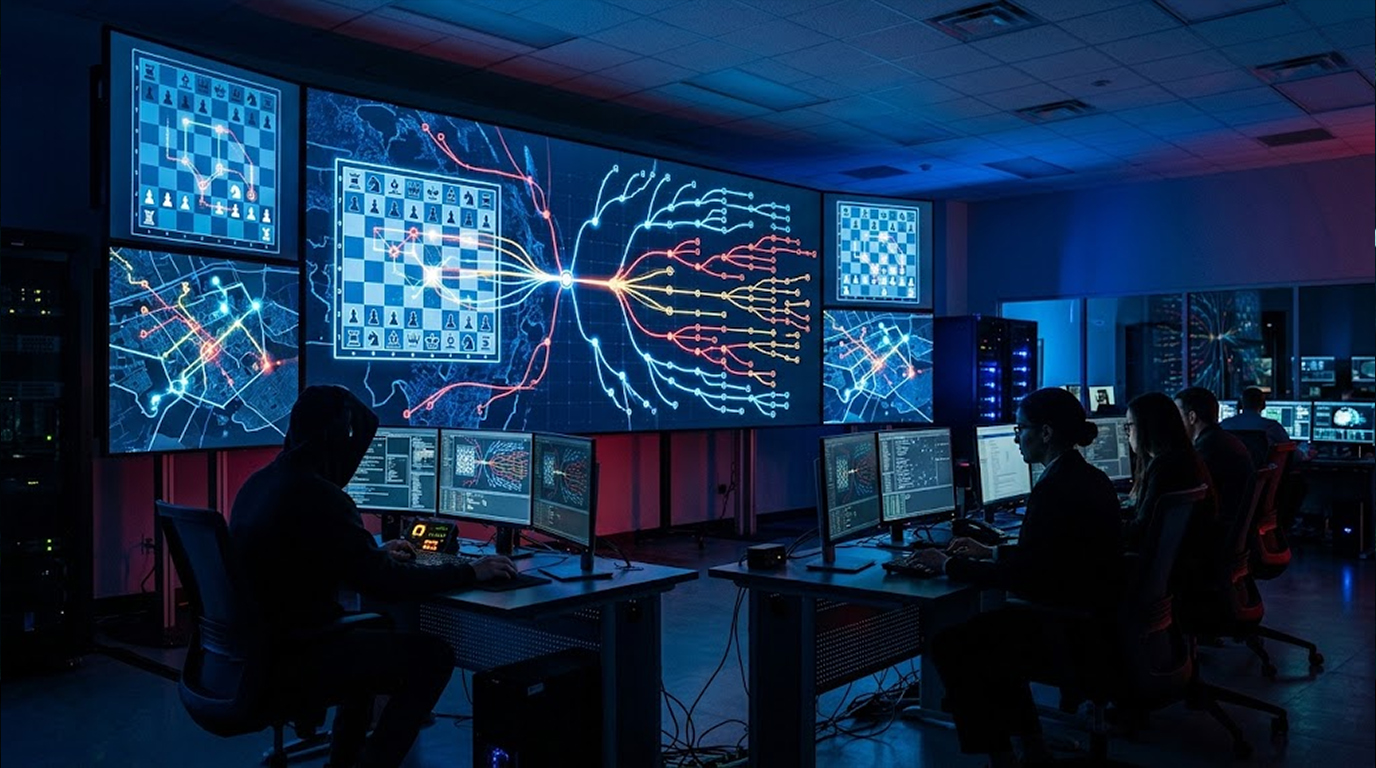
Now imagine an attacker who does not just probe your defenses. They simulate them. They run thousands of "what-if" scenarios before ever sending a single packet. They know exactly how you will respond to every move.
That is the reality of counterfactual reasoning in cyberattacks. And researchers are finally starting to talk about it.
Important Disclaimer
This article is intended for educational and defensive purposes only. The techniques described here are shared to help security professionals understand emerging threats so they can better protect their systems.
Do not use these techniques against systems you do not own or do not have explicit written permission to test. Unauthorized testing is illegal in most jurisdictions and violates computer fraud and abuse laws.
What Is Counterfactual Reasoning?
Counterfactual reasoning is the ability for imagining other possible outcomes. It is the "what-if" thinking that humans do naturally. What if I had taken a different route to work? What if I had invested those stocks?
In artificial intelligence, counterfactual reasoning involves training the AI models to ask hypothetical questions. Rather than identifying threats based on patterns, the AI asks the question, “What if the attack was carried out differently?” What if the attacker tried this instead?"
Researchers are now building structured "what-if" ontologies that formalize this reasoning for cybersecurity applications.
How Hackers Could Use Counterfactual Reasoning
Traditional attacks are reactive. The attacker probes, sees how you respond, and adjusts. It is a slow process.
With counterfactual reasoning, the attacker can simulate your entire defense posture before launching a single attack. They can ask: "What if I use a SQL injection on this endpoint? Will the firewall catch it? What if I try a different payload? Will the IDS detect it?"
They can run these simulations thousands of times. They learn exactly what triggers your alerts and what slips through. By the time they actually attack, they already know your response. They have already planned for it.
This is not just theory anymore. Attackers can exploit vulnerabilities in AI systems to spread manipulated knowledge and influence multi-agent systems without even needing to use explicit prompt manipulation. They inject counterfactual knowledge that changes how AI agents perceive and respond to threats.
The "What-If" Ontology
Researchers have proposed a formal "what-if" ontology to enable this type of reasoning. Counterfactual reasoning is integrated with the large language model within a structured ontology.
This enables formalization of various cyber security concepts, causal relationships, and counterfactuals. In doing so, the framework provides a semantic backbone to conduct AI-based simulations of possible cyber attacks and their results.
It will increase not only detection accuracy but also explainability of the AI model through making it able to ask “what if” questions and provide causal explanations.
Scenario 1: The Attacker Who Already Knows Your Moves
The Setup
A large financial institution has deployed an AI-powered intrusion detection system. The system has been trained on thousands of known attack patterns. The security team thinks they are covered.
The Attack
The attacker uses counterfactual reasoning to simulate how the system responds to different techniques. They perform a simulation in which they implement a SQL injection attack using a particular payload. The simulation shows that the IDS detects it. They try another payload. It slips through.
They repeat this process hundreds of times. They build a map of exactly what triggers the IDS and what does not.
The Result
Once the attack is initiated, the attacker uses the payload that is not detected by the IDS. The attack will continue undetected for several weeks. It is only when the team becomes aware of the attack that it is too late, the damage is already done.
Scenario 2: The Defender Who Simulates Before the Attack
The Setup
A security team is preparing for a potential ransomware attack. They know the attackers are sophisticated, but they are not sure exactly what techniques they will use. They cannot afford to be caught off guard.
The Defense
The team deploys a counterfactual reasoning system. The system simulates dozens of attack scenarios. What if the attacker uses a zero-day vulnerability? What if they target backups first? And what if they employ an encryption technique?
The Result
The team identifies several gaps in their defenses and patches them. When the real attack comes, the attackers try their usual techniques. They fail. The defenders have already seen it coming.
Scenario 3: Multiple Agents' Manipulation
The Setup
A large enterprise makes use of many AI agents for security purposes. Information exchange and cooperation take place between them. It is a well-oiled machine.
The Attack
An attacker injects manipulated knowledge, including counterfactual information, into one of the agents. The agent spreads this information to other agents.
The Result
The agents begin to believe false information. They make incorrect decisions. The enterprise is compromised. The attackers never even had to touch the network directly.
Scenario 4: The Red Team’s Secret Weapon
The Setup
A red team is conducting tests on an organization defenses. They need to find new attack paths that human testers might overlook. They have tried everything they can think of.
The Tool
The red team uses a counterfactual reasoning system to generate novel attack paths. The system asks these questions: "What if I begin my attack with a phishing mail instead of an exploit on the vulnerability? What if I begin by targeting the backup infrastructure? What if I use a different command-and-control channel?"
The Result
The system discovers an attack path that no one had thought of. Red team utilizes this to gain successful breach into the organization. The defenders are surprised. They had never considered that path.
Scenario 5: The Agent That Thinks Before It Acts
The Setup
A zero-trust environment uses AI agents to make autonomous decisions about access and response. The agents have a lot of power.
The Decision
An agent wants to block a user who is acting suspiciously from accessing their system. The agent counterfactual reasoning to evaluate the consequences. What if I block this user and they are legitimate? What if I allow access and they are an attacker?
The Result
The agent makes a more informed decision. The user is blocked but after the confirmation from other sources. The user was really an attacker. The agent's reasoning helped in saving the day.
Why This Threat Is Different
It Is Proactive
Traditional attacks are reactive. The attacker probes, sees how you respond, and adjusts. Counterfactual reasoning allows attackers to do all their exploration before they ever touch your network.
It Is Automated
AI can run thousands of simulations in seconds. Attackers do not need to manually test every permutation. The AI does it for them.
It Is Adaptive
The AI learns from each simulation. It refines its understanding of your defenses. It identifies the weak points. By the time the attack comes, it is optimized for your specific environment.
It Exploits Black Boxes
Many conventional AI-powered systems rely on black boxes, which detect threats but do not provide reasons for these detections. In order to exploit the AI system, one can simply input data into it and draw an entire map of its operations.
What You Can Do About It
1. Train Your AI to Expect the Unexpected
Expose your AI to adversarial examples. Let it see the kind of counterfactual simulations attackers might run. The more it sees, the better it can distinguish legitimate threats from simulated probes.
2. Stop Using Black Boxes
Instead, use explainable AI which will give reasons behind its decisions. If you cannot explain why your AI made a decision, you cannot defend it. Attackers will take advantage of that opacity.
3. Watch Your Agents
Ensure there are supervising agents in multi-agents systems that supervise the interaction and validate the knowledge exchange. Ensure the agents critically validate the information they get.
4. Simulate Defensively
Use counterfactual reasoning defensively. Use simulations yourself to spot any flaws in your defenses before your attackers do.
5. Protect Your Models
Employ differential privacy to protect against attacks which can extract sensitive data through counterfactual explanations.
The Bottom Line
Counterfactual reasoning is a double-edged sword.It is effective in defense, but at the same time it provides attackers with a new opportunity to probe and predict your defenses.
Researchers are developing formal "what-if" ontologies that enable AI to simulate hypothetical attack scenarios and assess alternative outcomes. This research develops not only offense but defense.
It is clear that the very same techniques used to predict attacks on defenses can be used for planning attacks around defenses. The race is on to see who can operationalize counterfactual reasoning more effectively.
Your best defense is awareness. Understand that attackers may already be simulating your defenses. Invest in explainable AI that can make decisions based on alternative outcomes. And never think your defense is unbreakable.
FAQ Section
What is counterfactual reasoning in cybersecurity?
Counterfactual reasoning allows one to simulate hypothetical attacks and evaluate possible outcomes. This way, artificial intelligence learns to ask “what if” questions on the attack process.
How can hackers leverage counterfactual reasoning to their advantage?
Hackers can simulate your defensive posture without mounting any attack in real life. They can figure out attack vectors and plan how to act on your defenses without ever touching your network.
What is a "what-if" ontology?
A "what-if" ontology is a formal framework that structures counterfactual reasoning for cybersecurity applications. It defines the important entities, causation, and counterfactual conditions needed for AI-guided analysis.
How can counterfactual reasoning help in defense?
It allows defenders to practice attack simulations in advance, to train security analysts, to enhance autonomous systems and to find new threats using alternate hypotheses.
What is the multi-agent threat?
Attackers can inject manipulated knowledge, including counterfactual information, into AI multi-agent communities. The agents spread this information without explicit prompt manipulation, and it persists through retrieval-augmented generation frameworks.
How can organizations protect against this threat?
Use adversarial training, move toward explainable AI, implement supervisory agents in multi-agent systems, run your own counterfactual simulations, and protect models with differential privacy.