Open-source software has changed the world, it has made development faster and more collaborative, but it has also changed the threat landscape because open-source malware now exists, and that is a real problem.
BraZetsu is one perfect example of how this works since it is an information-stealer that is written in Python and is open source, meaning that it can be downloaded, modified, and even used by anyone who does not have programming skills.
This makes it incredibly dangerous because attackers do not need to be experts anymore, they just need to know how to run a script, and that is it.
Here is what you need to know about BraZetsu malware, how it works, and how you can defend against it.
Important Disclaimer
This article is intended for educational and defensive purposes only, the techniques described here are shared to help security professionals understand emerging threats so they can better protect their systems.
Do not use these techniques against systems you do not own or do not have explicit written permission to test, unauthorized testing is illegal in most jurisdictions.
The author assumes no liability for any damages, legal consequences, or other outcomes resulting from the use or misuse of this information, always obtain proper authorization before conducting any security testing, and stay legal, stay ethical, stay responsible.
What Is BraZetsu?
BraZetsu is an open-source information stealer, it first showed up in 2023, it is written in Python, and it is built to do one thing well, steal your stuff.
Credentials, cookies, and crypto wallets, it grabs them all.
Here is the scary part, the code is sitting on GitHub, anyone can grab it, anyone can tweak it, and anyone can use it.
You do not need to be a skilled hacker anymore, you just need to know how to run a Python script, and that is it.
Why Open-Source Malware Is a Game Changer
Open-source malware changes everything.
Before this, attackers had to be decent developers, they had to write their own code, they had to figure out how to avoid detection, and they had to maintain their tools.
Now? They just download someone else's work, use it as-is, or change it, add new features, make it behave differently, and make it harder to spot.
This is the democratization of cybercrime, anyone can play now.
What this means for you:
- More attackers with less skill
- Malware evolves faster
- Harder to detect because variants pop up constantly
- Cheaper for attackers to operate
How BraZetsu Actually Works
BraZetsu is simple but effective.
The Attack Chain
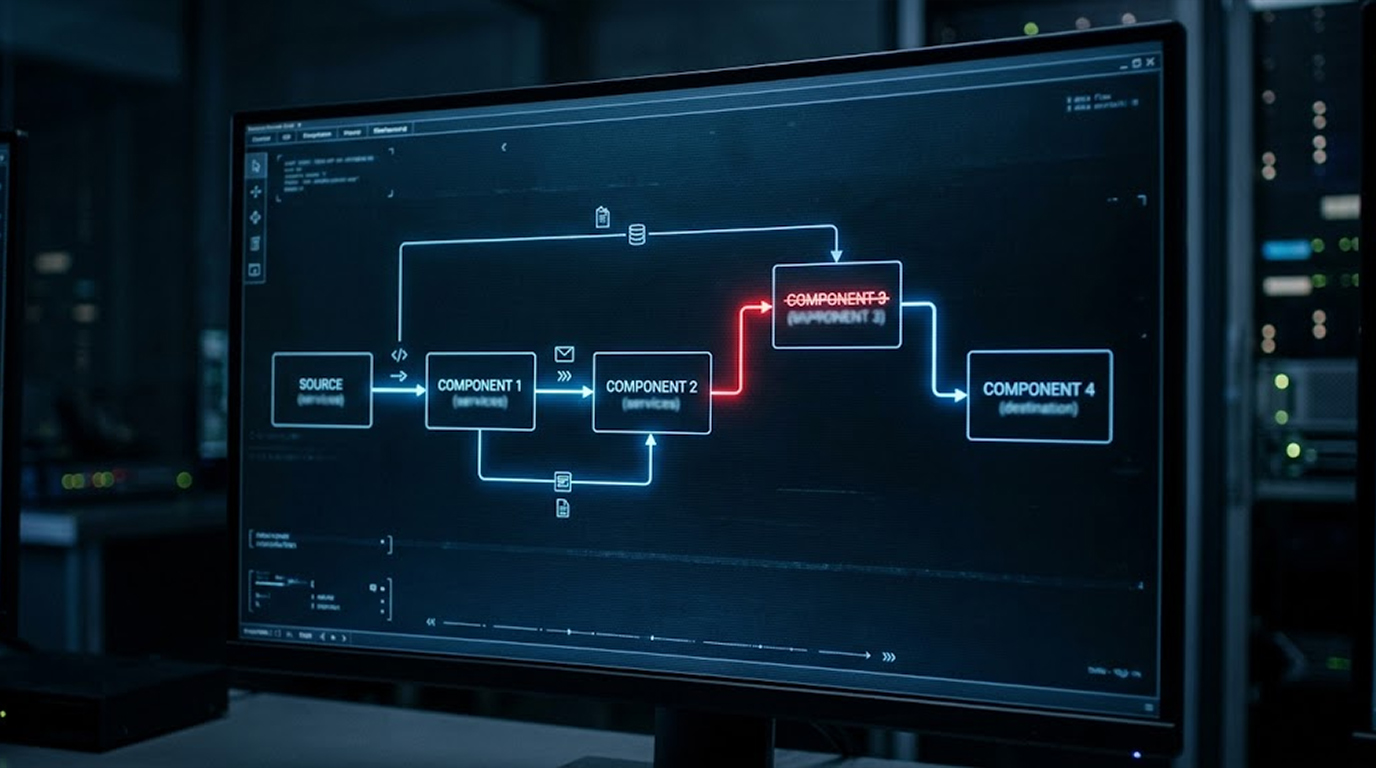
- Delivery: Phishing email, malicious download, or exploit kit
- Execution: The Python script runs on your machine
- Collection: It grabs credentials, cookies, and crypto wallets
- Exfiltration: It sends everything to a Telegram channel the attacker controls
What It Steals
BraZetsu has a long shopping list:
- Browser credentials: Your saved usernames and passwords
- Cookies: Session cookies that let attackers bypass authentication
- Crypto wallets: Your wallet files and private keys
- System info: Hostname, username, OS version
- Telegram sessions: Your Telegram session data
- Discord tokens: Your Discord authentication tokens
The Plug-in Architecture
BraZetsu is modular, it has a core stealer module, and then it loads additional plug-ins for specific tasks.
This is smart because attackers can add new features without rewriting the whole thing, if they want to steal from a new browser, they just add a plug-in, and they do not need to rebuild the entire malware.
The Telegram C2 Connection
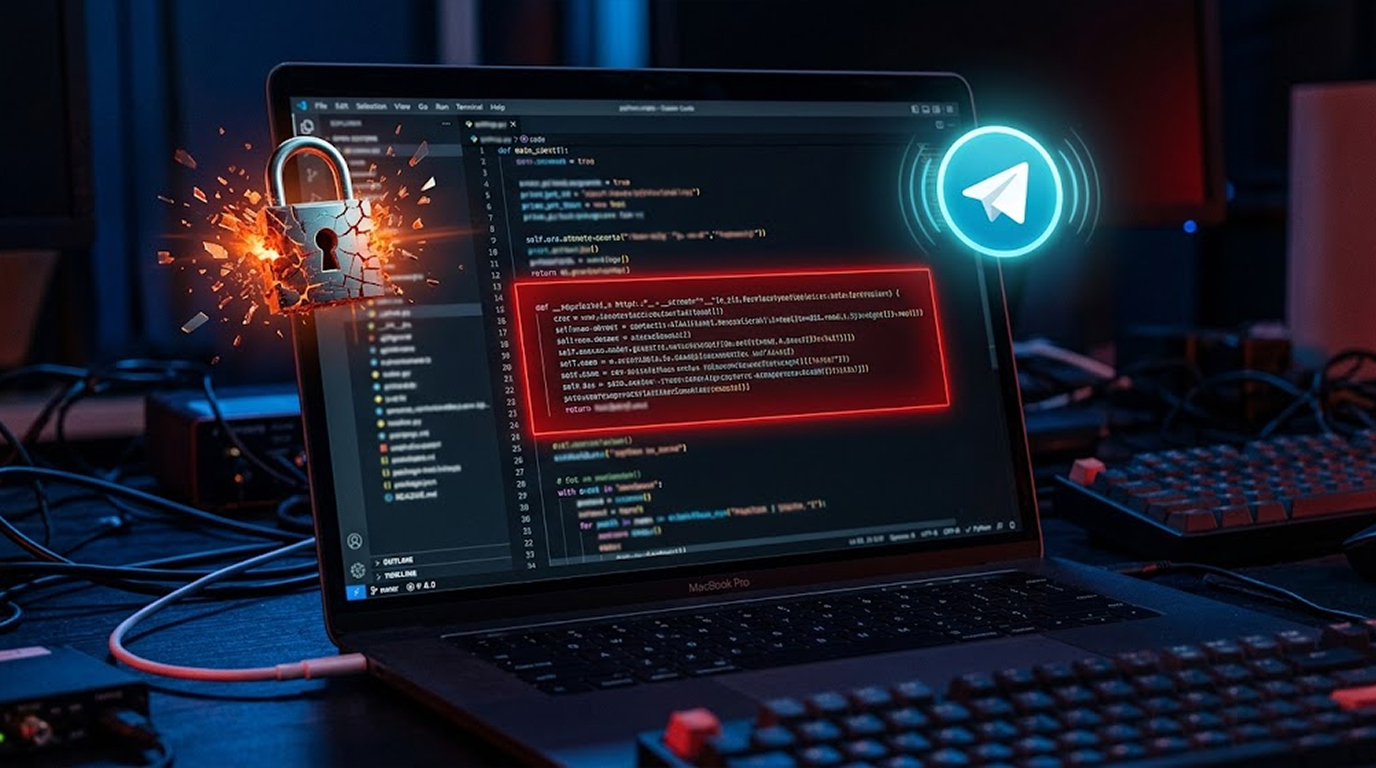
BraZetsu uses Telegram for command and control, and it sends stolen data through Telegram channels.
This is effective because Telegram communications blend in with regular communications and, therefore, are more difficult to distinguish from other C2 communications.
How it works:
- Attacker sets up a Telegram bot
- Malware connects to the bot
- Stolen data is sent as Telegram messages
- Attacker gets the data in real time
Scenario 1: The Phishing Email Attack
The Setup
An employee gets an email, it looks like an invoice from a vendor, and the email asks them to download an attachment.
The Attack
The employee downloads the attachment, it is not an invoice, it is BraZetsu, and the script runs silently in the background.
The Result
BraZetsu steals the employee's browser credentials, cookies, and crypto wallets, and it sends everything to the attacker's Telegram channel.
The Aftermath
The attacker uses the stolen credentials to access corporate systems, they move around the network, they steal more data, and the company suffers a major breach.
Scenario 2: Supply Chain Attack
The Setup
An attacker infects an update channel of a particular software, and they insert BraZetsu malware into the software update.
The Attack
Thousands of users receive the corrupted update from the infected update channel and install it believing it is a genuine one.
The Result
BraZetsu is now on thousands of machines, and it steals credentials and crypto wallets from all of them.
The Aftermath
The attacker collects data from thousands of victims, they sell it on the dark web, and most victims never even know they were compromised.
How to Detect BraZetsu
Signs to Watch For
- Suspicious Python processes: BraZetsu runs as a Python script, so look for Python running from unusual locations.
- Connections: BraZetsu communicates with the C2 server through Telegram; therefore any suspicious network connection needs to be investigated.
- File modifications: BraZetsu modifies browser files for stealing credentials; therefore any file modification in browser directories needs to be examined.
- Unusual network activity: BraZetsu uses Telegram server communication; therefore, all connection to unfamiliar IP address or domain must be scrutinized.
Detection Criteria
Network Detection:
- Watch out for connections made from your network to Telegram servers
- Watch out for unusual activities, especially when there is too much data that leaves the network
- Watch out for connections to malicious websites
Endpoint Detection:
- Watch out for suspicious Python scripts
- Watch out for any file changes
- Watch out for credential stealing malware
Log Analysis:
- Watch out for any suspicious login attempts
- Watch out for any account lockouts
- Watch out for privilege escalations
Prevention of BraZetsu
Technical Controls
1. Employ Endpoint Protection
Deploy an endpoint protection solution that can detect and block malware from spreading and keep it updated at all times.
2. Limiting Script Executions
Restrict script executions and apply application whitelisting for allowing only the trusted executables.
3. Detecting Malicious Python Processes
Detect any malicious python process and find out any python process running from unapproved places.
4. Preventing Telegram C2 Communication Channels
Prevent communication through any channel used by Telegram or otherwise keep track of such channels.
5. Implementing MFA
Implement multi-factor authentication as it minimizes damage if your credentials are compromised.
6. Limit Privileges
Apply the principle of least privilege, and give users access to only necessary resources.
7. Perform Updates Regularly
Perform updates regularly as it protects against exploits by cybercriminals.
User Training
1. Phishing Awareness Training
Employees should be trained on how to detect phishing emails, and also not to download any attachments from unknown parties.
2. Software Downloading Best Practices
Employees should be trained on how to download software from safe sources, and also not to use unauthorized downloading websites.
3. Reporting Suspicious Activity
Encourage employees to report suspicious activity, and build a culture of security awareness.
BraZetsu Detection Quick Reference
|
IOC |
What to Look For |
|
Suspicious Python Processes |
Python running from unusual locations |
|
Telegram Traffic |
Outbound connections to Telegram endpoints |
|
File Modifications |
Browser files modified unexpectedly |
|
Network Connections |
Connections to unknown IPs or domains |
BraZetsu Defense Quick Reference
|
Control |
How It Helps |
|
Endpoint Protection |
Detects and blocks malware |
|
Script Restriction |
Prevents unauthorized script execution |
|
Python Monitoring |
Identifies suspicious Python activity |
|
Telegram Blocking |
Stops data exfiltration through Telegram |
|
MFA |
Reduces impact of stolen credentials |
|
Least Privilege |
Limits what attackers can access |
|
User Training |
Reduces risk of phishing and malware |
The Bottom Line
BraZetsu is open-source malware that anyone can use, it steals credentials, cookies, and crypto wallets, it uses Telegram for command and control, and it is modular and easy to customize.
The malware is dangerous because it lowers the barrier to entry, attackers do not need to be skilled developers, they just need to run a Python script.
Your best defense is layered, use endpoint protection, monitor for suspicious activity, block Telegram C2, and train your users.
The attackers are using open-source malware, so your defenses need to be ready.
FAQ Section
What is BraZetsu malware?
BraZetsu is an open-source information-stealing malware developed using Python programming language which steals credentials, cookies, and cryptocurrency wallets from the infected computers.
How is BraZetsu distributed?
The BraZetsu malware can be distributed using phishing emails, downloads from suspicious websites, exploiting kit, and by infecting software updates.
What information is stolen by BraZetsu?
Credentials and cookies, cryptocurrency wallet files, system information, Telegram sessions, and Discord tokens.
How do BraZetsu communicate with hackers?
Telegram channel acts as the BraZetsu's command-and-control channel, and the stolen data is forwarded to the Telegram channel owned by the hacker.
Why is open-source malware so risky?
Open-source malware is dangerous because everyone can have access to it and run it as there are no special skills needed for the process.
How can I protect myself from BraZetsu attacks?
Endpoint protection, restrict script execution, be wary of Python scripts, prevent Telegram command and control, and MFA.