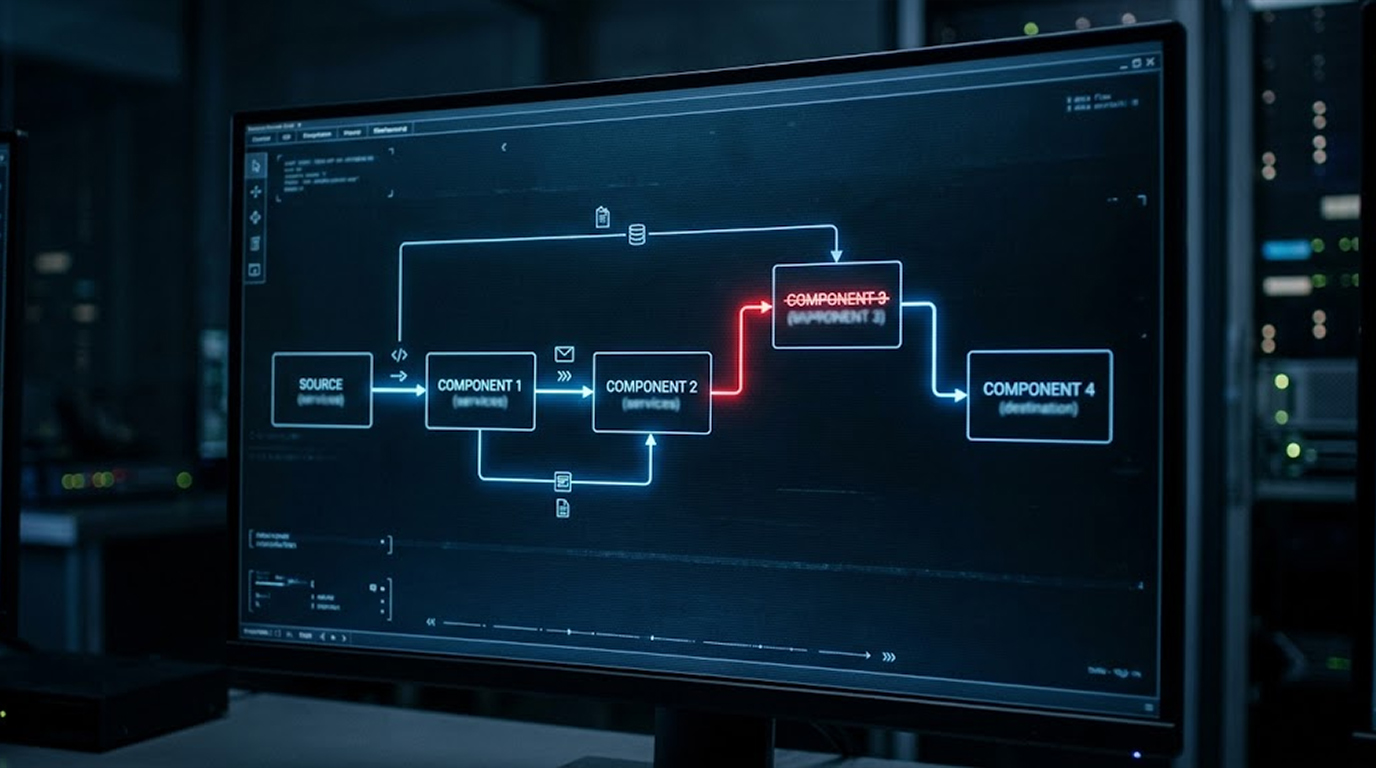
You have a network. You have firewalls, intrusion detection, and endpoint protection. You have done everything right. But the attackers are still probing. They are still scanning. They are still looking for a way in.
What if you gave them something to find? Thousands of fake systems. Fake databases. Fake credentials. Fake everything.
This is not a honeypot. This is a deception farm. And it is powered by AI.
Let me demonstrate how it works, what makes it so powerful, and how you can take advantage of it to deceive and ensnare attackers.
This guide includes practical instructions on how to use real tools to build your own deception farm.
What Is an AI Deception Farm
A deception farm is a network of fake systems, applications, and data designed to look real. Attackers find them, waste their time on them, and reveal their tactics in the process.
What is it:
- Simulates a set of production systems that are decoys.
- Provides the generation of fake but convincing data.
- Acts as a bait; looks like a tempting target.
- Takes up time and wastes the attacker’s resources.
What is it not:
- Honeypot (acts as a decoy system).
- Firewall (controls traffic).
- Vulnerability Scanner (detects vulnerabilities).
Purpose:
The purpose is to mislead the attacker.They find your fake systems, spend time attacking them, and leave your real systems alone. Meanwhile, you learn their tactics and techniques.
How AI Makes Deception Farms Possible
Traditional deception is hard. You have to manually create fake systems, fake data, and fake activity. It is time-consuming and expensive.
AI changes this.
AI can produce realistic data. The AI can produce false records of customers, false transaction data, false emails, and false documents. These pieces of data appear to be real. They have realistic patterns.
AI can imitate human actions. The AI can produce false activities of users such as logging into a system, sending emails, accessing some documents, and producing network traffic. All these activities look like real ones.
AI can react to attackers. The AI can monitor the activities of an attacker and adjust the deceptive activities instantly. If the attacker is looking for something particular, AI can produce a false one.
AI can scale. AI can create thousands of fake systems. It can manage them. It can update them. It can keep them running.
How a Deception Farm Works
The deception farm operates in four stages: deployment, engagement, observation, and learning.
Stage 1: Deployment
Deception farm generates fake systems, data and activity. It distributes them in your network.
Deployment by deception farm includes the following.
- Fake servers which look like legitimate ones
- False databases with false data.
- Fake applications looking like legitimate ones
- Fake credentials which can be stolen by attackers
- Fake traffic which looks like legitimate traffic
How is it deployed:
Deception farm generates decoys through automation. Thousands of decoys can be generated and managed through automated process within minutes.
Stage 2: Engagement
The attackers come across the deception farm and engage with it. The attackers investigate the deception farm. The attackers target the deception farm. The attackers make attempts to benefit from it.
Why:
Because the attackers realize that these decoys are not actual systems. They expend their resources in attempting to attack these fake systems. They disclose their techniques and technologies. They are assured that this is the system they are after.
Why do they engage:
It is because the deception farm appears to be real.
Stage 3: Observation
While attackers engage with the deception farm, you observe their activity. You get to know about their tactics, tools, and techniques.
The things you know:
- Attack vector used by the attacker
- Lateral movement techniques used by the attacker
- Privilege escalation techniques deployed by the attacker
- Data exfiltration techniques used by the attacker
- Persistence techniques used by the attacker
How you learn:
The deception farm logs everything. It logs all requests, commands, and accesses to files. The intelligence provided helps you learn about the attacker.
Stage 4: Learning
This is where you utilize the intelligence gathered from the deception farm.You patch vulnerabilities. You update detection rules. You train your team.
What you should do:
- Mitigate all the vulnerabilities used against you by the attackers.
- Upgrade your detection system based on the methods of the attackers.
- Train your staff about the attacker’s methods.
- Enhance your incident response capability.
Why it works:
You are learning from real attacks. You are seeing what attackers do. You are improving your defenses based on real data.
Practical Tools for Setting up Your Deception Farm
Here are some practical, open-source tools you could employ right away to set up your own deception farm.
Tool 1: Beelzebub
Description: A secure and low-code deception runtime environment that uses LLMs to generate adaptive decoy services.
Functionality: This tool employs LLM-powered decoy services to interact on several protocols such as SSH, HTTP, TCP, TELNET, and MCP. But not only does it attract the attackers, it also includes threat intelligence gathering, injection detection, and participation in real-life interactions.
Key features:
- Coalescing of output from LLMs to relevant context-based answers instantly
- YAML configuration and regex commands that will help detect the patterns without any programming skills
- Compatibility with multiple protocols to work with different attack vectors
- Monitoring via Prometheus and RabbitMQ events
How to run it:
# Deploy your Beelzebub
git clone https://github.com/beelzebub-labs/beelzebub
cd beelzebub
docker-compose up -d
When to run it: In case you need to deploy your decoys using multiple protocols without writing any code.
Tool 2: Sinon
Description: An open-source, modular automation tool for the “burn-in” process of Windows-based deception hosts.
Function: The main function of Sinon is automation of Windows deception hosts’ setup through execution of numerous activities which imitate behavior of real users.
Features:
- Installation of applications, customization of wallpaper and resolution, control of Wi-Fi network and settings
- Control of updates state and particular updates packages for OS and applications
- User activities simulation such as emails, internet browsing, file downloads, document printing and task scheduling
- Lure creation and synchronization such as SSH keys, credential pairs and API keys
How to use it:
# Clone and install Sinon
git clone https://github.com/JamesBRINE/Sinon
cd Sinon
pip install -r requirements.txt
# Run Sinon on the decoy host
python sinon.py --config config.yaml --host target_hostWhen to use it: For Windows-based deception hosts automation and making them seem to be alive.
Tool 3: HoneyMCP
Description: This is an active security measure which implements deceptive measures within the Model Context Protocol (MCP) server.
Functionality: HoneyMCP introduces "ghost tools" which serve as honeypot and are able to detect two very vital threat types:
- Data exfiltration through "get" tools which try to get security information.
- Indirect Prompt Injection via "set" tools that detect injection of malicious instructions
Key features:
- One-line integration with any FastMCP server
- LLM generates domain-specific deception tools
- Sniffer to capture commands, arguments, and sessions
- Real-time dashboard that will display attacks
How to use it:
# Installing HoneyMCP
pip install honeymcp
honeymcp init
# Using in your FastMCP server - ONLY ONE LINE
from honeymcp import honeypot
mcp = honeypot(mcp) # Done!When to use it: If you are using AI agents that use MCP servers and want to detect prompt injection or data exfiltration attempts.
Tool 4: VelLMes
What is it? High interaction deception framework based on artificial intelligence, which simulates various protocols and services.
What it does: VelLMes supports SSH Linux shell, MySQL, POP3, and HTTP protocol simulation, and all these can be utilized as honeypots. VelLMes is an attackable honeypot framework that should interact with human attackers, therefore, realism matters.
Key features:
- Multimodal protocol simulation, including SSH, MySQL, POP3, and HTTP
- Responses generated by LLMs produce realistic interactions.
- Capability to deceive validated in a study in which 30 percent of attackers thought they were interacting with a legitimate system.
How to use it:
# Setup VelLMes
git clone https://github.com/murisladic/VelLMes
cd VelLMes
docker-compose up -d
# Initiate a honeypot
python start_honeypot.py --config config.yamlWhen to use it: If you want an AI deception tool backed by science that is capable of simulating several protocols and dealing with sophisticated attacks.
Tool 5: konterfAI
What is it: Proof of concept model-poisoner that produces nonsensical content to make AI models degenerate.
What it does: konterfAI works on a reverse-proxy and recognizes crawlers using their user-agents. In case of crawlers, it provides poisoned content rather than legitimate content.
Key features:
- Queries a small LLM with very high temperature values for hallucinations
- Offers defense against AI crawlers which don’t respect robots.txt
- Produce a tar pit effect using random self-references that trap crawlers in a loop
How to use it:
# Install konterfAI
go install codeberg.org/konterfai/konterfai@latest
When to use it: When you wish to protect your web content from crawling AI crawlers.
Practical Scenario: The Ransomware Attack
The Scenario:
A mid-sized manufacturing company deploys an AI deception farm across its network. The deception farm creates fake file servers, fake databases, and fake credential stores. All of them look real.
In one instance, a ransomware group manages to penetrate the network using an infected VPN login. The attacker starts exploring the network in search of sensitive information to encrypt.
How the Deception Farm Operates:
The attacker performs a scan of the network and identifies what he thinks is a file server holding customer agreements and accounting files. This server is a fake. It contains nothing but deceptive files.
The attacker spends 45 minutes enumerating the fake file server. They download several "sensitive" documents. They feel that they have discovered some useful information.
In the meanwhile, the deception farm logs everything. The logs include the commands given by the attacker, the tools used by them and the files accessed by them.
The attacker searches for the domain controller. This is yet again a deception machine. The attacker tries to gain elevated privileges from this deception machine.
The Outcome:
The deception farm has cost the attacker 2 hours of time. In those 2 hours, the security team discovers the breached VPN account and disables it. The attacker's access is terminated.
The security team is also aware of the particular tool used by the attacker to discover the file shares. The detection rule set is updated to detect this tool.
The actual file servers and domain controller have not been breached. The attacker did not get close to any real information.
Findings of the Company:
How the attacker gained entry into the network in the first place is that it used an infiltrated account of the company's VPN. The attacker was using some specific tool for lateral movement.
Actions taken by the company:
Multi-factor authentication was configured on the company’s VPN. Rules for the lateral movement tool detection were updated. Decoy resources were increased to kill time for any future attack.
Practical Scenario: The Insider Threat
The Scenario:
A financial services company deploys an AI deception farm. The deception farm will create false customer databases and false employee files.
The disgruntled employee is about to steal some data belonging to customers. They login using their credentials and start looking for confidential files.
How the Deception Farm Works:
The employee begins to search for “customer data” and notices a file labeled “Customer Records – Confidential.” The employee then opens the file and finds hundreds of customer records. All of these records are fabricated records created by AI technology.
The employee proceeds to download the whole folder. The employee thinks he stole the confidential information.
The deception farm monitors the actions of the employee. It logs all the files the employee has accessed and the amount of information he downloaded.
Outcome:
The security team is alerted about an activity on the deception farm. On investigation, they see that there has been downloading of huge amounts of data by the employee. They confront the employee and dismiss them from employment.
The fake customer data is useless. The actual customer data is still secure.
Lessons learned by the company:
The intention of the employee was to steal data. The employee had access to sensitive folders and was able to download vast amount of data without getting caught.
Changes made by the company:
Data Loss Prevention, limitation of access to confidential documents, and creation of more decoys for insiders.
How to Set Up a Deception Farm
Step 1: State your objectives.
What is it that you are trying to protect? Customer information? Intellectual property? Production environments? Be clear on your objectives.
Step 2: Build your decoys.
What kind of decoys do you need? Dummy databases? Dummy applications? Dummy credentials? Build decoys that look real.
Step 3: Deploy your decoys.
Deploy your decoys in your network environment. You should automate the deployment of the decoys and keep them updated.
Step 4: Identify activities done by the attackers.
Identify the activities carried out by the attackers using the decoys. Note down all the activities carried out and analyze them.
Step 5: Secure your environment.
Secure your environment using the data gathered from the decoys.
Challenges and Limitations
Cost.
Deploying a deception farm can be expensive. It requires infrastructure and expertise.
Complexity.
Operating deception farms is a complex task. Automation and personnel are needed.
Detection.
An attacker is capable of detecting deception farms. He is able to look for indicators of fake infrastructure.
False positives.
Decoys will produce false positives. Actual users might interact with them.
Maintenance.
Decoys need to be maintained. They need to be updated. They need to look real.
The Bottom Line
AI deception farms are a powerful tool for confusing and trapping attackers. They create decoys to look like genuine systems. They waste attacker time and money. They give intelligence on attacker methodology.
They are flawed systems. They are costly and complicated. They may be detected by the attackers. However, they work effectively.
Deploy a deception farm. Waste the attacker's time. Learn their tactics. Improve your defenses.
FAQ Section
What is AI Deception Farm?
An AI deception farm is the creation of a system or an application that looks real but is deceptive for the hacker using AI technology.
How does artificial intelligence contribute in creating these farms?
AI technology can generate realistic fake information and emulate behavior, adapt and scale systems.
How does an AI deception farm work?
It has four stages – deployment (creation of deceptive systems), engagement (interaction between attackers and those systems), observation (logging of attack activities), and learning (gaining intelligence for better protection).
What could one benefit from implementing a deception farm?
You can learn more about how the attack is entering your system, how it moves laterally, escalates its privileges, exfiltrates data, and how persistent it is.
How can I build a deception farm?
The first thing that you should do is to set your objectives, create the decoys, deploy them in your network, observe them, and then use the intelligence for your benefit.