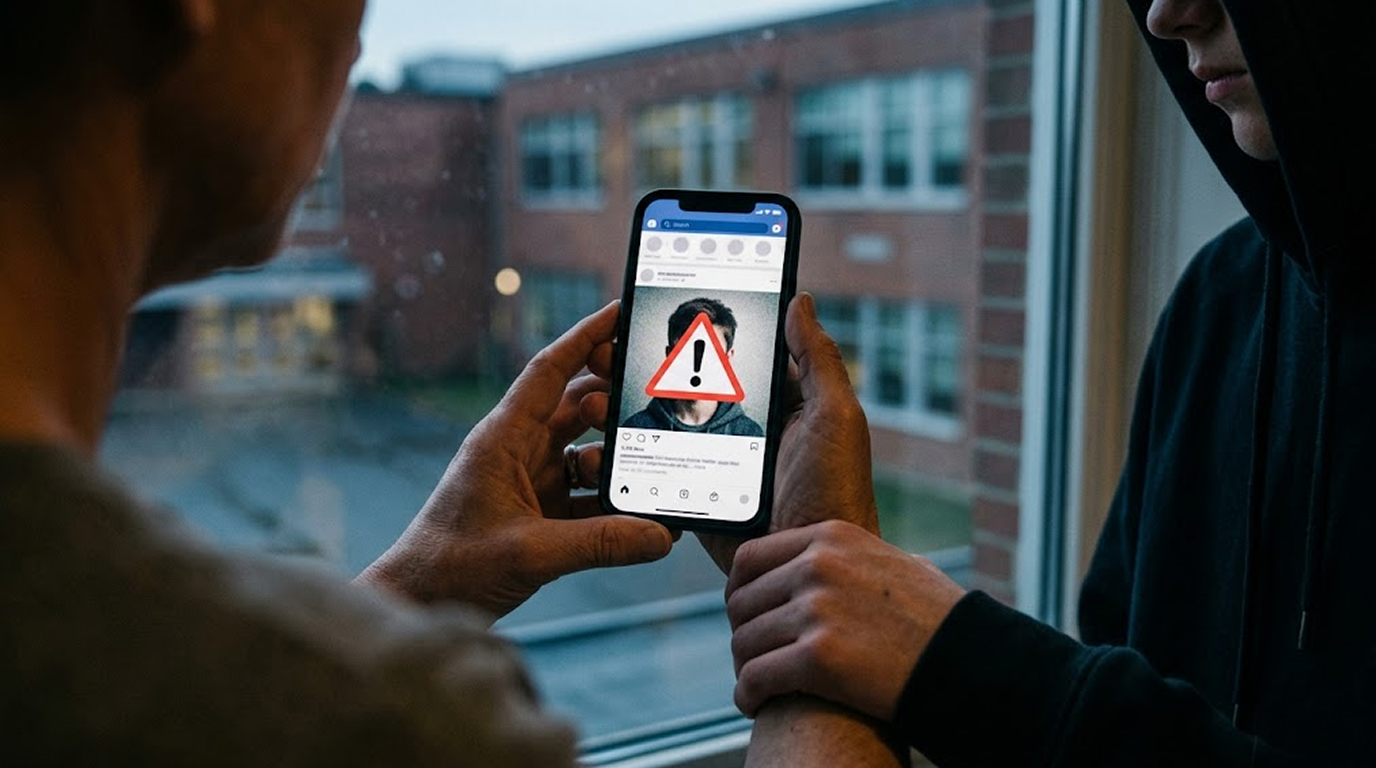
Your child comes home from school looking upset. They will not tell you why. They have been quiet all evening, and they keep staring at their phone but not typing.
That night, you hear them crying in their bedroom
When you finally get them to talk, they show you a message from a classmate. It contains a fake image of your child doing something humiliating. The image looks completely real. Your child says they did not do that, and you believe them.
This is not a nightmare. This is happening to children right now. AI tools have made it easy for bullies to create fake, damaging images and videos of their targets. The technology is free, fast, and frighteningly convincing.
You cannot stop bullies from having access to AI tools, but you can prepare your child, respond effectively, and take action.
Parents need to learn about the dangers of deepfake and to find ways to protect their children against it in order to help keep them safe.
What is a Deepfake? How Does Bullying Use Deepfakes?
Deepfakes are manipulated images/videos/audio recordings created with artificial intelligence (AI). AI can analyze many real-life pictures and videos to learn to recreate the look and voice of any person, allowing for that individual's likeness to be inserted into whatever situation an aggressor wants.
For example, if a bully has access to real pictures of your child on social media, they can use image-generating AI to create a fake picture of your child doing something inappropriate or embarrassing. This image can be so lifelike that they could confuse classmates, teachers, or possibly even family.
There are also a few ways deepfake bullying is different than traditional forms of bullying.
1. Fast, Fake images can rapidly distribute to many people within minutes.
2. Permanent, once something is online, it’s almost impossible to get back.
3. Difficult to prove one is ‘innocent’, It is up to the victim to prove their innocence because injected images will have strong evidence against them.
4. Increased humiliation - A great number of individuals experience extreme humiliation as a result of deepfake bullying and will, therefore, be hesitant to ask for help because of their feelings of embarrassment.
5. It can feel hopeless to many parents and children because they may be unaware that deepfakes can be detected/removed.
AI-powered bullying is not limited to photos and videos. Bullies can also create fake audio clips that sound like your child saying terrible things. They can use AI to impersonate your child in group chats or on social media.
This is not science fiction. These tools are available for free online, and any child with a phone can use them.
The Warning Signs Your Child May Be a Target
You cannot protect your child if you do not know what is happening. Look for these changes in behavior.
Emotional indicators include:
1. Frequently having unexpected feelings of sadness, anxiety, or mood changes.
2. Withdrawing from social connections with friends or family members.
3. An unwillingness to discuss their classroom experiences.
4. Crying for reasons that don't seem obvious or apparent.
5. Sharing expressions of low self-esteem/shame
Behavioral indicators include:
1. Suddenly avoiding their devices (landline or mobile phone/wireless devices/computer).
2. Downloading social media applications located on their devices, subsequently reinstalling them after having deleted them.
3. Not permitting you to view their devices screen.
4. Frequently changing their passwords on their devices and hiding their screens when you walk by.
5. Waking-up during the night to monitor messages/notifications on their device.
Academic signs of a student being bullied may include the following:
1. Grades dropping quickly
2. Being disinterested in attending schools (ie feigning illness)
3. No longer wanting to participate in extracurricular activities they once enjoyed
4. Changing the route they use to get to school and avoiding friends/classmates when going to school
Digital signs of a student being bullied may include the following:
1. Receiving text messages that create feelings of distress but refusing to explain why they are distressed
2. Deleting text messages as soon as they read/view them
3. Having several social media accounts (one public, one private and one secret)
4. Being tagged in posts for which you do not have/unable to access the tag.
If you see these signs, do not ignore them. Your child may be experiencing deepfake bullying and does not know how to tell you.
Talking to Your Child About Deepfake Bullying
Opening up this type of conversation may be daunting. Your child may feel embarrassed or ashamed about the fact that they were targeted, angry for being blamed and nervous they will lose their phone.
To help you help initiate this conversation with your child, consider the following:
Choose an Appropriate Time
Avoid initiating this type of conversation if you are angry, stressed or in a hurry. Choose a time to have your conversation when both you and your child can remain composed. This may include having a leisurely walk, a calm car ride, or working together to prepare dinner.
Avoid Accusing, Ask Your Child Questions
For example: “Recently, I learned of a new method of bullying. Bullies have developed ways of creating fake images of their victims with the use of artificial intelligence (AI), an application called a deepfake, have you heard anything like that happen at school?” By stating this in the above manner, you indicated an interest rather than a level of suspicion.
Acknowledge their emotions.
If your child expresses that they have been a target of bullies, listen to your child without interrupting and respond with statements such as "That sounds frightening" or "I am so sorry you're dealing with that." Never invalidate the reality of the impact a fake image can have on a person, regardless of how false the image may be.
Promise not to overreact.
Your child may be afraid that if they tell you, you will call the school, contact the police, or take away their phone. Promise them that you will work with them to find a solution, not act without their input.
Explain that it is not their fault.
Many children blame themselves when they are bullied. They think they did something to deserve it, or they think they should have protected their photos better. Remind your child that the bully is the only one at fault.
Make a plan together.
Ask your child what they want to do. Do they want to report it to the school, to the police, or to the social media platform. Do they want you to handle it privately. Involving your child in the decision gives them back some control.
How to Respond If Your Child Has Been Targeted
If your child tells you that someone has created a deepfake image or video of them, take these steps immediately.
Step 1: Believe your child
You should not say, “Are you sure this is a fake?” or “Did you do anything to make them mad?” The only thing your child needs is for you to believe them, no questions asked. Also, thank your child for being honest with you.
Step 2: Save Evidence
Prior to making any reports, be sure to take screenshots of all content. This includes the fake image or video (if there is one), the caption, comments, usernames, time stamps, and how many times the fake was shared.
Do not delete any of it yet; you will want this information when you report to your school, platform, or local law enforcement; therefore, it is important to have some evidence.
There are several methods to preserve evidence:
1. Taking a screenshot on your phone or computer.
2. Using the save as function for pictures and videos.
3. Copying the URL of the message or post.
4. If the bullying happened in chat format, you will want to save the whole conversation.
Make sure to store the evidence in a secure location, so that it can be recovered if necessary at some point in the future.
Step 3: Do Not Share the Fake Content
If you are unsure whether the content is a deep fake (for example, by asking someone "Is this a real video?"), do not share it with anyone because doing so could (again) cause additional harm to the victim of the deep fake (i.e., by sending to someone other than law enforcement/school officials).
If you must show it to someone (law enforcement, school personnel), do so face-to-face rather than electronically.
Step 4: Inform the Social Media Platform
All social media platforms have rules that prohibit using deepfake images and other types of deepfakes to harass others, therefore any harassment must be reported to the social media platform at the first possible opportunity.
Reporting Instagram harassing content - When reporting deepfake harassing content on Instagram, first find the post in question. Once found, click the … icon (the 3 stacked dots) located beneath the post, click "report", click "fake or misleading content", click "harassment or bullying".
Reporting TikTok harassing content - When reporting harassing deepfake content on TikTok, find the video in question and click on the share arrow located to the right of the video, select "report" and click on harassment and bullying, then you click "fake or impersonating".
Reporting Snapchat harassing content - When reporting harassing content on Snapchat, press and hold onto the harassing message or snap to report, and then choose the option for "harassment".
Reporting Discord harassing content - When reporting Discord harassment, right-click on or hold your right-click button on the message(s) or direct message(s) authored by the harasser and click "Report Message" then follow the prompts to submit the report for harassment.
Reporting Telegram harassing content - Since Telegram does not allow for direct reporting of all forms of harassing behavior, you must contact them to report the harassing deepfake to their abuse team at [email protected]
Step 5: Contact the educational institution
It is important to contact the school's administrator promptly if your child's peer has experienced bullying situations.
Here is what you should take with you:
1. The information you collected.
2. A detailed account/overview of the incidents.
3. The names of any party involved (where applicable).
4. Any date/time of the incidents.
Questions that you will need to ask:
1. Have the materials digitally removed from any school-connected devices/networks.
2. Perform any necessary disciplinary action on the bully per the school's policy.
3. Provide assistance/support of your child (counseling, schedule)
4. Have a plan in place to stop further occurrences of bullying.
If specialised health care legislation exists in the area, many schools now have policies in place that deal with issues related to the publication of deepfakes via an AI platform. Remember to ask about the school's deepfake policy.
Step 6: Contact the police
In most jurisdictions, creating and distributing deepfake images/videos where the subject is a minor and/or an individual generally is a criminal offence. As a result, creating/distributing deepfake images/videos can be charged as: Child Sexual Exploitation, Harassment, Identity Theft, etc.
Scenarios to consider when involving law enforcement:
1. If the deepfake depicts sexual or nude behaviour by your child.
2. If there were threats of violence associated with the bullying activity or the bully.
3. If the bullying behaviour resulted in extortion or blackmail.
4. If the bully is an adult.
5. If the image/video has gone viral and you can no longer control the sharing.
Contact your local police department's cyber crimes unit:
For UK residents:
Report to the Internet Watch Foundation (IWF) at iwf.org.uk.
For US residents:
Report to the CyberTipline at missingkids.org (National Center for Missing and Exploited Children).
For other countries:
Contact your national police cyber crime unit or child protection hotline.
Step 7: Support Your Child Emotionally.
Deepfake bullying is traumatic and will likely require your child to speak with a professional.
You should locate a therapist that specializes in the following:
1. Adolescent trauma
2. Cyberbullying
3. Body image issues
4. Social anxiety
Your child's school counselor may be able to provide you with recommendations for a therapist, or you can contact your child's paediatrician. Additionally, work on helping your child rebuild their self-esteem by doing the following:
1. Encourage offline activities that your child enjoys.
2. Spend additional time engaging in activities together that provide a sense of safety.
3. Remind your child that the image created was not reflective of them.
4. If it helps your child mentally, limit the amount of time they have access to social media for a short period.
How to Report Deepfake Content and Get It Removed
Deepfakes spread quickly, and removal can be difficult. Here is how to maximize your chances.
Ask the platform for content to be removed.
Every platform has a different way of removing deepfakes:
Facebook and Instagram: You can report the post using the Report button. If you are being harassed by a deepfake, you can also file an additional harassment report through Facebook’s harassment reporting form. (You can find it in their Help Center.)
TikTok: You can report the video from inside the app. If it is an urgent matter, email TikTok’s safety department at [email protected].
X (formerly Twitter): Report the tweet with the deepfake. If it is a deepfake of a minor, email X's security team at [email protected].
Snapchat: You can report snaps or messages by either sending an email to the safety department at [email protected] or by selecting one of the options to report abuse via an in-app option.
If you want Snapchat to remove your images/videos from being searched on any search engine online (Google, Yahoo, Bing), you must submit a request and Snapchat has no obligation to make any changes based on this request.
Deleted deepfakes may still show up as search results in Google even after they have been removed from Snapchat.
For Google: To remove personally identifiable information from Google, you should complete Google’s "Remove Personal Identifying Information" form. In the description section, make sure to explain that it is a deepfake of a minor.
For Bing (Microsoft): Use Microsoft’s content removal form to remove search results.
Seeking Removal from the Internet Archive
In case a deepfake has been archived on the Wayback Machine or any similar service you will want to use the process outlined below to begin requesting the removal of the deepfake from these digital archives:
1. Go to archive.org and locate the archived webpage in question.
2. Fill out the “Opt Out” form associated with the content that pertains to your child, or any other minors.
Hiring a Digital Forensics Specialist
If you have a serious case and the deepfake has gone viral or you are interested in identifying the creator, you may want to hire a professional digital forensic specialist.
Digital Forensic Experts are able to:
1. Investigate a deepfake's usage of varying types of artificial intelligence in its production.
2. Locate the original content behind the deepfake.
3. Secure evidence for use in court proceedings.
4. Report on the deepfake's distribution level, including the total number of times shared.
How to Help Your Child Prevent Deepfake Harassment
You cannot stop every bully, but you can reduce your child's risk.
Limit Public Photos Online
A deepfake requires the creator to have identifiable images of someone to produce one. By limiting how many publicly accessible images of your child’s likeness exist will make it more difficult for someone to generate a deepfake of your child or someone else.
The following are five actions you can take to limit your child’s public availability:
1. Convert their social media accounts to private
2. Remove from their public social media profile all images of their face
3. Encourage them to share images with only those they know best
4. Avoid photographing your child in identifiable locations (for example, with their home number on display, in their school uniform, or with a street sign visible)
5. Teach them how to identify manipulation in the media.
Children should learn that not every picture or video they see online is a true representation of reality.
Here are some tips for checking the validity of an image or a video:
1. Look for shadows and lighting that are 'off' from what you see normally.
2. Look at the eyes in an image. Do they appear to be irregularly positioned or an unusual color?
3. Does the photograph show skin that appears to be 'too smooth' or 'too shiny'?
4. Can you find anything that appears inappropriately placed (location of background) in relation to the subject being photographed/videotaped?
5. In film/video does the subject’s mouth move at the same time with their spoken words?
Keep in mind that although the technology behind creating deepfakes is advancing, there are still some minor mistakes in many deepfakes.
Implement a No-Blame Reporting System
Your child should feel free to come and speak with you without fear of punishment
Develop a rule: "If you see something on the internet that upsets you, tell me right away. I won’t take your phone away, and I won’t be mad at you."
When your child does come to you with a report, thank them and do not penalize them for something someone else has done.
Use Reverse Image Search
Show your child how to use reverse image search using Google Images or TinEye. If they feel that the photo is being used to create a deepfake, they can locate the original photo used to create that deepfake through a reverse image search.
Turn Off Facial Recognition Features
Many platforms use facial recognition to tag people in photos. Turn this off in your child's account settings. The less the platform knows about your child's face, the harder it is for bullies to find photos to exploit.
For Instagram and Facebook: Go to Settings then Privacy then Face Recognition and turn off the option.
For TikTok: Go to Settings and Privacy, then Privacy then Face Recognition and turn off the option.
Adding Watermarks to Shared Pictures:
While your child is sharing pictures publicly, add a visible watermark that includes their account name or other identifying information so bullies cannot claim the authenticity of the photo since they can see it is from your child’s account.
You can easily add watermarks using applications like “Add Watermark” or photo-editing applications that add watermarks in seconds.
Advocating for a Deepfake Policy to Be Created by the School
If your child’s school is not currently working on creating a deepfake policy, be an advocate.
A sound deepfake policy should contain the following components:
1. Clearly defined definitions of AI or machine-learning-based harassment
2. An opportunity for students and parents to report situations where they feel threatened.
3. A system of harsh punishments for individuals making false images or videos involving students/staff.
4. Provide training to students regarding the consequences of deepfakes and their ethical use.
5. Provide assistance to those harmed by deepfakes.
6. Collaborate and assist law enforcement in investigating all instances of the creation and dissemination of deepfakes that rise to a serious level.
Ask your school principal or school board what their policy is. If they do not have one, ask them to create one.
Schools receive resources from:
1. The Cyberbullying Research Center provides model policies and lesson plans
2. The National Association of School Psychologists gives guidance to schools on technology-based harassment
3. The UK Council for Internet Safety has instructional materials for schools regarding deepfakes
Current Legal Protections for Victims of Deepfake Harassment
The development of laws to protect victims of deepfake harassment continues to evolve.
The laws currently in place include:
In the United States, many states have enacted laws specifically prohibiting deepfake harassment:
1. California’s AB 602 and AB 1398 outlaw non-consensual deepfakes containing sexual content.
2. Texas’ SB 1361 makes it illegal to create deepfakes with malicious intent or to harass another.
3. Virginia’s code § 18.2-386.2 prohibits the distribution of a deepfake image that depicts sexual or nude acts.
4. New York, Georgia, and Minnesota have similar legislation.
Laws that are enforced at the federal level include laws related to the Violence Against Women Act and laws related to child exploitation.
In the UK: Online Safety Act 2023 makes it a requirement for Digital Platforms to proactively take responsibility for eliminating publicly accessible capacities for the creation of Deepfake Content; also, if Digital Platforms do not comply with this obligation, the Act will create a legal responsibility to remove such materials.
In the EU: The Digital Services Act not only compels digital platforms to remove illegal (including deepfake-related harassment) content from their sites but also has a proposed draft EU AI Act that will include specific language requiring transparency and other protections related to deepfakes.
In Australia: The Online Safety Act 2021 empowers the eSafety Commissioner with authority to issue removal orders for illegal deepfake matters.
If you are located in an area outside of the UK, EU, or Australia, contact your nation’s cybercrime investigative agency or child protection agency. Most countries have laws prohibiting some forms of illegal harassment that will apply in some way to situations involving the use of deepfake materials.
Legal Assistance:
1. Call or visit the legal aid in your area for assistance with any legal issue that you may have.
2. Ask your school guidance counselor for help locating additional resources for legal assistance in your area.
3. Search the internet for “cyber-civil rights” organizations based on the impact that cyber bullying has on your particular country or geographic location.
4. Find an attorney who specializes in matters of Internet harassment and Internet privacy law. An attorney can represent or provide assistance to you in your case.
Talking to Your Child's School About Deepfake Harassment
You will need to provide some background information to the school authorities so that they understand what deepfake technology is. Most administrators still do not have a full understanding of it at this point.
Example of what to say:
The deepfake creations are not "real" videos/images and are instead digitally fabricated. This means that they have no basis in reality at all, but they look like they are real videos/images. Someone used the technology to create a fake photo of my child – this is harassment and may also constitute criminal activity.
Example of what to say about the urgency:
After this gets out into the public domain (i.e., when it becomes viral), it will be near impossible to have the content completely removed from all sites; so we need to act as quickly as possible on this matter to stop any future distribution and figure who is responsible for this act.
Evidence:
Collect screenshots and any other evidence you can collect.
Specific actions you would like to be taken:
1. Identify the students that engaged in the conduct and whether they go to school there.
2. Remove ANY digital copies of the offending content (all files, programs, directories) from any devices or networks used by the school.
3. Follow school policy when applying disciplinary measures.
4. Assist my child with counseling and help protect them from future harassment.
5. Notify parents of any students that are involved in this incident.
Follow up with a written record:
After the meeting you will send the school an email that summarizes the discussion items and the actions that the school agreed to undertake as a result of the discussion. production of documentation is essential for your protection.
The Bottom Line
Deepfake cyberbullying is a new and frightening threat, but you are not powerless.
You can spot the signs, talk to your child, preserve evidence, report to platforms and law enforcement, and advocate for better policies at school.
Most importantly, you can be the safe person your child turns to when something terrible happens online.
Don’t wait for an emergency to have a talk with your child about deepfakes and privacy settings. Explain why it’s important that they report anything troubling to you if it occurred online.
The best way to protect yourself is not by using tools or applying current laws; rather, it is through developing a relationship where your child can count on you to always believe and support them.
Be there for them!
FAQ Section
Is it possible for someone to create a deepfake of my child without any of their photos?
Yes, but it is more difficult to do. The AI needs to have "source" material in order to "learn" what your child looks like and sounds like. If there are a lot of public photos and videos of your child on the internet, it will be much easier for someone to create a deepfake of your child. You can help prevent the creation of deepfakes by cutting back on public photos and videos of your child.
How can I prove that my child was the victim of an altered photo?
Providing proof that your child's claims are valid does not require you to provide evidence to support this claim; instead the burden of proof rests solely with the accuser of providing sufficient evidence to establish the authenticity of their video. The original images used in the production of the altered image may potentially be located by searching for them via reverse search techniques.
If you are compiling evidence for a criminal prosecution case, you should consider using one of several available deep fake detection software programs to assess whether or not the altered photos represented in videos meet standards established by law enforcement agencies (e.g., Microsoft's Video Verification Tool and Intel's FakeCatcher).
Will my child be punished by school for being a target of deepfake bullying?
No, but many schools do not properly handle these types of incidents. If your child receives punishment for something they did not do regarding a deepfake, find. You will want to speak with an attorney as soon as possible. The school may also have to follow their own policies on bullying and harassment to punish the actual bully.
Can I take legal action against someone who deepfakes my child
Yes! In the event that you are aware of a father or mother who created deepfake content, you may be able to pursue a civil case against the person who created the deepfake for violation of privacy, defamation, or intentional infliction of emotional distress. An attorney with experience in cyber and civil rights law and online harassment law can help clarify your potential options. Should I refer you?
How long will it take to remove deepfake content from social media sites?
It varies depending on the particular social media site. Some social media sites will remove deepfake content within hours; however, other sites may take days or even weeks. In general, most social media sites will prioritize removing deepfakes of minors. Make sure that you report the deepfake through the proper reporting channels and check with the site if you do not hear back from them. You could also contact the site’s safety team directly if your case is urgent.
Can the bully remain anonymous because of an anonymous account?
You can report it no matter if you know who made the content or not, the site could help by identifying the account behind the content and deleting it. Law enforcement can, in extreme instances, use a subpoena to retrieve information about the creator of the account from the site.
If I want to protect my child should I take away their phone?
Taking away your child's phone does not help the victim, only punishes them. If your child has no way to show you evidence of the harasser or eliminate future harassment, then by taking away their phone, you have taken away another form of evidence/report. Consider helping him/her set up privacy features and/or make them feel secure when using technology.