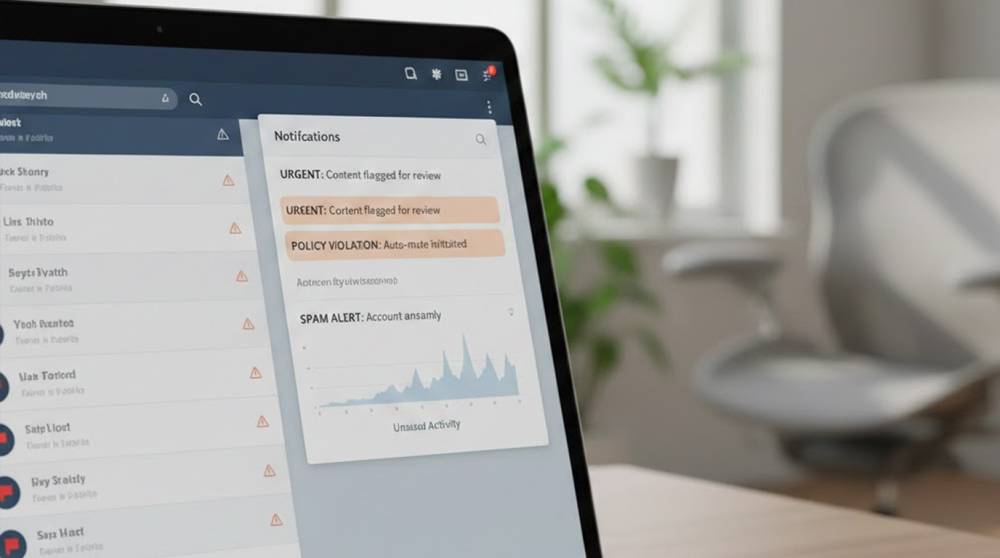
Social media incidents rarely begin as crises.
They start with a post, a message, or an access issue that feels manageable.
What turns them into incidents is visibility.
Platforms amplify mistakes quickly, often before anyone inside the organization realizes what is happening.
Looking at real incidents shows consistent patterns that are easy to miss and costly to ignore.
Most incidents are not technical failures
Contrary to popular belief, social media incidents are rarely caused by platform bugs or advanced attacks.
They are usually caused by:
1. Shared access with no clear owner
2. Old credentials that were never removed
3. Third-party tools with broad permissions
4. Human error under time pressure
5. Lack of review before posting
The technology works as expected.
The process around it does not.
Speed matters more than perfection
In real incidents, the first 30 minutes often define the outcome.
Delays usually come from uncertainty:
Who owns the account?
Who is allowed to speak publicly?
Who approves a response?
The absence of answers creates a void filled with silence.
The characteristics of successful organizations are:
1. They break the news quickly.
2. They address the matter factually and with brevity.
3. They rectify the erroneous information promptly.
4. They don't discuss too much about the issue.
When an organization is calm and corrects their faults, the public will give them a better response than if they became defensive and gave detailed explanations.
Real-world examples
Example 1: Shared Access = Shared Blame
A company account posted offensive content in the middle of the night by accident.
What had happened:
1. Multiple users had access to the same login
2. They had no way of knowing who posted what because there was no audit
3. Unable to determine the origin of the post
Impact:
The post went viral and damaged the brand's reputation.
The company's recovery was a public apology and complete overhaul of internal processes.

Example 2: The Use of Third Party Tools Adds Risk Quietly
A retail brand's Instagram account was hacked and used to send phishing links to patrons.
What had happened:
1. A scheduling tool continued to have access to an account after the contract had ended
2. Access rights and user permissions were never reviewed
3. The attacker did not have to log in to an account to send fraudulent links
Impact:
Customers received scam messages for several days.
To recover from this incident, the company had to inform customers, revoke user tokens, and update the company's policy regarding third party apps.

Example 3: Deleting a post Does Not Remove the Damage It Has Caused
A misleading promotional post was sent on Twitter and was quickly deleted.
What had happened:
1. A screenshot of the post had been disseminated already
2. An official public clarification was never issued
3. Customers were left speculating the company's intentions
Impact:
The brand experienced a loss of credibility, and media reports indicated how confused customers were after reading the post.
The company's recovery included issuing a public clarification and a temporary suspension of all tweeting activity.

Example 4: Personal Account Affecting Corporate Reputation
An employee's tweet on a personal account regarding their place of employment was inappropriate because:
1. There was no established corporate policy for employees regarding public association with the company
2. Corporate response to the incident was slow
3. External entities generated press coverage before the company had any opportunity to explain the situation.
The resulting effect on the company was extensive negative media coverage. To prevent recurrence of this type of situation, the company updated its policy, established a new employee guidance policy, and implemented training for all employees.

What effective responses have in common
Well-handled incidents tend to follow simple patterns:
1. Clear ownership of the account
2. Pre-agreed response authority
3. Short, factual public statements
4. Internal coordination before external messaging
These are governance decisions, not social media tricks.
Preventing repeat incidents
Organizations that learn from incidents rarely add complexity.
They add clarity.
Common improvements include:
1. Centralized account ownership
2. Individual access instead of shared credentials
3. Regular reviews of third-party permissions
4. Simple approval workflows for sensitive posts
5. Clear escalation paths
These steps reduce both risk and panic.
What to take away
Social media incidents are not rare and not unpredictable.
They usually expose gaps in ownership, access, or response—not intent or effort.
Learning from real incidents helps organizations respond faster, communicate more clearly, and recover with less damage.
The goal is not to avoid mistakes entirely.
It is to avoid being surprised by them.